
Smart Office

Union Peddling Lies & Untruths Over A380 Incident Claims Qantas

The union representing Qantas Licenced Aircraft Engineers appear to have had a lapse in intelligence after they started peddling fear and untruths about the recent Qantas A 330 incident over Indonesia says Qantas.


Desperate to push their case the Union claimed that engineers were set to be stood down because of the incident which saw the entire fleet of Qantas flights grounded after an engine exploded.Qantas claims this is blatent lies  and that ALAEA federal secretary Steven Purvinas is taking advantantage of a situation to “peddle lies”

Qantas chief executive Alan Joyce said in a statement that Mr Purvinas was wrong to say Qantas engineers has been stood down because of the incident on QF32, which was forced to turn back to Singapore following the explosion.

He said the cause of the engine failure was still being investigated, but it appeared likely to be a design problem.

Joyce, said Mr Purvinas was wrong, and that he and the Union had demonstrated yet again that he was prepared to go to any lengths to further his industrial agenda.
“It is clearly too soon to speculate on the cause of yesterday’s engine failure,” Mr Joyce said.

“Regardless, Steve Purvinas continues to peddle prejudices and generalisations about aircraft maintenance and safety in the knowledge that his claims will more than likely go unchallenged. “The engineers he has referred to in a number of media interviews today are employed by QantasLink in Brisbane and are involved in ongoing enterprise agreement negotiations. Six employees were directed not to attend work last week, on full pay, while a disciplinary matter is appropriately investigated. This has nothing to do with our A380 fleet.”

“Mr Purvinas also continues to raise overseas aircraft maintenance as though this was something only Qantas was not allowed to pursue. The overwhelming majority of our aircraft maintenance is undertaken in Australia, and he knows this.

“We operate an international airline and aircraft that are manufactured overseas so it is inevitable some need to be serviced overseas and that has always been the case.
“The A380 involved in the Singapore incident recently underwent its first heavy maintenance check by Lufthansa Technik in Germany. Lufthansa is a leading international airline, a top tier engineering and maintenance provider and an operator of the A380 itself. Rolls-Royce Trent 900 engines are overhauled at
Rolls-Royce facilities.

“To suggest that Lufthansa and Rolls-Royce do not have the expertise and experience to undertake the highest quality aircraft and checks is ludicrous.
“All Mr Purvinas is interested in grabbing is a headline, regardless to the damage to the reputation of Qantas and its employees including members of his own union”
Mr Joyce also confirmed that Qantas met all the requirements of two Airworthiness Directives (ADs) applying to the Trent 900 engine.

“We take compliance with any Airworthiness Directives extremely seriously,” he said. “Two ADs applied to the Trent 900 engines we use on our A380s. One is no longer relevant to Qantas following an engine modification, and we are fully compliant with the other. Any claim otherwise would be wrong.

A short while ago Qantas said that the Qantas B747-400 dispatched as a relief flight last night to Singapore to bring passengers affected by yesterday’s QF32 engine failure was scheduled to depart Singapore at 10.30am local time. QF8032 is expected to arrive in Sydney at 8.45pm tonight.

Qantas continues to provide assistance to customers affected by the temporary suspension of A380 operations, including hotel accommodation, where needed, and meals, as arrangements are made to get people on flights as soon as possible. All available Qantas aircraft capacity is being used and the airline is also in discussions with other carriers regarding aircraft charter options in addition to the QF10 charter listed below.

Qantas continues to work with Rolls-Royce and Airbus to fully understand the circumstances surrounding the engine failure ahead of taking the first steps toward to resuming operations. It is still too soon to be able to provide an indication of when this might be.
Fake Stephen Conroy Iced

Telstra has now conceded that managers did tell its staffer behind the Fake Stephen Conroy blog that he had to stop.

For other marketing stories seeIn a posting yesterday, Mike Hickinbotham, senior social media adviser at Telstra, said:

“Last night I said that Telstra hadn’t shut down Leslie’s Twitter account. This was based on the advice of my colleagues. It’s factually correct, though it’s also true that Leslie’s senior managers independently told him last night to stop.”

In his previous update, Hickinbotham had stressed that Telstra had not shut down the Twitter account.

This afternoon he said: “Leslie is not prohibited by Telstra from twittering as the Fake Stephen Conroy, as long as the satirical nature of the account is clear, and it doesn’t interfere with work and as a personal initiative. True, it’s arguably questionable for a Telstra employee to be dabbling in satire that is prone to being confused with his role in the company. But in keeping with the principles of social media, we try to take a light-handed approach to the problem, assuming that users are smart enough to judge for themselves what to think of other users.”

He concluded his post with advice to other companies: “Luckily Telstra was already pretty advanced in developing policies for social media. If other corporates haven’t begun writing their policies, this illustrates it’s time to do so now.”

For other marketing stories see:

http://mumbrella.com.au/2009/03/18/telstra-okay-we-did-tell-fake-stephen-conroy-to-stop/

Sound Future For In Car Infotainment?

In car navigation and entertainment systems are getting ever more sophisticated, and distracting for drivers. But how far can the connected revolution for in-car entertainment and navigation go?


Click to enlarge

While integrated hard disk drives are disappearing from cars, the days for optical drives for CD and DVD are also numbered, according to research firm iSupply, in favour of digital in-car systems, devices like smartphones, and playing music off a USB or SD card. 

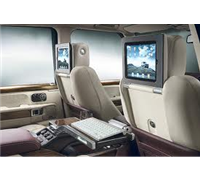
Its predictions that iPads will also make their way into in-car infotainment as a backseat entertainment unit have already been realised by Range Rover, although a visit to any car forum on the net will show that there are several fanatics who have also included iPads on their dashboards.

But what of the safety concerns? The Federal Government is currently investigating safety initiatives governing smartphones, navigation and other technology in cars following research released by the NSW Police and the RTA that revealed that up to 30% of people involved in accidents had been talking on a mobile phone or were sending a  text message while driving.

“Road Safety is a very emotive issue,” said Graeme Redman, managing director of digital radio manufacturer, Pure Australasia. “If the traffic authorities have anything to do with it, it will be banned altogether.” 

Last week, BMW became the first to offer digital radio as an add-on in their Series 5, 6 and 7 in Australia, with several other audio firms waiting in the wings to launch new products. 

Speaking at the launch of a new subscription music service available to digital radio users, Redman said: “The problem is that drivers cannot manage the level of distractions they are subjected to yet. But, where safety is a concern, there may be moves to disable the information displays and still enable systems to play digital radio in the car,” he said. 


Click to enlarge

Orion has recently released an all-in-one system that packs navigation, safety, hands-free calling and multimedia into one in-car receiver. The AVR6.1 is a good example of what infotainment systems can offer today.


With Australia gradually tuning into digital radio, at least in the capital cities, a DAB+ receiver comes standard in the unit. DVD and CD readers are part of the package, but are overshadowed by digital media inputs like SD, USB, Aux and Bluetooth.

Some of the staples of modern in-car entertainment systems include Bluetooth connectivity for mobile phone integration and navigation options in tow. Motorola is taking these utilities and integrating them with its smartphones and the car dashboard.

“Motorola has released its first generation of in-car entertainment products that compliment handsets,” said Angela Menabue, Motorola’s Business Manager for Companion Products.

The In-Car Defy dock and Milestone2 docks integrate smartphone functionality to the (almost) hands-free entertainment experience.

The Defy dock plugs a Motorola Defy into the car’s entertainment system with a clean, six button interface that stores everything from widgets and apps to navigation and entertainment.

“It’s part of Motorola’s vision to create greater ecosystems, and we’ll see more of this with future products,” Menabue added.


Throwing apps into the equation, just like smartphones and tablets, also looks to be part of the future of in-car infotainment systems, and the companies involved are already seeing growth.


“We’re seeing a lot more apps being developed by third parties and people like Google. There’s the MotoSpeak app for in-car systems, for instance, that’s made specifically by Motorola.”


Click to enlarge
The Asteroid, from Parrot is due in Australia around July/August

Parrot has taken this straight into the in-built car receiver with its Asteroid platform that integrates web apps and hands-free calling into a typical music player-style fixture.


“We’re also looking to add text-to-speech later this year so you can do things like dictate text for SMS,” said Peter George, Parrot’s Country Manager for Australia.

Parrot anticipates a launch of Asteroid around the July/August mark in Australia, bringing with it a slew of apps like Google maps, internet radio options, navigation and even services like Skype, though “that’s just the beginning,” according to Peter.

While entertainment fixtures in cars are getting an upgrade, GPS units are also upgrading and tailoring themselves to the connected user.

Marketing Manager for TomTom’s Asia Pacific unit, Nick Saisanas said that the in-car device market would probably see a move toward connected devices with dynamic content like sending traffic information to and from navigators.

He points to a move from solely GPS to integrating GPRS – the difference being that GPRS is a data service technology that allows information to be sent from the device. 


TomTom currently uses iQ Routes as a traffic condition notifier on its GPS units, but this software is based on historical data. What GPRS integration does is add the ability to send traffic data from the navigator so that everyone can have access to up-to-date traffic information.


Click to enlarge
Garmin uses an FM traffic subscription service to get data from an FM traffic antenna.

Garmin currently uses an FM traffic subscription service that allows compatible devices to get traffic data from an FM traffic antenna/receiver.


GPS companies are finding that their devices are changing to suit the style and functionality of a smartphone to stay ahead on the market. This means more functionality on a thinner unit with a bigger screen.

“With everyone having a smartphone or iPhone, [GPS] units are getting slimmer and we’re adding dual orientation like a smartphone,” said Ian Edwards, National Sales Manager at Garmin.

Apps jumping into the driver’s seat are extending into GPS navigation, with the big companies hopping onto the smartphone and tablet bandwagon.

TomTom’s Nick Saisanas said that while the TomTom iPhone app was not garnering very large revenue compared to the main GPS devices, it was seeing growth.

OZ Retailers Facing Mastercard & Visa Problems Today

Australian retailers may have a few problems today processing Mastercard transactions after a group known as Anonymous hacked into the company’s online operations following Mastercard’s decision to stop processing payments to the whistle-blowing site Wikileaks.

In what they called “Operation Payback”, a network of online activists have targeted firms including Mastercard and Visa, in the latest front of the battle over leaked US diplomatic cables.

The group, known as Anonymous and thought to be 1,500 to 2,000-strong, flooded the websites of the credit card companies, and that of the Swedish prosecution authority, with millions of bogus visits.

Their attack came after the financial giants, along with the online payment firm PayPal, announced they would no longer process donations to the anti-secrecy group.

The credit card sites among several targeted by the group of hackers, who have pledged to pursue firms that have withdrawn services from Wikileaks. In other moves consumers are reporting that Visa’s website appears to be experiencing problems. Anonymous also claimed to have attacked Visa.

A Harvey Norman franchisee said it was too early to tell whether there were problems in Australia while a JB Hi Fi operator said that to date no issues have been reported.

In the UK the BBC was contacted by a payment firm linked to Mastercard that said its customers had “a complete loss of service”.

In particular, it said that an authentication service for online payments known as Mastercard’s SecureCode, had been disrupted.


Other readers have also said that they have had problems with online payments. The scale of the problems is still unclear.

Mastercard has not responded to the claims.

It said in a statement that it was making “significant progress” in restoring full service to its website as we wrote this story.

“Our core processing capabilities have not been compromised and cardholder account data has not been placed at risk,” it said.

“While we have seen limited interruption in some web-based services, cardholders can continue to use their cards for secure transactions globally.”

Annonymous said that websites that are bowing down to government pressure have become targets.”

PayPal, which has stopped processing donations to Wikileaks, has also been targeted. On Monday the US owned firm said Wikileaks’ account had violated its terms of services.


“On 27 November the State Department, the US government, basically wrote a letter [to Wikileaks] saying that [its] activities were deemed illegal in the United States,” PayPal’s Osama Bedier told the Le Web conference in France.

Before the Mastercard attack, a member of Anonymous, who calls himself Coldblood, told the BBC that “multiple things” were being done to target companies that had stopped working with Wikileaks or which were perceived to have attacked the site.

“Websites that are bowing down to government pressure have become targets,” he said.

“As an organisation we have always taken a strong stance on censorship and freedom of expression on the internet and come out against those who seek to destroy it by any means.”

“We feel that Wikileaks has become more than just about leaking of documents, it has become a war ground, the people vs. the government,” he said.

Supporters of Australian Julian Assange yesterday also launched cyber attacks on the Web site of the Swedish prosecutor’s office which is seeking the extradition of Assange form the UK over sexual misconduct charges.

PandaLabs, a malware detection laboratory, says that the prosecutor’s Web site, aklagare.se, was brought down by members of the cyber “hacktivist” group.


The attack came as Assange was refused bail by a British judge over the charges that aim to have him extradited to Sweden.

Sean-Paul Correll, a threat researcher at PandaLabs, confirmed that the group had launched the attack, not only on the Swedish prosecutor’s Web site but also others including PayPal and the Swiss Post Office bank which have frozen WikiLeaks accounts – though the Swiss bank says he can have the $41,000 proceeds as soon as he establishes another, legal, account, something that may be difficult if he’s languishing in a Stockholm jail.

Fairfax Management Changes

Fairfax has stopped short of bringing its online and print mastheads together, but taken a step in that direction.

The company has announced to a new structure to the ASX that sees most of its online classifieds move out of Fairfax Digital and combine with their print counterparts.

Meanwhile Fairfax’s powerful New Zealand classifieds site Trade Me will now come under the auspices of Fairfax Digital boss Jack Matthews.

But the link-up does not yet cover editorial. Andrew Jaspan, the former editor of The Age complained in a radio interview after he was ousted that he had no control of the online masthead.

Under the new set-up – described by CEO Brian McCarthy as “evolutionary” – Fairfax has been divided into operating groups based on metro, regional, business publishing and online.

The key management roles include:

Jack Matthews – Fairfax Digital
Lloyd Whish-Wilson – Sydney publishing
Don Churchill – Melbourne publishing
Michael Gill – Fairfax Business Media
Allan Browne – Australian regional publishing
Grant Cochrane – Agricultural publishing
Allen Williams – NZ publishing
Ken Nichols – Illawarra, Newcastle, ACT publishing
Graham Mott – radio
A Fairfax insider told Mumbrella: “This is not revolution. There will be increasing integration of print and online as we go forward, but it will be a step-by-step process.”

No Credit For Shippers Set To Hurt Technology Industry

Consumer electronic and PC technology companies could be facing a shortage of stock running into the peak Xmas buying period because global shipping is grinding to a halt because of the refusal of banks to issue letters of credit.


Australian distributors and vendors who are expecting their biggest shipments of the year over the next two months have told ChannelNews that they are aware of the problem but are still waiting on shipping advice from their parent Companies or overseas vendors.

Alan Kohler of the ABC and a writer for Business Spectator said that he was alerted to this by TJ Marta, of RBC Capital Market’s New York-based fixed income strategist on the weekend, during an interview for the ABC’s Inside Business program.

He said that the Baltic Dry Index of bulk shipping rates has collapsed by 89 per cent – from 12,000 in May to 1355 last night. In October alone it has fallen 61 per cent.

In his column in the London Telegraph last night, Ambrose Evans-Pritchard wrote that he believed shipping was now slowing as fast as it did in late 1931.

The Business Spectator went on to say that Khalid Hashim, managing director of Precious Shipping, Thailand’s second-largest shipping company, was quoted in the Taiwan News yesterday as saying: “Letters of credit and the credit lines for trade currently are frozen. Nothing is moving because the trader doesn’t want to take the risk of putting cargo on the boat and finding that nobody can pay.”


Here’s another quote, from Steve Rodley, director of a London based shipping hedge fund called Global Maritime Investments: “The whole shipping market has crashed. But the biggest ships are suffering particularly.”

Letters of credit are issued by banks to guarantee payment at the other end of a shipping transaction. In effect, the bank substitutes its own credit for that of the customer, so the shipper doesn’t have to hunt around in a foreign land trying to track down payment.

Exporters are getting caught up in the problem because their customers are saying “we can’t pay you until our customers pay us”, so there is a knock-on effect that is affecting manufacturers and bulk goods suppliers everywhere.

See Business Spectator for more on this story see www.businessspectator.com.au

CE & IT Industry Now In The Hands Of The Dollar

Consumer electronics, IT and Hi Fi vendors are set to get hit hard by the falling Australian dollar. Yesterday Sony announced price increases by up to 30% with both Samsung, LG and Panasonic saying that they will have no price increases untill the new year when it expected that they will lift prices by up to 15%.

Speaking at the 2008 SmartHouse “Best Of The Best Awards” Carl Rose the Managing Director of Sony Australia told a large audience of industry executives that that one key issue will dominate the consumer electronics industry in the first quarter of 2009 price rises and the “dollar, dollar and the dollar”.

Overnight the dollar has dropped  following the release of a US manufacturing activity report which is the worst in 26 years added to evidence the US was already in recession. A smaller than expected interest rate cut from the Reserve Bank of Australia (RBA) today is tipped to give the domestic currency a short-lived boost, but weaker than forecast domestic retail sales data could spark fears about the local economy.

Already CE and IT distributors are feeling the effect of the falling dollar with some analysts now predicting a $0.60 dollar by Xmas which could result in further price hikes especially from Japanese manufacturers like Sony, Sharp, Pioneer, Mitsubishi and Fujitsu who are also having to battle the value of the Yen to the US dollar.

At 7am AEDT, the dollar was trading at $US0.6453/57, down marginally from Monday’s close of $US0.6465/70.  During the offshore session, the local unit traded between a midnight low of $US0.6384 and a late high of $US0.6482.

Risk appetite for high-yielding currencies came under pressure after the Institute for Supply Management’s US manufacturing report for last month posted its weakest reading since May 1982.   Manufacturing sector activity fell to 36.2 points in November, down from 38.9 in October, with a reading below 50 indicating a contraction.


The dollar and the euro both weakened as equity markets struggled, with Wall Street’s S&P500 index losing more than five per cent during New York trade.  Bank of America senior currency strategist John Rothfield said the dollar and the euro recovered from their session lows later in offshore trade as US Federal Reserve chairman Ben Bernanke said the central bank would buy more longer-dated US Treasury notes.

“That’s weighing a little bit on the US dollar, just this idea the Fed is doing what it can through quantitative easing to support the US economy,” Mr Rothfield said from San Francisco.  The supply of US dollars would increase if the US Fed bought more US Treasury bonds.

With debt futures already pricing in a 100 basis point rate cut from the RBA, Mr Rothfield said the dollar would enjoy a temporary rally if interest rates were eased by a lesser 50 or 75 basis points.

“That would be a temporary phenomenon until markets assessed if the Reserve Bank is behind the curve,” he said.  “Although the Australian dollar is undervalued, I’m not confident that if you get a spike you’ll get follow through.”

A one percentage point move would take the cash rate to 4.25 per cent for the first time since May 2002.

The RBA annoucement is due at 2.30pm AEDT.

Australian retail sales data for October is due at 11.30am AEDT, with economists expecting a 0.4 per cent decline, seasonally adjusted.

Mr Rothfield said a bigger than expected contraction in retail trade would spark a sell-off in the dollar, as traders worried about the possibility of the domestic economy sinking into a recession, despite assurances to the contrary from the RBA and the Treasury.

“The onus is on the data to show the official sector is right in predicting no recession,” he said.

What Good Customer Service Really Is

Finding new customers is much more expensive than retaining existing ones. Customer service is more than just keeping customers happy. It’s about revenue, because a lost customer means lost revenue and an unhappy customer can damage your reputation.

Some aspects of effective customer service are:

knowing your customers’ needs;
identifying your key service activities;
delivering superior service;
follow-up.
In a competitive marketplace it makes sense to aim to provide superior service.  Customers base their purchasing decisions on the service they receive, not just price, quality and availability.

Build superior customer service into your business:

Incorporate customer service strategies into your business and marketing plan.
Develop a business vision that reflects your commitment to good customer service and let your customers know about it.
Make sure everyone involved in your business shares your commitment.
Customer service check:

Do you tend to over-promise and under-deliver?
Are there opportunities to improve your service?
Do you know if your customers value your customer service initiatives?
Do you have systems in place to deal with unhappy customers?


What Superior Customer Service Means

Word-of-mouth referral is the most effective form of promotion.  It costs nothing and carries a lot of credibility as it is based on personal experience.

Satisfied customers not only tend to return to buy again from you but are also likely to talk positively about your business to others.  A bad customer service experience is shared with around 10 other people who are likely to tell another 10.

Superior customer service is service that exceeds your customers’ expectations and will make your business stand out from your competitors’.  To be effective, customer service must be consistently good in every part of your business.  From the moment the customer thinks of purchasing, right through to the final sale, there are opportunities for the business to add customer service to the process.

 Better Business Tip
Go to any amount of trouble for all of your customers.  Don’t treat “big” or “small” customers any differently.  Customer referrals are powerful and a customer who feels complimented that you’ve gone out of your way to help them with a small matter is very likely to know someone who’d fit into your “big and best” customer category.


Top of Page

Knowing Your Customers’ Needs

There’s no point providing services that are not valued by your customers.  It’s, therefore, important that you develop a good understanding of their needs.

Some ways of achieving this are:

Regularly ask your customers about your business services.
Provide feedback forms for your customers to complete.
Phone or visit customers at critical points, eg after the initial sales, and ask if your product or service meets their needs.
Consider using an outside agent to get feedback from your customers.
Welcome customer complaints and manage these promptly and positively to avoid loss of customers and negative word-of-mouth.
Keep a list of customer complaints to identify any patterns and the cause of dissatisfaction.
Learn what your competitors are doing to achieve customer satisfaction.
Customer feedback is most effective when:

you hear both positive and negative feedback;
you obtain feedback regularly;
the feedback is focussed on what the customer wants or doesn’t want.


Identifying Your Key Service Activities

Every interaction you have with your customers offers you an opportunity to impress them and create a positive perception of your business.  It is useful to identify those key service activities so that you can review your performance and decide on what initiatives you can take to provide superior service.

Typical interactions include:

responding to phone calls;
providing product and service information;
taking customer orders and discussing service requirements;
sending follow-up documentation, eg to confirm orders;
billing and managing payments;
after-sales service;
dealing with after-sale complaints.
 Better Business Tip
When communicating with your customers, keep your language positive.  Rather than say, “We won’t be able to see you before Friday”, rephrase your statement to “We’ll be able to see you on Friday.”  Presenting a positive manner and approach in even the smallest ways contributes to an overall positive impression of your business.


Delivering Superior Service

Consider some key factors that contribute to superior customer service.

Provide a complete experience  Step back and make sure that all your customer needs are met from the beginning to the end of the sales process.  Make the customer feel valued, even after the sales process is complete, eg by offering after-sales help such as installation.

Reliable service  Deliver your products and services on time and as requested.

Accountability  Take full responsibility for providing high-quality products and services.  Make sure you honour guarantees/warranties on your products.

Efficiency  Deliver your product/service with minimum hassle for your customers.

Assurance  Create customer confidence in you through your professional approach and demonstrated knowledge of your product/service.  Customers must be able to trust your word so always act on your promises.

Attention to detail  Attend to even the smaller details.   Show you care and that you are prepared to provide individual attention to every customer.

Appearance  Make sure your image and appearance reinforce customer confidence in your services.

Keep in touch  Keep customers regularly informed on progress and developments – but make sure this is welcomed by the customer.

Recovery strategies  Put processes in place to allow you to recognise problems when they arise and take action to fix them.

Value adding  Explore how you can offer that little bit extra, such as supplying complimentary products or services after the initial sale, or providing valuable follow-up information.

 Better Business Tip
One of the most important things your customer expects from you is accuracy.  You’ve probably thought the same yourself as a customer.  “If they can’t even send my account to the right address, how can they look after my …”, or “I ordered herb bread and you’ve brought out garlic.  How hard is it to get THAT right in a restaurant?”  Make sure your employees are well aware that any information given or sent to customers must be accurate.


Follow-Up

Your customer service initiatives don’t have to stop when the sales process is complete.  Following up with your customers can reap benefits through repeat purchase and referrals.  However, any initiative you take must be seen by the customer to be value adding.

Initiatives to consider:

Send thank you notes.
Make follow-up calls to check that the product or service has been satisfactory.
Provide an e-newsletter or use email alerts for new products/services.
Recognise customer achievements through certificates or awards.
Make follow-up visits without necessarily making a sales pitch.

Written By NSW Department Of Business Development

Class Action Bought Against Major CE Retailer

Only in the USA. Anyone with an investment in the consumer electronics industry, knew that by mid 2009 sales were going soft and most people knew that Best Buy had an advantage after their arch rival Circuit City collapsed that helped them hold up sales.

Despite this a Pennsylvania-based law firm has filed a class action lawsuit against Best Buy on behalf of company shareholders who claim the company misrepresented its finances. A company spokeswoman said Best Buy will fight the suit.

The suit, filed in the United States District Court for the District of Minnesota by firm Barroway Topaz Kessler Meltzer & Check, accuses the company of misrepresenting its financial health to its shareholders, including “that demand for the company’s electronic products was declining and/or weak.” The complaint also alleges that the company knew but did not disclose declining performance until much later than they should have.

The suit is seeking unspecified damages.

“Best Buy has a long-standing practice of not commenting on pending litigation. That said, I can tell you that we believe the case lacks merit. We will defend the case vigorously,” Best Buy spokeswoman Sue Busch Nehring told Dealerscope.

Reports: NBN Delayed Until 2020

The Senate has just approved the pushing back of the $36 bn NBN until 2020, it has been confirmed.
Broadband Minister Senator Stephen Conroy

“The build has expanded,” he confirmed to the Senate hearing today.

The minister has reignited controversy on the proposed broadband network, producing a  massive 23 pages long list of amendments to NBN legislation currently being debated in the Senate.

Conroy says the amendments will ensure the NBN operates as an open-access, wholesale-only network, to support vigorous retail-level competition for Australians.

But critics say Conroy’s amendments reveal NBN Co may end up with power to charge different prices for bush communities using wireless and satellite services than their city counterparts using fibreoptic cable.

That appears to go against assurances given to independent MPs last year that there would be uniform pricing across the country.

Many of the country’s leading telco’s including Telstra, Optus and TPG have all voiced criticism over the NBN.

Read ’23 Pages Of Amendments To NBN’ here