Smart Office

Navman’s “Greatest Leap” In GPS Navigation

Navman has released a new GPS range that, they believe, features one of the ‘greatest leaps’ in GPS navigation.

With a build-up like that, you’d imagine the GPS transforms into Optimus Prime, but I wouldn’t get my hopes up. Rather, the innovation spruiked by Navman is simply conversation-style directions. Could the next leap in GPS technology be so simple?

Is Less, More?

Research commissioned by Navman indicated people are barraged with information when driving. Sharing information that is relevant and presented in an easy-to-understand way is definitely a step ahead of the arithmetic instructions dictated by other GPS systems.

The voice guided navigation takes notes of a person’s surroundings and incorporates local landmarks and points of interests. “Before the Coca Cola sign turn right into Victoria Street” is just one example.

Navman also commissioned an independent survey that involved showing drivers footage of streetscape that featured a car dealership, (the same car dealership is in Navman’s Landmark Guidance). Participants were asked to look out for road signs and other landmarks in an effort to identify the street they would need to turn in to. 86% of the participants missed the street in the video, while 84% noticed the car dealership.  

When designing their new range, Navman prioritised safety. Roughly 20 per cent of the drivers surveyed said ‘they would be unlikely’ to take a break after 2 hours of straight driving, but 60 per cent of them would change their mind if they were guided to the nearest rest stop. As a result, Navman’s Driver Fatigue alert now offers a range of options where people can take their break.


Fruits of their Labour

Navman released two new GPS ranges, their MYseries and EZYrange.

The MY range is populated with the MY300LMT and the MY350LMT, which are both 5″ touchscreen units that feature Bluetooth and lifetime map updates. The MY350 is the top of the range as it has premium driver alerts AV-in and comes with a complimentary AV-in cable.

Although the company’s EZY range scored some new features, Navman is adamant the additions haven’t made the beginner series any more difficult to use. The EZY100T (4.3″) and the EZY200 (5″) make up the range, with the latter featuring in built Bluetooth and live point of interest search and dialling.

The full feature rundown following was provided by Navman in their official press communication.


The new Navman 2012 MY Series include the following new features and capabilities:

· Lifetime maps– the MY300LMT and the MY350LMT come with lifetime maps so Navman users can get up-to-date maps, released every quarter, with the latest information about red light, safety and combined cameras – giving them up to $400 worth of value each year!

· Improved premium driver alerts -in the MY350LMT, even more potentially hazardous areas have been flagged, such as areas with a sharp bend ahead, a steep incline or decline and an overtaking lane coming up, when the road narrows, known animal crossings or roads that are dangerous in icy or wet weather.

· Improved driver fatigue alerts – if you have been driving continuously for two hours, the device will warn you and can tell you about all possible options to make a stop nearby, such as petrol stations, public restrooms, food outlets or rest areas.

· Improved traffic information – Navman was the first GPS company to offer free lifetime Live Traffic subscription in its devices.  This year, its traffic feature from SUNA is even better with live traffic updates streamed continuously and all messages updated approximately every 30 seconds. Live traffic is now incorporated into the estimated time of arrival and data is updated continuously.

· Voice destination entry – you can give even more spoken commands now, such as adjusting the volume and brightness of the device.

· Smart volume – the volume on the device increases in increments the faster you travel.

· Improved SmartFind searches – the super-convenient SmartFind keyword search function will not only search from a database of street addresses and POIs, but will also include any information from Navman guides such as the Lonely Planet Guides, Wcities Guide, Lonely Planet Scenic Routes and the AAAT guide.


Additional features of the 2012 EZY range include:

· Instructions in Cantonese and Mandarin

· A Logbook to help you keep a record of journeys and mileage – handy for tax time

· Navman’s Smart Route option that uses historical traffic date to provide drivers with the best route to avoid traffic congestion at any given day and time

· Spoken street names

· Tunnel simulation so the driver’s GPS signal won’t be interrupted when travelling through tunnels

· SUNA Live Traffic updates can also be added to the EZY200 model

TomToms New Gear Fights Back At Smartphones

With smartphones stealing GPS market share, TomTom have been busy tinkering with their GPS units, looking for innovations and introducing services that will help them reclaim lost ground. At their frontline is its new Live services, including HD Traffic, and its just released Go Live range.

Its Go Live range consists of 4 new GPS models, the 820, 825, 2050 and 2050 World.


Click to enlarge
TomTom’s 2050 World

The Go Live 820 accommodates a 4.3″ resistive touch screen, is receptive to voice controls and can replace in-car speakerphones with its Bluetooth connectivity. And that’s just the base model.

The 825 is just as capable as the 820, except it has a larger 5″ touch screen.

The 2050 and 2050 World are TomTom’s premium GPS units, made from superior materials and incorporating more advanced technology. Both make use of capacitive touch-screen technology, offering an iPhone-esque experience when it comes to using its refined mapping system. You can pinch to zoom and swipe across with ease.

Although almost identical in every way, they’re worlds apart, as the 2050 World comes with the maps of 49 countries.

Where the 820 and 825 have an inbuilt and adjustable suction cap for mounting, the 2050s use an ‘easy click magnetic mount’, making it easier to position the unit. It’ll also eliminate the tell-tale suction cap mark that taints windscreens.

To make mounting easier, each TomTom in the series now features an accelerometer. A nifty addition, if users want to mount their TomTom to their dashboard, they can as the display just flips over.

Complementing the robust hardware is TomTom’s mapping system. The system’s graphics are crisp, making excellent use of its limited screen size to communicate a clear route to an otherwise preoccupied driver. It is focussed, detailed and intuitive, without distracting divers from the pleasures of driving.


Features like Advanced Lane Guidance extricate the tangled view that plagues junctions. The navigation screen switches from a bird’s eye view to a driver’s point of view. It displays the number of lanes and where you should turn off. They’ve really squeezed the full potential here, executing perfect timing, making sure it switches to and fro when the driver needs it.

TomTom maps are updated seasonally, with updates being released in December, March, June and September. Updates, however, are not free and will cost $49 per year. TomTom do offer a ‘Latest Map Guarantee’ saying “if a new map becomes available within 90 days of first year every user is entitled to download the latest map free of charge.”

Where Tomtom differs from other GPS units is its new HD Traffic. HD traffic takes the details that slow your drive down, like traffic, roadwork and accidents, into consideration when planning your route. It takes these real life scenarios into consideration, before navigating you into the thick of them.

A continuously updated traffic feed (by an impressive 2 minute interval) helps avoid areas that are congested, easing the city’s clotted arteries from dense commute and getting people to their destination quicker.

“The introduction of TomTom HD Traffic to Australia marks a fundamental breakthrough in the quality and functionality of GPS devices, giving Australian drivers real-time information about road conditions,” says TomTom’s VP Chris Kearney.

A one year free subscription comes with the purchase of any TomTom Go Live GPS, with the following year costing $69. TomTom do offer a website that delivers the same information on PCs at no cost, but the in car aid is where the inside scoop is most needed.


Click to enlarge
PC Friendly: HD Traffic can be acessed via TomToms online

Navigation units of present include an estimated arrival time, but anyone who has used one before would’ve noticed the constantly adjusted estimate, being pushed back further and further, moderating a theoretical estimate to adapt to real life conditions.

Each GPS sold feeds information back to Tomtom, such as the obvious speed and distance travelled, to help the company identify the bottlenecked areas.

Its new HD traffic may steal the show, but it is just one of many features that make up TomTom’s Live services. Older generation GPS units focused on delivering a route system alone. The new software concentrates on being a complete travel companion, feeding a five day weather forecast, verified safety camera alerts and Google local search.

HD Traffic has also been incorporated into its iPhone Application. Current owners of the $90 app can simply update to the new version (1.8) at no extra cost. They will need to pay a subscription for the Live services, either $7.50 monthly or $42 annually.

TomTom’s Go Live range is currently available, with the following prices:
TomTom Go Live 820 at RRP$299
TomTom Go Live 825 at RRP$349
TomTom Go Live 2050 at RRP$399
TomTom Go Live 2050 World at RRP$499

Asia Pacific To Experience Great FTTH And FFTB Growth

According to an Ovum, FTTH and FTTB combined is forecasted to surpass DSL’s wireline broadband in the Asia-Pacific region by 2014.

In the independent study, Ovum’s principal analyst and study co-author said “Ending 2010, four economies in Asia-Pacific had more than 25% household penetration. South Korea, followed by Japan, Hong Kong, and Taiwan tops the list”.

Also evident in the study was a low household penetration from China, FTTH/B subscribers’ base reflecting Japan’s 2010 end of year figure.

“Despite a very low household penetration of only 4%, China will take first place for FTTH/B subscriber base, which will exceed 74 million in 2014, representing almost 60% of the FTTB/H subscriber base in the 16 economies”.

FTTH/B growth rates were also noted across the economies, as government policies, broadband initiatives and population characteristics influence it. The top four will continue to experience FTTH/B growth, although at a slower rate, while other economies continue to grow in both FTTH/B and mobile broadband.

“Varying growth patterns across the different countries in Asia-Pacific are seen, reflecting the diversity of the region.  For example, Australia’s FTTx CAGR from 2010 to 2014 will be very high (180%) as they are starting from a low base and have plans for significant investment (National Broadband Network), while Japan’s growth  will be lower (9%) since its existing base is very high,” Kunstler concluded.

Siri Could Work on iPhone 4, If Apple Wanted

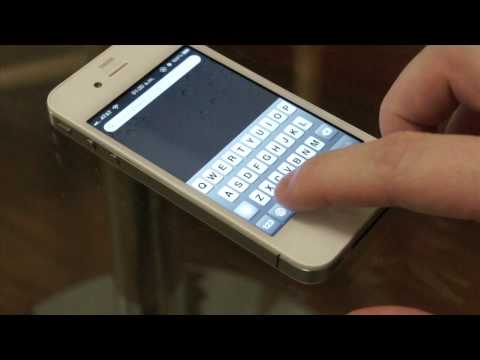
A hacker has proven Siri has the potential to work on Apple’s iPhone 4, but its servers are actively rejecting any Siri requests that originate from a phone other than its new iPhone 4S.

iOS aficionado Steven Troughton-Smith has hacked the code to make the Siri voice feature compatible with the iPhone 4. According to Smith, the software runs fairly well, evident in the demonstration video below.

PCMag claim Siri has the potential to work on an iPhone 4, if Apple wanted it to. Siri requires access to server-side software to determine what inquisitions are being yelled into the phone. Since the servers sit on Apple’s end, they verify what kind of phone the request is being made from, and are actively rejecting any Siri requests from any phone other than an iPhone 4S.

Without access to the server, Siri is just a space-wasting application.

With iOS introducing the least amount of innovations yet, Apple are banking that Siri will be a big enough draw for customers to ditch their old iPhone 4 for a slightly different iPhone 4S.

Review: Jabra’s New Drive Hits The Road

Jabra’s new drive is a sleek little Bluetooth that has specs and a pricetag to rival some of its more expensive competition, but is it a complete car companion?


Click to enlarge
Driving Bliss: Jabra’s Drive Bluetooth

Jabra’s drive is well designed, fusing simplicity with a premium look and feel. Dominated by a sleek black stereo mesh, it strikes a refined contrast with the steel band’s finish. It’s not just pretty, with sturdy build quality that is void of taxing weight.

Focusing on being a Bluetooth for everyone, simplicity runs through its DNA. Its face has only three large buttons, their size a necessity when you’re preoccupied driving. The front speaker doubles up as an answer/hang up key, with up and down volume buttons up top, and the power switch on its side. Keeping it company is the generic micro USB port that is used for charging.

Pairing is handled easily, automatically entering the mode when the on switch is flicked for the first time. Alternating blue and red lights easily communicate this to users, letting them know it’s the phone’s cue.

Like any Bluetooth, it’s a simple matter of jumping into the phone’s menu, looking for connectivity and nominating the Jabra Drive. After entering the requested passcode, your phone will be paired, handling a total of eight phones. It will even handle two phones paired simultaneously, aiding passengers if they choose.

It snugly fits on your car’s sun visor, giving it a great audio vantage point. As your phone rings, simply press the speaker mesh which doubles as a large answer button. There’s plenty of Bluetooths that respond to vocal cues, but very few of them work well. Even though the Drive lacks voice activation, its button system is full proof, keeping in car Bluetooth simple and reliable. 


The single speaker is impressively loud, making it easy to communicate at speeds of up to 60km with the window down. Go any quicker than that though and you’ll struggle to hear over the wind interference. But as long as the window is down, call volume is loud and crisp.

However, when using the stereo Bluetooth option, which lets you stream music straight from your phone through the Bluetooth speaker, it begins to distort at almost full volume, showcasing the speaker’s limited range when under the strain of music audio.

Depending on what features your phone offers, most of your interactions can be handled easily through the Drive. Features like the Samsung Galaxy S2’s voice application, which lets you access messaging, calling, navigation and music, worked seamlessly. Activating it was as simple as holding down the call button, and then saying ‘Hi Galaxy.’

It will even communicate GPS prompts, provided your GPS is equipped with Bluetooth. It’s great that it offers the option, but futile, as many GPS units have speakers capable enough of rivalling the Drive’s.

The battery life was exceptional without needing a charge throughout the seven day test. Jabra say it’s capable of 20 hours talk time and 30 days standby time, making it a very reliable car companion. The Drive tells you when the battery is running low, using voice guidance to warn you when it’s time for a charge.

When charging is due it will have to be via a USB port or car charger, as it doesn’t come with mains charger. Failing to provide at the least an adaptor (similar to the iPhone’s mains + USB combo system) means charging will take a long 2 and a half hours.

Even with its limited music range, the Drive is an incredibly well built and thought out product. It is purpose built, designed to be a car speakerphone first.

But above all, what elevates this device is the exceptional value for money it offers. Retailing at $59.95, it’s noticeably cheaper than many of its rivals, without compromising quality in the pursuit. Thought out, well-built and reliable, it is a complete car accessory.

Galaxy S4 Video Surfaces 2 Days Before Launch

A video has surfaced of the supposed Galaxy S IV and it is convincing


Image Source: 52Samsung

Stylistically it resembles an evolutionary Galaxy SIII as the curved corners, a hardware menu button, the single LED light and even the colour seems related to its forefather. It does differ by featuring a larger screen and a finer bezel right around. Even the touchwiz interface being used lines up with leaked screen shots as it’s thematically white and not black.

The hardware appears to fall in line with suggested specs too. According to images released by the same source, 52samsung.com, the smartphone has a Full HD display, a quad-core CPU and a 12.8MP camera.

The model number GT-I9502 marks the supposed S4’s as it is an overseas model; complete with dual sim card slots. The single card sim version is expected to carry the moniker GT-I9500.

Although this leak is compelling, there’s no way to know for certain if what we are drooling over is the Galaxy S4. Well, not until the March 14 announcement.

Source 1, Source 2 | Via 1, Via