Smart Office

USB Flash Drive Meets Security Standards

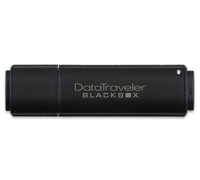
DataTraveler BlackBox is a USB Flash drive available in 2GB, 4GB and 8GB capacities that has met Federal Information Processing Standard (FIPS).


Click to enlarge
Gaining FIPS 140-2 certification requires a validation process that meets federal requirements set by the National Institute of Standards and Technology. This is critical because many governmental agencies in the United States mandate that sensitive “data at rest” (i.e., all information not in the network) must be encrypted with the FIPS 140-2 standard.
 “We are very excited that our DataTraveler BlackBox met all federal requirements established by the National Institute of Standards and Technology (NIST),” said Vaughan Nankivell, Regional Manager- Australia and New Zealand for Kingston Technology. “This certification, along with other enhanced security features, makes the DT BlackBox an ideal way to store and transport confidential documents with the utmost confidence that the data is secure.”
 The FIPS Level 2 standard requires the DT BlackBox to run a power-on self test which verifies that the encryption architecture is functioning each time it is plugged into a USB port.
The DataTraveler BlackBox features 256-bit hardware-based AES encryption via a dedicated processor which automatically encrypts and decrypts data on the fly. The drive automatically locks down after ten consecutive failed password attempts, thus helping to prevent unauthorised access if the drive is lost, stolen or misplaced. 


Features include:
Speed Rating(2): data transfer rates of 30MB/sec. read and 20MB/sec. write
Enhanced(3): for Windows ReadyBoost on Vista-based systems
Compatible Operating Systems: Windows Vista, Windows 2000 (SP4), Windows XP (SP1 and SP2), Mac OS (10.2x and higher), Linux (2.6 and higher)
Operating Temperature: 0 _ C to 60 _ C
Storage Temperature:  -20_ C to 85_ C

RRP
2GB: $189
4GB: $279
8GB: $489

Exclusive: Sneak Peek of JB Hi-Fi New Sydney Store

JB Hi Fi will tomorrow open its brand new store right in the middle of the North Sydney CBD
ChannelNews got an exclusive look at the new store which is packed with content, portable devices, tablets, software and smartphones.

Located at the junction of Walker and Mount Street, the store, which does not sell TVs or home theatre gear, is designed to cater for “lunch time traffic and passing trade”, and the Company is marking the location in an effort to build weekend traffic on Sydney’s North Shore.

The closest JB Hi Fi stores to the new location are based in the City and Artarmon, where JB Hi Fi sells their full range of merchandise.

The North Sydney store features extensive merchandising for headphones and portable devices with several vendors investing in point of sale merchandising kiosks.

The newest JB Hi store to open in Oz says a lot about the current state of the technology industry – there’s a Samsung stand with its line of Galaxy Tabs, Wi-Fi -ready cameras, and notebooks taking pride of place at the front to the store, alongside its accessories. 


Meanwhile, taking second place behind Samsung is Apple’s merchandise including Macs, iPads and iPod accessories.

This appears to be a reflection of Samsung’s new found dominance in the technology industry, as demand for its Galaxy Tabs and smartphones intensifies, at the expense of the once undisputed leader, Apple.

There is also a clever audio space in JB’s North Sydney store, with Bowers and Wilkins, Pioneer, Sonos and wireless audio systems on display where consumers can not only listen to tunes on range of headphones from Beats, Sennheiser and SkullCandy, but the best bit is there are several mirrors where you can admire how the fashionable headgear looks.


But the store also carries a slew of other audio gear, speakers and accessories from JBL, B&W and Sony, and the rear of the 890 square metre store is completely dedicated to DVDs, music and games.

There’s also a range of smartphones from HTC, Samsung and Apple, as well as Belkin networking and software, including Microsoft’s new Office, out today.

It is also interesting to note Tech2Go consumer electronics store recently shut its doors in the nearby North Sydney Greenwood plaza shopping centre after less than a year in operation.

The other nearest competitor is a small Dick Smith store on Miller St, North Sydney.

We will report back tomorrow to see how its first opening day fared.

New Sharp Projectors Now Brighter

Sharp has introduced two new projectors in its affordable business-targeted Notevision range, which incorporate new BrilliantColour technology promising bright, vivid colours.

The new DLP models (F312X and F212X) can project high-resolution (but not full 1080p HD) images up to UXGA (1600 x 1200) and SXGA+ (1400 x 1050) compatible in Intelligent Compression System.
 
The top end model offers 3000 ANSI lumens to the picture, while the lower-end offers 2300 ANSI lumens.

Because the projector is designed for use in conference rooms or classrooms, Sharp says it has designed the remote control accordingly, with presentation assist functions such as page up/down, GUI pointer etc.

Other features include direct power off, auto restart and up to 20 degrees keystone correction. The exhaust system is located at the front of the projector to help minimise any viewer disturbance from fan noise or airflow, the company says.
 
The projectors also sport a DLP sealed system and filter-free lamp construction. The new lamp design is easily replaceable by the user and offers a lifespan up to 4,000 hours, the company claims.
 
Connectivity options include DVI, (compatible with HDCP) computer/component (mini D-sub 15 pin), S-Video (mini DIN 4 pin), video (RCA), audio, USB (Type B) and RS-232C.
 
RRPs: $1999 (PG-F312X) and $1599 (PG-F212X)

See: www.sharp.net.au

HP Boss To Get The Boot & Replaced By eBay Chief?

Leo Apotheker could be about to be replaced with ex-eBay chief by its increasingly anxious board, sources have told Reuters.


Click to enlarge

Change is already nigh over at Palo Alto, recently announcing a shock change in direction intending to spin off its PSG group including PC and notebook business – to focus on software business – a move spearheaded by Apotheker himself, who has been in the job less than a year.

HP’s board of directors “is thrashing out a host of issues, including whether to name Whitman as the interim CEO,” the source said.

This comes as the No.1 PC maker in the world faces market incredulity, major shareholder discontent and free falling share prices, following the move to ditch its hardware ops.

Read Apotheker Ousting: HP ‘Risky Business’ As Future Hangs Uncertain Here

Ex eBay CEO Meg Whitman may be announced as interim leader of Hewlett Packard in the coming weeks, source indicated. Shares immediately rose up 6.6% to close at $23.96 yesterday on the US stock market, following the news.

The ousting of the German native, the third CEO alongside Carly Fiorina  to be booted by the HP board in a matter of years, comes as no surprise to many analysts, who say it was only a matter of time.

“He was doomed from the beginning,” analyst Brian White, Ticonderoga Securities, said. “The die was cast for whoever stepped into that position.”

Hewlett-Packard has also just begun layoffs at its mobile device unit which makes the webOS operating system. The move follows discontinuation of HP’s TouchPad tablet computer, which went on sale here for just $98 last month as it sought to offload excess inventory.

Phased out by the company a month ago in a move that resulted in a stampede for the product, HP said the layoffs follow its decision to shut down the mobile devices business during its fourth quarter, which ends October 31.

Several staff members already have left on their own volition; but more than 500 are expected to lose their jobs involuntarily in the next few days.

The company said it would give notice to employees by the end of September.


Unclear is the future for former webOS chief executive Jon Rubinstein, a former senior software executive at Apple. He’s now answering to Todd Bradley, VP of HP’s personal systems group – but that group will either be sold or spun off under CEO Leo Apotheker’s latest plans.

Some folk are asking whether Rubinstein could be attracted back to Apple, which might appreciate some visionary drive following the retirement of Steve Jobs.

Wireless LAN Makes Sense

Wireless LAN switches are helping IT departments im SMB organisations to make sense of wireless networks. We report on the latest technologies and deployments trends.

Wireless LAN technology is almost certainly the most pervasive wireless computing technology to have reached the SMB market so far, with equipment sales (including those to consumers) expanding 56% to $2.5bn in 2004, according to Infonetics Research. Users need simply to plug a WLAN access point (AP) on to the end of their PC’s Ethernet connection and they have an instant wireless network.

As with other mobile technologies such as PDAs and smart phones, many of these deployments have taken place out of sight, and therefore beyond the influence, of IT departments. And that, as CBR has written on numerous occasions, leaves a veritable barn door open for miscreants to pillage, poach, disable or otherwise attack corporate systems.

The situation has, thankfully, improved as WLAN technology has become more widely understood. RSA Security’s 2003 analysis of WLAN showed that only 34% of the 1,078 APs it encountered lacked the basic WEP (wireless equivalent protocol) encryption of 802.11, down from 63% in 2002.

“In the location we’re in I can sit and pick up four or five networks. Some are WEP-enabled, some are not. We could pick up the keys quite easily,” says Matt Hobbs, head of technical operations with online entertainments booking service Lastminute.com, which is based in London.

The unavoidable conclusion is that most of the APs deployed in capital cities were still effectively outside the control of IT professionals. But the proliferation of APs continues exponentially. RSA’s findings showed a 229% increase in AP numbers between 2002 and 2003. It would be little surprise to see that upward curve maintained or exceeded in 2004.

Where APs are not under the jurisdiction of IT departments, this situation can easily run out of control. New security holes can open almost anywhere on a network and detection, especially in multi-site or otherwise highly dispersed network configurations, becomes almost impossible except through intensive manual searches.

It can be difficult to know who is accessing the corporate network and for what reasons. Given the huge efforts to which IT departments have to go to secure their wired networks, it is no wonder that many CIOs and IT managers prefer simply to preclude the use of WLANs.

However, with the directive for evaluating or implementing WLANs typically coming from top-level executives rather than IT departments, CIOs are often left with little alternative than to begin to understand the challenges the technology raises, whether they want to or not.

“Talking from the IT department side we’ve probably buried our heads in the sand a bit when it comes to wireless. We’ve been worried about security problems,” says Peter Faulkner, network team leader with a major local  Council “Wireless was driven by management and by the fact that our building was really swamped by wiring. Those were the two things that really drove our hand.”


Management challenges

Even assuming that APs are under the control of IT, their rapid spread puts additional pressures on IT departments over and beyond securing them. Beyond the need to rewrite security policies to include wireless access, widely dispersed APs create all manner of management and implementation challenges.

Positioning of APs for coverage and aesthetics, different standards (such as 802.11a/b/g and, soon, 802.11n), reliability and performance, deploying upgrades, mobility from AP to AP and integration with existing systems are all issues that must be addressed, even in a limited WLAN deployment.

Most APs have been designed to embody much of the necessary intelligence for WLANs, in the form of protocols for user authentication, encryption, management, roaming and so on, inside a single box. In this scenario the APs are connected directly to wired network nodes and essentially form an overlay to that network, at the will of the same network resources.

This ‘fat’ AP approach is fine where wireless connectivity is only required at specific points in an enterprise, such as meeting rooms or lobbies. But where pervasive wireless connectivity is needed throughout the enterprise, the need to individually configure and manage each AP leaves this approach seriously compromised in scalability.

Nor, under normal circumstances, do fat APs support mobility from one to another without re-authenticating the user. The need to enable secure WLAN roaming G? without which WLAN is little more than an unwired replacement for a wired network G? helped to spawn a market for what are known as WLAN ‘appliances’ or ‘gateways’.

The combination of fat APs with WLAN appliances has proved acceptable in environments such as educational campuses and continues to provide a living to solution providers. But there is a growing consensus that in large enterprise deployments the fat-AP-plus-appliance approach has a limited shelf life, especially where real-time applications such as voice over IP (VoIP) over WLAN are being considered. Crucially, WLAN appliances, as originally envisioned, make little effort to secure or manage the air itself.

Features such as detecting and disabling ‘rogue’ APs brought onto the network without approval or radio frequency (RF) management functions, such as the ability to perform automated, dynamic site surveys, require the purchase of additional hardware.

Over the last 18 months there has been something of a revolution in the enterprise WLAN market as so-called WLAN switches G? sometimes simply called wireless switches G? have begun to gain ground over earlier methods for securing and managing such networks.

Where WLAN appliances have concentrated on encrypting traffic and authenticating users, WLAN switches aim to provide the full range of enterprise WLAN management and security requirements in a co-ordinated and comprehensive way.

Adaptive networks

Rather than spreading WLAN intelligence across fat APs and a range of appliances, wireless switches integrate WLAN management and security features, such as intrusion detection, firewall, VPN termination, mobility, packet capture and RF management, onto a single specialised device.

Established vendors such as Symbol Technologies and Proxim have been quick to take up the wireless switch baton backed by aggressive start-ups, including Trapeze Networks, Airespace and Aruba Wireless Networks.

“As we move towards enterprise deployment we’re seeing issues around security and scalability that require centralised management. We’re heading towards self-configuring, adaptive wireless networks,” says Peter Finter, director enterprise solutions at Nortel Networks, an OEM partner of Airespace. “The RF domain is one that IT managers have no experience at and can’t afford to gain experience at.”

Simplicity is key

The APs themselves, sometimes also known as access ports in this type of architecture, now become ‘thin’ featuring little bar the radio (although functions such as air monitoring may be pushed to the network edge in some vendor scenarios).

These multi-layer switches normally feature high-performance hardware and bespoke operating systems, helping to overcome performance issues. Centralised management of all functions is another key benefit. Nor need they intrude on the core network (although some may be deployed in the data centre if preferred). Simplicity in both deployment and management is the name of the game. Lowered costs are the promised outcome.


With Cisco (along with some other wired networking equipment companies such as Foundry Networks) remaining committed to the distributed, fat AP topology, it is no surprise to hear that wireless switch vendors target their invective against the giant.

“If you deploy a Cisco wireless LAN you need a client on every PC, an access point with certain features, appliances from Bluesocket and something to protect the air. Trying to do Wi-Fi without [securing the air] is like flying an airplane without air traffic control,” says Albert Benhamou, VP EMEA Aruba Wireless.

The downside of a switched WLAN architecture is the requirement to use the vendor’s proprietary APs, which will not work with other manufacturers’ switches. Where most of the security features of WLANs are now standardised, the transmission of control data for the features such as rogue AP detection and RF management are not.

This may not prove popular at sites with a legacy of fat APs, especially in mixed environments where a WLAN appliance might look more attractive. But there are hidden advantages in thin APs, for vendors as well as users.

“The main change [in WLAN] has been the processing engine in access points. If I told you you had to constantly upgrade that at every AP you’d say ‘don’t be silly,'” says Phil Keeley, consulting systems engineer with Symbol Technologies. “With a switch mechanism all security upgrades can be made from a PC in the middle of the network.”

WLAN switch pioneer Symbol introduced its first such product around two years ago. Concentrating WLAN intelligence in its switch has allowed the company to stretch the lifespan of its APs, and therefore its investment, over a much longer period. “We’d be releasing a new access point every year to keep up with developments,” says Keeley.

Even the main objection to thin APs, their proprietary nature, will recede in due course with the development of the lightweight access point protocol (LWAPP), which will define the WLAN to AP communication protocol.

The thorn in the side of LWAPP, which is being overseen by the IETF, is Cisco’s proprietary RF management approach known as Structured Wireless Aware Network (SWAN). The clash of philosophies between Cisco and the wireless switch vendors runs deep. But many have expected that the company, by far the biggest supplier of enterprise-class APs, not to mention its pre-eminence in LAN equipment, would eventually offer its own take on WLAN switches.

The April 2004 launch of a Layer 3 WLAN roaming product was read in some quarters as a sure sign that Cisco had crossed the divide, or was at least moving in that direction. Not so, says the vendor.
Where wireless switches are standalone machines, Cisco’s Wireless LAN Service Module (WLSM) is a blade for its Catalyst 6500 Ethernet switch, capable of supporting roaming of up to 6,000 WLAN users across 300 Cisco Aironet APs.

The system also provides centralised configuration and security policy enforcement. Firewall, intrusion detection and VPN services are also available, either natively from the switch through Cisco’s Supervisor Engine 720 or via other modules. Despite this, Cisco’s distributed WLAN credentials remain intact.

WLAN switches, as generally understood, look set to remain outside of Cisco’s product portfolio. A major downside of switch-based WLANs, according to Ian Phillips, manager of mobility marketing for Cisco, is a lack both of scalability and of reliability relative to a system employing more distributed intelligence.

Switch vendors are keen to respond to Cisco. “They’re centralising a little in the switch but really they’re trying to reinvent the LAN switch for wireless. This is their move to capture the
market where it was a year ago,” says Marcel Dridje, general manager EMEA for wireless switch vendor Airespace.

Dridje thinks WSLM preludes a full-blown wireless switch entry from Cisco. However, he believes the networking giant has been careful not to make a direct move at this time due
to a basic conflict of interests arising from the fully centralised switch-based WLAN topology.

“The Aironet and Catalyst businesses are trying to dance around each other and not cannibalise each other,” he says. “With SWAN they’re moving more features to Aironet. [If they offer a] switch, Aironet becomes an ugly duckling.”

Centralised converts

So which is really the best? A January 2004 comparative study from research house Farpoint Group provides the only objective assessment CBR is aware of. According to Farpoint, even relatively small switch-based WLANs run out at least half the total cost of ownership of their distributed equivalents. And this disparity increases with size of deployment .

“Yes, the new product from Cisco has moved some centralisation features, like Layer 3 roaming, into a single blade put in their Catalyst, but the customers’ pain of fat APs and the rest remains the same despite this announcement,” says Aruba’s Benhamou.

“As an enterprise you already need four vendors [in the Cisco model]. The bottom line is that every customer becomes an integrator. There are too many boxes.” Early adopters of wireless switches seem to agree. Lastminute.com’s Matt Hobbs and Tameside Council’s Peter Faulkner, some of the earliest European customers of Aruba and Trapeze respectively, have become fans of the system despite their original fears.

“We’re in a large eight-floor building with 1,200 potential users,” says Faulkner. “If we eventually give coverage to the whole building using self-contained access points that would be a tremendous management overhead.” With 120 potential remote sites dotted around Manchester, that overhead could rapidly become a management impossibility.

With Infonetics Research predicting a market for WLAN switches of $169m in 2006, compared with $12.8m over 2003, users seem ready to switch on to WLAN.

Microsoft, Investors Save Private Dell

NEW YORK – It’s official. Dell has escaped Wall Street’s beady eyes and gone private

Dell, the world’s third-biggest PC maker, is going private in a deal valued at a cool US$24.4 billion, thanks to a $2bn helping hand form Microsoft, and technology investment firm Silver Lake.

The news broke early this morning Australian time.

The deal will see founder/CEO Michael Dell, who owns 16% of the company’s shares, take back majority control of the company he founded as a university student almost 30 years ago.

The deal, which Dell called “a definitive merger agreement” under which Mr Dell “in partnership with technology investment firm Silver Lake, will acquire Dell.”

Its statement was also very telling of the future direction of the Round Rock, Texas based company, pledging to “continue to deliver the superior solutions, services and experiences that our customers have come to expect.”

(Note no mention of hardware per se, although most doubt Dell will do an IBM and give its PC business the boot anytime soon).

Michael Dell and Silver Lake will pay $13.65 a share, 35 percent more than the closing price of $10.88 on January 11, the last trading day before buyout talks became public.

Microsoft also kindly loaned Dell $2bn, giving it a significant but minority holding in the privatised company.

And lets not forget Microsoft, who is banking on huge demand for its new Windows 8 platform, will also be banking on its hardware partner Dell to produce Ultrabooks and other PCs based on the fledgling touch based OS.

The move comes at a time when Dell, once the leading PC maker before being overtaken by HP and Chinese brand Lenovo, is looking to move away from the scrutiny of Wall Street, as it proceeds with its transformation to a fully fledged IT giant, like rival IBM.

Dell, one of the major causalities of the ailing PC market failed to adapt to the popularity of smartphones and iPads, has recently snapped up a bundle of cloud, software and firms including Wyse Technology and Quest Software in a bid to move away from being just a hardware maker.

“Everything in our high-tech industry that was once driven by a PC is now driven by a smartphone,’ Jim McGregor, Tirias Research analyst, told Bloomberg.

”Dell more than anything changed the business model of the PC market. But when you look at all the innovation that’s gone on recently, it hasn’t been on the PC.”

Bloomberg notes the stock has lost more than half its value since January 2007, when Dell resumed his role as CEO.


It says that by going private after a quarter-century as a publicly traded company, Dell is seeking more leeway to cut jobs and adopt strategy shifts needed to court high-margin customers spending billions on datacentres.

Michael Dell said “this transaction will open an exciting new chapter for Dell.”

“We can deliver immediate value to stockholders, while we continue the execution of our long-term strategy and focus on delivering best-in-class solutions to our customers as a private enterprise.”

He said Dell has made “solid progress” executing its strategy but says “it will still take more time, investment and patience, and I believe our efforts will be better supported by partnering with Silver Lake in our shared vision.”

The $24.4bn deal is subject to regulatory and stockholder approval is expected to close before the end of Dell’s second quarter FY2014.

Storage A Channel Growth Engine

As vendors fight over the spoils resellers are set to make a motza from the storage market by selling hardware, software and services. Critical is certification.

The humble digital camera is making millions for storage vendor’s resellers and solution providers in Australia.
One click after another it’s driving SMB enterprise to invest in new image editing software, high-quality printers and storage devices and is creating a high demand for new servers.

Companies like Nestle have supplied digital cameras to their sales force who use the devices to photograph retail displays. In turn, these images are being combined with PowerPoint presentations for internal reporting. Executives at Nestle claim that this has driven up their demand for storage.

At the bottom-end of the storage market, companies like Maxtor, Seagate and LaCie are selling terabytes of storage for under $2000. This same storage five years ago cost hundreds of thousands of dollars. Also getting in on the act are wireless vendors like Netgear and D-Link. At the top end of the SMB market, EMC in partnership with LAN Systems has entered the market with a combination of storage hardware and software solutions that, for resellers and solution providers, offers an opportunity to sell hardware, software and ongoing services as a total package.

Wendy O’Keefe, managing director of LAN Systems, says: “We didn’t take on EMC to sell hardware. We took them on because they have wisely acquired software organisations that allow us to work with resellers and solution providers in the storage market with a combination of hardware, software and backup services. These solutions allow the channel to generate ongoing management revenue. For example, with EMC we can now sell scalability, both from a hardware prospective right through to the software. We can sell Retrospect back at the bottom-end and Legato at the higher-end. We can scale the hardware while providing access to support and information that helps our customers make money.”

 She adds that SMBs used to skimp on security because they thought they were too small to be targets for hackers: “But SMBs now realise that they are just as vulnerable to worms, spam and other random cyber plagues as large enterprises. SMBs, in fact, are taking security seriously, and VARs have plenty of budget-minded solutions for them. It’s knowing how to sell them to that slice of the market that’s key.”

David Henderson is responsible for EMC’s development of SMB storage solutions and is currently working hand in hand with LAN Systems to build a network of resellers and solution providers. He says that certification is critical. “We have a lot of interest in the EMC offering and right now we are running certification courses with resellers and solution providers who are moving from the likes of HP and IBM to EMC. By growing the base of certified storage providers we can help organisations grow their business, as with EMC they will be able to sell hardware, software and follow-up service and expansion.”

Jordan Reizes, country marketing manager of EMC, says: “Retrospect gives us a product that has been built from the ground up to work in an SMB environment. What we are looking to do is drive greater demand for these products to small to mid-size businesses, homes and home offices. Before the acquisition of Dantz we didn’t have a product range to suit customers in all of these markets.”

The move into SMB and SOHO backup is a natural extension for EMC. Megan Dahlgren, IDC senior market analyst, software, says: “EMC is in a very strong position in the SMB space. Its products provide customers with what they need at the right price point, and the go-to-market model has a well-supported channel and strong partnership with Dell – all contribute to a strong position for EMC in the SMB space.”

There are challenges though. EMC will be directing its software at a market segment it has previously not addressed, and the company will have to relearn how best to market such a low-end product set.

In contrast, Symantec is a company with a long pedigree in the SMB and SOHO space. Though it too faces its challenges – Symantec does not have much of a background in storage and backup. The company’s Ghost tool has provided some experience, but it’s a far cry from the business it will find itself in when the acquisition of Veritas is completed. It also heads into a mature market with a number of ‘complete solution’ offerings by the likes of IBM, HP, Sun and EMC. To succeed, Symantec will certainly need to keep on its toes.

Dahlgren says: “Veritas’ strength has traditionally been in the backup and archive software market, but over the last three years has been moving up the value chain to end-to-end storage, application and performance management areas as well. Veritas has a strong direct sales force and they tend to work with enterprise customers engaging in long, in-depth pre-sales cycles to scope out requirements and help them to solve their business challenges with IT solutions. Symantec has historically had a volume shrink-wrap product business through the channel.”

While Symantec has recently been getting strong in services-led engagements to help customers solve end-to-end IT security needs, the go-to-market models of the companies have historically been quite different. In addition, from a technical point-of-view, storage and security software are still separate both from a technology and procurement standpoint. Symantec and Veritas tend to have very different customers, even within the same account.

Dahlgren believes: “IT security professionals and network administrators (Symantec’s historical customers) do not tend to make decisions about infrastructure management – the area Veritas’ customers tends to focus on in the systems and storage environment. There is a gap that will need to be filled from a technology and R&D point-of-view, as well as from a go-to-market point-of-view.”

Symantec acquired Veritas in order to develop end-to-end data management and security solutions. It is a step towards its recently articulated new vision called ‘information integrity’, which is meant to encompass all of the various aspects of security and availability of data. The acquisition of Veritas also gives Symantec the ability to broaden its market coverage beyond just security software – a market with limited, albeit significant, growth potential.

According to Dahlgren, resellers will benefit tremendously from competitor EMC also broadening its offerings for the SMB market segment. EMC has invested in its PartnerLink program, website, support services, and infrastructure in order to make it easy for partners to engage with EMC, and have the access to resources they need to sell solutions effectively to customers.

Simon Elisha, strategic technical architect for Veritas, welcomes the competition from EMC: “The EMC/DANTZ Retrospect product has a very different SMB focus. They [SMBs] won’t be dictated to how they should do things and they know what they are getting with Veritas’ backup products. We have spent years building our relationship up with our clients.”

All the same, in this climate of uncertainty, resellers in the SMB market will need to brace themselves for change. As Graham Penn, IDC associate vice president, Asia Pacific storage, points out: “Resellers to the SMB segment will need to work closely with a much larger organisation that may not be entirely focused on the segment and inevitably there will be a new channel strategy. In some cases previous partners will not continue which can make support an issue.”


CEDIA Founder To Drive New Linksys Division

In the first step toward positioning itself as a manufacturer of full solutions as opposed to stand-alone products, Linksys is establishing a home networking division that will focus on the interoperability of products in its increasingly diverse line card.

 Chris Stevens, a founder of CEDIA, will lead the yet-to-be-named business unit. Linksys, he says, realises the future of the home network lies in connecting devices to each other and the Internet as consumers look for more ways to distribute, share and view content across that network. “If we get this done right, all of that connectivity will exist in the background,” Stevens says. “What will be apparent, however, is a much richer user experience.” This approach facilitates the delivery of content that’s owned and created by the end user, as well as commercial content, he adds.

The first product coming out of the division will be the DP-600, a network-connected DVD player from Linksys’ acquisition of Danish vendor KiSS last year. The DP-600 plays high-definition Windows Media video files, connects through Ethernet to the home network and to the Internet through a Wi-Fi connection, and enables users to access an online program guide and radio station directory. Linksys plans to launch that product domestically in the next few months.

> . . . ‘There will be specific products tailored to the installation channel that will enable integrators to realize profit opportunities.’ –Chris Stevens, leader of yet-to-be-named new Linksys unit

Many industry leaders say consumers have been slow to adopt networked entertainment gear because the products, which vendors promote as “plug-and-play,” are far from it. Most are difficult to set up and difficult to use. Integrators and analysts say vendors would sell more products, increase customer satisfaction and decrease the amount of product returns if those products are sold as part of a full solution and implemented by a professional integrator.

“People are frustrated with this category because of the difficulty of getting stuff installed,” says Gordon van Zuiden, president of CyberManor, a Los Gatos, Calif.-based home integrator. “Our experience has been that unless these products have stable OSes, IP-based products aren’t always a good fit for the home.” However, because KiSS products such as the DP-600 are Linux-based, they should provide a more stable user experience, he says. Copyright issues also have slowed the growth of the networked entertainment market, integrators say.

“It’s one thing to move content around the home, and quite another to move high-definition video,” van Zuiden says. As a result, home users could end up with a “mishmash solution” of high-definition video that can only be watched in certain areas of the home because it’s locked to a specific box through digital rights management, he says.

Linksys expects to officially announce products and a channel program, initially aimed at CEDIA members, for the networked entertainment business unit later this year. IP telephony, entertainment and security products will be the initial focus and Linksys plans to leverage its existing expertise in these areas.

“It’s fundamentally important for us that everything will be IP-based,” he says. “Although we haven’t figured out exactly which technologies we will incorporate for the home integrator channel specifically, our intention is to provide a complete solution.”

Allen Powell, director of channel sales at Linksys, will be involved in the development of the new group’s channel strategy. “Allen’s background is as a VAR, and CEDIA integrators have the same issues,” Stevens says. “That’s why Allen will be a terrific person for developing a channel strategy that’s profitable for the CEDIA channel.”


Elements of the program will be designed for custom A/V installers and integrators, as well as distributors. “We need a certain amount of momentum that some of the product going through wide distribution will provide, but there will be specific products tailored to the installation channel that will enable integrators to realize profit opportunities,” Stevens says.

Home monitoring and control will be the next push Linksys makes in the home. Wireless cameras will be the first offering in that product line, Stevens says. Cisco Systems’ January acquisition of Zensys, maker of the Z-Wave wireless home control solution, gives Linksys significant inroads into this market.

LG In Shock Blu Ray Move

In a shock move LG Electronics has dropped plans to introduce a Blu-ray Disc player this year along with a family of Portable Media Center products, as originally planned and promoted heavily at the recent CES show.

 In a shock move LG Electronics has dropped plans to introduce a Blu-ray Disc player this yearb along with a  family of Portable Media Center products, as originally planned. Instead of delivering the Blu-ray Disc player, LG told dealers it is instead working to develop a dual-format HD DVD/Blu-ray Disc player, which could come to market at the end of 2006.

In a memo to dealers Bob Perry, LG sales VP, said that it had decided to drop the Blu-ray player “in light of uncertainty in this early stage of the market for pre-recorded high-definition optical discs, we have decided not to introduce a Blue Ray.” Perry had no further details on the dual-format player at this time, he said, however the announcement came shortly after LG’s parent company announced an intellectual property-sharing agreement with Toshiba for the development of next-generation optical disc drives, including HD DVD.

Perry’s memos also said the company has withdrawn its new family of handheld Portable Media Center products that were heavily promoted at its dealer show and at the International CES, as well as a pair of specialty plasma TVs.

The string of announcements were part a notice “to the field”  that indicated LG had also withdrawn plans to market a pair of LCoS-based rear-projection TVs due to “part procurement” issues, giving the company the chance to monitor and re-evaluate the shrinking micro-display rear-projection category for future participation.

Similarly, LG said it had cancelled plans to market a pair of specialty plasma TV products that were previously announced. “as a result of concerns expressed by dealers over market introduction timing, as well as engineering development schedules,” the dealer notice stated. “Instead, we will carry over current models for global release. We also plan to adjust market pricing on these models as the market moves. Dealers should continue to carry the popular PY2DR chassis in their lineups.”

LG’s much-hyped Portable Media Center (PMC) and related portable player product family also encountered “an unanticipated delay,” the notice said. “As a result, we will not make our global rollout timeframe. Because this market is so competitive and dynamic, we believe it is not appropriate to launch a partial lineup, so the delay in the PMC will delay the entire lineup.”

LG said it will “announce new rollout dates as information becomes available. In the interim, we are removing these models from our lineup at this time. We hope this change has not caused any inconvenience.”

Affected products were part of a large lineup of new models introduced at an unusually early 2006 product line show that was held for dealers and press last fall. In part, LG used the event’s accelerated schedule to gather opinions on new products with time to make adjustments for spring and summer shipping dates.


Pioneer President Quits Following Bad Results

The chairman and president of Japanese electronics group Pioneer has quit folllowing poor results, the laying off of hundreds of employees and the closure of a plasma manufacturing plant.

The chairman and president of Japanese electronics group Pioneer has quit folllowing poor results, the laying off of hundreds of employees and the closure of a plasma manufacturing plant. President Kaneo Ito and chairman Kanya Matsumoto will remain as a director and advisor to the firm respectively.

According to Reuter, current executive vice-president Tamihiko Sudo will become president of the firm in January.  Pioneer has warned it expects to unveil a record net loss of $240 for the year as margins shrink. The company has been struggling as it has been forced to slash prices to keep up with its rivals. I will step down to regenerate our management “We are now facing the harshest ever business conditions since our firm was established (in 1947),” Mr Ito told journalists. “I will step down to regenerate our management,” he added.

Pioneer said the pair had resigned to take the blame for “the steep decline in Pioneer’s financial performance due to the smaller-than-planned number of units sold of plasma displays and DVD recorders”.  The firm added that it would carry out a restructuring drive under Mr Sudo’s leadership in an effort to turn around its fortunes.  Reports in the Nihon Kenzai business newspaper suggested the firm could axe 1,000 jobs – 10% of its domestic workforce – and scale back its DVD recorder business.
Japanese electronics firms have been squeezed recently by weak prices – with Sanyo axing 14,000 jobs and selling factories in an effort to cut costs by 70bn yen.
Sony, Hitachi, Toshiba and Matsushita have all issued cautious forecasts for the current financial year, warning that the current price war in the industry is taking its toll. In Australia Pioneer is doing well having established itself as a leading Plasma brand. They are also strong in car entertainment.


Pioneer said Kaneo Ito, its president, and Kanya Matsumoto, chairman, would step down to take responsibility for the group’s disappointing performance. Tamihiko Sudo, vice-president, credited with building up the profitable car electronics business, takes over as president in January. The electronics group also said it would unveil a restructuring programme aimed at returning to profitability on December 8. Pioneer denied it planned to slim down its struggling home electronics businesses and declined to confirm reports that it would cut its workforce by 10 per cent and consolidate manufacturing.

The plight of Pioneer, which reported a Y16bn (US$135m) operating loss in the first half and said it would report a record net loss of Y24bn for the year, highlights the speed of change in the electronics sector. Last week, Sanyo said its full-year losses would be much larger than previously forecast and said it was seeking to raise Y200bn to Y300bn in new funds to boost its capital base. Moody’s yesterday responded by cutting Sanyo’s long-term debt rating one level to Baa2, two levels above junk, and put it on review for further possible cuts. Standard & Poor’s downgraded Sanyo earlier this month.

Although Pioneer’s Mr Ito said the company planned to focus on car electronics, he damped expectations that the group was poised to pull out of loss-making electronics businesses. “We have no intention of shrinking [the home electronics business],” he said.

Mr Ito admitted that Pioneer had not been quick enough to respond to the challenging market environment. But he said: “I am confident that our [strategic] direction was not mistaken.” In particular, Mr Ito and Mr Sudo denied Pioneer planned to pull out of or shrink the PDP operations, which have been a major drain on the group. He conceded that “NEC’s PDP business has become a burden because at this point we are not getting any OEM business [to supply third parties with panels] at all.”

But he said PDP technology still had tremendous potential.