Smart Office

AMD Cuts CPU Prices up to 25%

Just fresh from its triumphant Third quarter where AMD finally outsold Intel in the US consumer market, the company has slashed the pricing on its Turion 64 Mobile CPUs by up to 25 per cent.

Pricing has been cut on the Turion 64, Athlon 64 X2, Athlon 64 for full-size notebooks, Sempron, and mobile Sempron CPUs for desktop PCs and notebooks, but the biggest cuts of all were saved for the mobile chips.

The company held its pricing on the recently popular Opterons, the Athlon 64, and Athlon 64 FX lines.

The company is on a roll at the moment with a commanding performance lead over rival Intel that has helped it drive revenues to new heights in Q3. The quarter to September 25th saw AMD post revenues of US$1.5 billion and net income of US$76 million a 23 per cent growth in sales over the equivalent period last year and 21 per cent sequentially from the second quarter this year.

The price list is here.

Widescreen Notebook Sub $2k

Optima has set a new price point with its KN Series 15.4 inch widescreen notebook selling with an RRP of only $1,799.

The Centrino notebook is a balance between power and cost in a package that delivers surround sound and widescreen viewing in a very affordable package that illustrates what we can expect form other vendors in the near future.
Optima lists the battery performance of the new model at up to four hours of continuous usage. Optimised for media graphics are handled by an Intel Graphics Media Accelerator (GMA) 900 supporting up to128 MB of memory.
Using the Mobile Intel 915GM Express Chipset, supporting up to 2GB of DDR2 memory, integrated high-definition 5.1 Channel surround sound and an LCD with 1200×800 resolution the notebook should handle DVDs with ease. The DVD spindle in the KN Series is a Dual Layer DVD+/-RW Burner.
Henry Lee, Notebook Product Manager, Optima said: “Our latest feature-rich Centrino notebook is a strong and responsive unit that hits the market at a sub-$2,000 price point, ensuring that customers get real value for money.”

Thin Is Coming In

With thin client systems growing at 13 per cent per annum IT vendors would be Wise to take notice says IDC.

Looking at the thin client market over the next four years, a recent IDC study shows that while the market for thin client devices was only 59,000 units in 2004 growth in firms adopting the technology and increased acceptance by Australian CIOs looks set to propel the market forward.

Over the last few years there has been a lack of understanding about thin clients amongst IT managers, however this is now being overcome as organisations are becoming more mature and intelligent with their IT budgets and find it difficult to overlook the inherent ROI that a thin client device environment offers, says IDC.

“The thin client market has continued to post growth rates that most hardware vendors would salivate at the mere mention of. Despite this market growth only one vendor effectively saw growth during 2004,” said Michael Sager, IDC Senior Analyst for PC Hardware.

The local market is dominated by Wyse as it gained over 15 points in market share from 2003 and almost single handedly drove growth in the thin client device market. Hewlett Packard was able to maintain in second position despite decreasing by almost 7 per cent in terms of market share. Ironically, rounding out the top three was Sun Microsystems who finished with 4 per cent share of the local market.

The forecast through 2009 has the market shipping over 126,000 devices with a CAGR of 13 per cent from 2004. Comparing these figures to the PC market forecast shows that there is expected to be almost one thin client device for every ten commercial desktops sold in 2009.

“What is truly amazing about the growth in the market during 2004 was that it was effectively spearheaded by a lone vendor. The economic, geographic, and organisation dynamics of Australia make it a prime market for thin client devices. In light of this, perhaps it’s time for IT suppliers to start paying attention,” stated Mr. Sager.

Top 5 Vendor Market Share

Wyse 80.5%
HP 8.1%
Sun 4.4%
VXL Instruments 2.7%
Maxspeed 1.1%
(Others 3.2%)
Total 100.0%

 

Easier Management For Linux Blades

HP has made it easier to manage Linux blades with the release of Control Tower. It acquired the technology last year when it bout RLX.

The software works in conjunction with HP Systems Insight Manager to provide customers with simplified lifecycle management of blade servers running Linux by using familiar open-source tools.
The Control Tower software offers powerful deployment and monitoring capabilities and is set up in less than 30 minutes, says the company.

“With our acquisition of RLX last year, HP continues to expand its enterprise management offerings for customers,” said Tony Parkinson, VP and General Manager, Industry Standard Servers, Technology Solutions Group, HP Asia Pacific. “HP Control Tower allows customers to deploy and manage blades in a Linux-centric environment quicker and with greater ease than any other solution in the marketplace”.
HP Control Tower is available as a standalone product and can co-exist with HP Systems Insight Manager, which ships with all HP server and storage systems. Insight Manager addresses mixed platform and operating system environments, while HP Control Tower is an HP BladeSystem-specific and Linux-optimised management and deployment solution.

HP Control Tower is expected to be available in May.


More information on HP Control Tower is available at www.hp.com/go/controltower.


Sony Ericsson & Kyocera Hit With Lawsuit

According to reports from The China Post this morning, IT giants Kyocera and Sony Ericsson Mobile have been slapped with a lawsuit and accused of violating several mobile phone technology patents.


Click to enlarge

The plaintiff in this case, privately-owned company SPH America is suing the companies claiming three of its patents were violated.

According to reports, SPH is seeking “unspecified damages and an order barring the companies from selling the phones”, plus a tripling of awarded damages because the defendants’ actions were, in its own words “wilful”.

Kyocera, the maker of phones for Verizon Communications, is claimed to have infringed the patents with the Verizon XV6700, XV6800, XV6900 and SMT5800 phones.

On top of that, SPH claims that Kyocera’s K320, K325 and M1000 wireless communications devices and Sony Ericsson’s Z750a also violate its patents.

SPH says it “licensed the patents from the Electronics Telecommunications Research Institute, which is funded by the South Korean government”.

The court case continues and a ruling is expected later on this year.

Harvey Norman Sales Wobbly Say Competitors

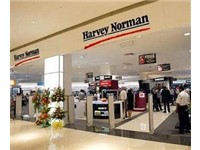
Consumer electronics retailer Harvey Norman has seen same store sales rise only 2.4 per cent for the first four months of 2008. In the same period last year they sales had risen 7.9 per cent according to their latest financial results.


Click to enlarge

Investors are not impressed with Harvey Norman shares falling 47 per cent in 2008.
In comparison arch rival JB Hi Fi who recently re branded their Digital Home online acquisition as JB Hi Fi Digital Home has seen their shares jump as much as 9.2 per cent with the Company saying that they anticipated earnings being towards the top end of its guidance.

Commenting on the Harvey Norman results Richard Uechtritz JB Hi Fi CEO said “The results are not bad in the current marketplace. We are in much better shape with more upside which is primarily because we are focused on consumer entertainment”.

Total sales for the four months to April 30 rose 6.4 per cent as consumers eased back on big-ticket purchases.

Goldman Sachs JB Were had forecast like-for-like sales growth of 4.0 per cent and ABN AMRO forecast 2.1 per cent.


Sales included Harvey Norman’s franchised stores in Australia, New Zealand, Slovenia and Ireland. It has about 190 stores in Australia.
The company reported a four-month period to smooth the timing shift of Easter this year from April to March.

For the 10 months to April 30, total sales rose 10.1 per cent and same-store sales rose 5.2 percent.

Retailers’ shares have come under heavy selling pressure this year as economists forecast a slowdown in spending, and government figures for March showed an across-the-board softening in consumption.

Smart Mouse

Logitech takes the mouse to a new dimension

The MX610 Laser Cordless Mouse from Logitech is probably the world’s  smartest mouse. Two-way communications enables the MX610 to turn itself on or off and notify the user of incoming email or IM even identifying who it is from.


Click to enlarge

The MX610 uses 2.4 GHz digital cordless technology and has its own on-board microprocessor which can monitor and warn when the mouse battery is low; notify the receipt of an important e-mail or instant message; and turn itself on or off  to save power. The mouse will also sense if there is wireless interference and change channels to establish the most secure connection.

“This changes the very concept of a computer mouse, because it is no longer simply an input device,” said Marco Manera, general manager of Logitech Australia. “The way the MX610 processes and delivers notifications for e-mail messages and instant messages puts it firmly into the smart device category. And its ability to manage battery life is extremely practical and a valuable feature. Logitech knows that smart devices will inevitably become a part of everyday life and this mouse shows that we are committed to investing in smart technologies for our mice and keyboards.”

The message notification lights – blue for email, orange for IM can be transmitted up to 10 meters away so the user can carry the mouse into another room and still monitor their important messages. The mouse can be customised with SetPoint software, so that the user is only notified when specific people send e-mails or IMs.

With no less than 10 buttons (for a five fingered right hand?) the mouse also has its own volume and mute controls.

The MX610 Laser Cordless Mouse will be available in Australia at the end of October at a suggested retail price of  $119.

Media Server For Video Streaming From Broadreach

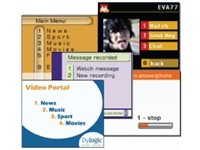
PSE Media Server is a carrier-grade, comprehensive platform for the deployment of VoiceXML audio/video interactive applications in IMS, SIP, H.323 and H.324M networks.


Click to enlarge

It supports industry standard protocols and interoperates with all terminals ranging from high-end videoconferencing systems to consumer 3G mobile phones.

The H264 advanced video compression technology allows to achieve a sharp, clear video even at low data rates; moreover, the appliance can handle many input and output media formats, including flash animations, WMV, AVI, MOV, MPEG, WAV and MP3, so that users from different channels are enabled to enjoy a high quality visual experience.

The PSE Media Server supports audio/video (VVoIP) and audio only (VoIP) services in SIP, H.323, H.324M networks.

In accordance with the evolution of the consumers’ behaviour, it enables Service Providers to create fun, compelling interactive services based upon user-generated contents, to be accessed via any hardware or software endpoint.
See www.broadreachservices.com

eBay Booming Too

Auction site eBay won’t have any trouble paying for its Skype acquisition if things keep going the way they did for the company in third quarter.

eBay has announce consolidated Q3-05 net revenues of US$1.106 billion, up 37% year over year. Operating income was up 40% year over year and net income of US$280.2 million. Less one-off items this translated to a net income of US$255 million for the three months ended Sept. 30.

At a price tag of US$2.6 billions for its Skype acquisition (not accounting for the additional US$1.5 or so in possible earn-outs) this translates to about three quarters of revenues for the company.

“We saw very strong growth across every part of our business in Q3,” said Meg Whitman, President and CEO of eBay. “It’s wonderful to see so much strength in our two largest marketplaces, the US and Germany. We’re excited about the great momentum eBay and PayPal have going into the holiday shopping season.”