Smart Office

Toshiba's toughest Tecra yet.

Toshiba has released a new Tecra, the S3 business notebook, which it claims is the most durable and secure mobile PC you can get.

On top of Toshiba’s EasyGuard suite security the notebook includes integrated software RAID, fingerprint reader, a three-axis ‘accelerometer’ for hard disk drive (HDD) protection, spill resistant keyboard, anti-theft timer and extensive cushioning to protect the most crucial components of the machine.

It’s green too being the world’s first computer to fully comply with the European Union’s Restriction of Hazardous Substances (RoHS) directive for environmentally-friendly electronic equipment – in fact the Tecra S3’s compliance precedes the compliance as set out in the RoHS directive by seven months.

Mark Whittard, Toshiba ISD general manager for ANZ said: “The single greatest concern for CIOs and IT departments is the protection of data – and with good reason. Research has shown that it can take up to three weeks and $20,000 to reproduce 20 megabytes of lost data, particularly that from critical functions such as accounting.”

The inbuilt RAID1 system on the new Tecra duplicates information on the primary hard drive to a secondary hard drive (optimal 9.5mm Slim SelectBay) as you would expect, but Toshiba has included a utility, which will automatically check the integrity of data on each drive and correct any corrupted data on either drive. Add the 3D motion sensors to detect motion and disengage the disks in case of shock and you have a high level of data security.

Want to stop other people accessing it and the fingerprint reader makes it more likely users will keep the security turned on and an anti-theft timer which has a time-activated BIOS password utility for preventing system access in the event of theft and you keep prying eyes away.

The RRP of the Tecra S3 is $4,400 including GST.

The company also refreshed a number of existing models in its line-up.

Tecra A4 : Widescreen desktop replacement (RRP $2,750 inc. GST)

  • A step up from the new Tecra A3X, the Tecra A4 is a 15.4-inch widescreen desktop replacement for individual users and small-medium businesses.
  • The processing power of this model has been upgraded; it is now equipped with a Pentium M 760 (2.0Ghz) processor.
  • Now featuring DDR2 memory improves the speed of the operating system and the application  performance, and a SATA HDD (Serial ATA) for continued speed enhancements over the classic parallel ATA bus technology.
  • It also offers a wide-range of mobility features including longer battery life and a full range of wireless connectivity options.

Tecra M3: Premium business notebook with privacy screen (RRP from $2,695 inc. GST)

  • The Tecra M3 is a lightweight, durable notebook designed for businesses  looking for mobile and performance with low TCO.
  • The Tecra M3 now comes in four models with TPM (Trusted Platform module),  an encryption chip based on standards from TCG (Trusted Computing Group) , designed to make notebooks more secure.
  • One model (PTM30A-17N002) now includes a unique privacy screen, which when activated, prevents other people ‘peeping’ over one’s shoulder to view the information on the screen.  This is particularly useful for those who use their notebook in public such as on aeroplanes or public transport.
  • Advanced engineering is a focus in the Tecra M3, with Toshiba incorporating a strong magnesium alloy case, advanced thermal management, and a patented cooling system to lengthen the life and protection of the product.

Port_g_ M200: Wireless tablet PC (RRP $4,070 inc. GST)

  • The Portege M200, Toshiba’s most popular wireless tablet PC, is for the travelling executive and workers who appreciate the value of pen-based computing.
  • The upgraded Portege M200 has been fitted with a new wide view screen to improve users ability to view the screen at any angle.  This is particularly useful when the tablet is being used in ‘slate’ mode.

Satellite M60: Powerful, multimedia PC (RRR $3,300 inc. GST)

  • The Satellite M60 is Toshiba’s top-of-the-line multimedia business machine with a 17-inch widescreen for design-oriented professionals wanting a notebook to manage graphic, sound and digital content;
  • The Satellite M60 has also been given a performance boost with a Pentium M processor 750 (1.86Ghz);
  • Its chassis design has also been updated – now incorporating Toshiba’s turquoise blue casing.


Put The Plasma On My Tab

Australian households undertook a $6 Billion spending spree on the home buying up plasmas, home theatre, cars and holidays.

The Reserve Bank has released the results of a survey which indicate that Australian households withdrew an estimated $6Billion in home equity during 2004 and then directed it toward consumption.

The RBA was trying to work out why household spending continues to increase when household income remains stagnant. Since the mid 1990s, says the Bank, household consumption has grown faster than household disposable income, and that over recent years, in contrast to previous experience, housing-related borrowing has exceeded spending on new housing and renovations, i.e. equity had been withdrawn and used for other purposes.

With a few qualifications and assumptions here’s what happened.

The Bank surveyed 4500 households to find out whether they had increased/decreased their home equity debt and what they had done with the money. The survey found that 11.7 per cent of households made a net withdrawal of equity over 2004, while around 30 per cent made a net injection of equity over the year.

About 7.25 per cent of Australian households withdrew an average of $20,000 of their home equity by increasing their debt on existing property, primarily by refinance an existing loan or drawing upon previous excess principal payments revolving equity type facilities. Those that did this tended to be single income households where the income earner was in their 40’s.

The survey asked households that made a withdrawal of equity what they did with the funds and were prompted with a number of possible answers, including using the funds for various types of consumption, the purchase of various assets, and the repayment of non-housing related debt, says the Bank.

Around 14 per cent declined to answer the question, but o a significant share (18 per cent) of the equity they withdrew over the year was used mainly for consumption-type expenditure, the bulk (58 per cent) of the funds were used mainly for asset accumulation, with an additional amount (8 per cent) used to pay down other debt.

The results also show that households borrowing against existing property most likely to use the funds to finance consumption. Around 55 per cent of households that borrowed more against their home equity used it on consumption – purposes such as home decorations, holidays, consumer durables and motor vehicles. A further 5 per cent of households withdrawing equity in this way cited consumption as a use, but not the main use, of the withdrawn equity.

With some qualifications, the Bank says its survey suggests that in 2004, around $20 billion was withdrawn by Australian households increasing debt on existing properties, with at least $6 billion of this being used to finance consumption. This added about 1.25 of consumption expenditure in 2004.

Add to that equity withdrawn during property transactions to that (although most appears to have been allocated to other assets, says the Bank) and you have an even bigger fillip for the home spending pie.

The survey also found that 6.5 per cent of households spent money on renovations, by decreasing their equity or paying for the renovations (at least in part) from other funds. The Bank says that in many cases renovations have been funded, at least partly, from the increased equity built up as a result of the large increases in house prices over recent years.

The survey indicates that around 11 per cent of households spent money on renovations in 2004, with the median amount spent on the main home equal to $13,500. Around 40 per cent of these households used housing debt to at least partly finance their renovation expenditure, with debt finance being used more often for larger renovations. As with the households increasing debt on an existing property for other purposes, households borrowing to finance renovations typically did so by refinancing an existing loan.

Weather-Resistant Speakers From Audio Telex

The Turbosound Impact series encompasses three new models: the ultra-compact 3.5″ passive two-way Impact 35, the compact 5″ passive two-way Impact 55T, and the larger twin 5″ passive two-way Impact 65T.


Click to enlarge

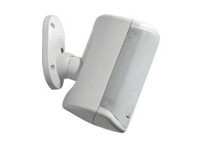
All models are supplied with a new adjustable wall bracket which provides the electrical connections as an integral part of the bracket assembly, enabling the wall brackets to be sited and pre-wired prior to the loudspeakers being available on-site, thereby greatly simplifying the installation process.

Impact 55T and Impact 65T models include an internal line transformer as standard, providing multiple voltage taps for 70 volt or 100 volt line distributed systems, as well as a low impedance setting, all accessible underneath a rubber cover on the bottom of the enclosure.

Impact series loudspeakers are weather resistant to IP54, allowing them to be installed outdoors and in humid conditions and are available in black or white as standard; the injection-moulded enclosures are also paintable to allow them to be decor matched in any venue.

All Impact models include a 3/8″ mic stand fitting on the bottom of the cabinet for convenient ‘hot-spot’ near field monitor use.
    
Applications include sports and leisure; cafes and restaurants; themed environments; retail shops; nightclubs and bars; corporate & audio visual; transport facilities and near field monitoring.

See www.audiotelex.com.au


Vodafone First To Offer Microsoft Mobile Mail

Vodafone has announced availability of an Exchange 2003 enabled mobile email service for selected devices running Microsoft Windows Mobile 5.0.

The first such service in the Australian market, the Vodafone offering will compete with it’s own BlackBerry services. Initially available on a range of i-mate smartphones and HPs iPAQ 6965, the service will be expanded later to include more handsets.

The first phones to run the service will be the i-mate JASJAR, SP5 and the i-mate KJam devices. Next month Vodafone will add the i-mate JAMin and bring the HP iPAQ 6965 into the range.

Vodafone also hinted at another HP smartphone saying a second HP device to be added to the service list “is still under wraps”. Vodafone will also add other handsets to the mix later in the year.

The Direct Push email service will incorporate email and messaging and will allow for the synchronisation of other Outlook features such as Tasks.

The service requires Microsoft Exchange 2003 Server running Service Pack 2 and will also support Microsoft Office attachments such as (mobile) Word and Excel files.

Mark Iles, general manager Business Markets at Vodafone Australia, adds: “Vodafone and Microsoft are the global leaders in our respective fields and our combined solution delivers the very best of both worlds to Australian business customers. Partnering takes mobile email and mobile computing into a new era, with the power to change the way our customers do business.”

All Windows Mobile Email from Vodafone devices feature either tri-band or quad-band capabilities,

allowing them to be used at major business travel destination around the world.

The service will be sold as a “Bolt-on” to Vodafone’s existing Business Caps plans Lite subscribers will pay $29.95 per month for 500 emails or $49.95 for 1500 emails for the Heavy plan. Both plans charge 0.2 cents per kb for additional usage.

Sony Releases Large Venue Projector

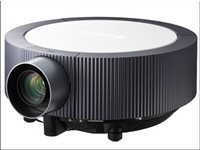
The VPL-FH300L was designed specifically for larger boardrooms and auditoriums, exhibitions and other open spaces such as cinema foyers and museum exhibits.


Click to enlarge

Featuring Sony’s BrightEra technology, the projector allows an increased aperture opening which ensures image clarity, high contrast and brightness; key features to ensure crisp large screen projections in challenging lighting conditions. 

In developing the product, several other key features were given extra attention. In addition to the 6000 ANSI lumen and 2048×1080 widescreen resolution, the VPL-FH300L features  technology like the fail-safe two lamp system; eliminating the risk of a blackout in the event of a lamp failure as the projector automatically chooses the lamp with fewest lamp hours.

The projector is also network capable and its round design includes hidden cables and robust casing to ensure the unit is protected from damage. Large-diameter fans and high-flow cooling air ductwork keeps the projector cool, while minimising fan noise.


Other key VPL-FH300L features include:
· Easy lens replacement
· Versatile mounting options which allow it to be tilted through 360 degrees
· Accessible locking bayonet mount mechanism makes lens replacement quick and easy
· Control panel is located on the sides for easy installation and maintenance  
· The lamp timer is on the lamp itself, reducing the need to manually reset lamp  
 
The VPL-FH300L keeps running costs and power consumption at minimum with its longer life and lower watt bulbs delivering operating life of up to 3,000 hours. In addition, an extra large and efficient air filter extends the time between filter replacements by up to 5,000 hours and the projector’s simple design means filters can be replaced without any tools.
 
The VPL-FH300L projector is available now with an SRP of $55,995.00 inc. GST.  The optional lenses range from $5,750 to $9,995 SRP inc. GST.


D-Link Increases Enteprrise Focus

D-Link is planning a big launch of its new xStack range of SMB/enterprise switches.

The Australia and New Zealand launch will be supported by an integrated campaign aimed at positioning the product range in the SMB/enterprise market, says the company.

The promotion is also designed to help out D-Link’s partners in the sales process as the company works on its strategy to expand its product portfolio to cater to the specific needs of business users.

“In a fiercely competitive market, network performance is key,” said Domenic Torre, Managing Director D-Link ANZ. “Businesses are demanding faster and more professional switching products, but at aggressive price points. xStack ticks all these boxes. Our partners now have the products that will help them to effectively address the needs of enterprises.”

The new xStack provide proactive network security management, end-to-end traffic control and 10 Gigabit performance.

Single IP Management functionality, included on all xStack products, enables full management control of up to 32 switches via one IP address. D-Link has also developed enterprise level services and support to strengthen the xStack portfolio.

The new offerings round out the xStack portfolio to five families of switches. The D DES-3500 series are Layer 2 managed switches with 24 to 48 10/100 ports and two combo 1000Base-T/SFP ports.

The DES-3800 family includes Layer 3 switches from 24 to 48 10/100Mbps ports and 4 Gigabit ports. Power over Ethernet is a feature on the DES-3828P.

For the big end of town, the DES-6500 is a core Layer 3 chassis-based Gigabit switch designed for performance and flexibility, easy management and cost-effective deployment for the enterprise or in and educational institutions.

A 10 Gigabit, Layer 3 switch, the xStack DGS-3300 family, is equipped with two stacking ports providing up to 40Gbps bandwidth if deployed in a ring stacking architecture. DGS-3300 products can also be used in a star stacking architecture for more critical environments. The switches are stacked together through high-speed stacking cables, allowing the entire stack to operate as a single high-performance entity.

Finally, the DXS -3300 family features full Gigabit switches with 10 Gigabit Ethernet interfaces and rich Layer 3 management functions. Some models feature 10GE uplinks for transmission at 10 times the speed of a Gigabit port.

Visit: www.dlink.com.au/xstack/ or www.dlink.co.nz/xstack/

Media Server For Video Streaming From Broadreach

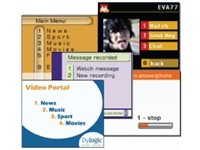
PSE Media Server is a carrier-grade, comprehensive platform for the deployment of VoiceXML audio/video interactive applications in IMS, SIP, H.323 and H.324M networks.


Click to enlarge

It supports industry standard protocols and interoperates with all terminals ranging from high-end videoconferencing systems to consumer 3G mobile phones.

The H264 advanced video compression technology allows to achieve a sharp, clear video even at low data rates; moreover, the appliance can handle many input and output media formats, including flash animations, WMV, AVI, MOV, MPEG, WAV and MP3, so that users from different channels are enabled to enjoy a high quality visual experience.

The PSE Media Server supports audio/video (VVoIP) and audio only (VoIP) services in SIP, H.323, H.324M networks.

In accordance with the evolution of the consumers’ behaviour, it enables Service Providers to create fun, compelling interactive services based upon user-generated contents, to be accessed via any hardware or software endpoint.
See www.broadreachservices.com

AMD Cuts CPU Prices up to 25%

Just fresh from its triumphant Third quarter where AMD finally outsold Intel in the US consumer market, the company has slashed the pricing on its Turion 64 Mobile CPUs by up to 25 per cent.

Pricing has been cut on the Turion 64, Athlon 64 X2, Athlon 64 for full-size notebooks, Sempron, and mobile Sempron CPUs for desktop PCs and notebooks, but the biggest cuts of all were saved for the mobile chips.

The company held its pricing on the recently popular Opterons, the Athlon 64, and Athlon 64 FX lines.

The company is on a roll at the moment with a commanding performance lead over rival Intel that has helped it drive revenues to new heights in Q3. The quarter to September 25th saw AMD post revenues of US$1.5 billion and net income of US$76 million a 23 per cent growth in sales over the equivalent period last year and 21 per cent sequentially from the second quarter this year.

The price list is here.