Smart Office

Sony Releases Compact Big Brother Camera

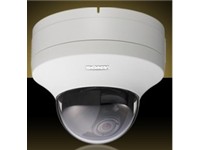
The SNC- CM120 Megapixel Network Camera is designed for use in security applications and the picture quality captured by the 1.3 megapixel camera is suitable for building entrances and parking lots, where detailed images, such as people’s faces and car license plates, are required.


Click to enlarge

The camera incorporates an advanced progressive scan CCD with ExwavePRO technology, providing clear and detailed images for surveillance monitoring applications.

Unlike conventional network cameras that incorporate progressive scan CCDs with primary colour filters, these cameras use a complementary colour filter to provide bright and high-resolution images, even in dimly lit environments, which is a common requirement for surveillance monitoring.  
 
In addition, the unit is first to features Sony’s unique ‘Light Funnel’ technology which combines image data gathered from multiple horizontally and vertically aligned pixels to provide extremely bright image output, even when monitoring moving objects. This function can be activated automatically in response to surrounding light conditions or on a pre-specified time schedule. 

Features such as a Day/Night mode setting that provides extremely bright images, even when monitoring objects during challenging settings such as dusk and in dimly lit environments; variable gamma settings that help to capture high-contrast images; bi-directional  audio options; a slow shutter mode for additional bright image output; voice alert function for pre- recorded audio files; and solid PTZ which allows users to conserve bandwidth by viewing images at lower resolutions.
The camera also features dual streaming capability at a frame rate of up to 30fps. 


Epson To Release Nickel-Free Printer

Epson has made a breakthrough entry into the sign and display market with the launch of the Stylus Pro GS6000, a 64-inch eight colour photo quality printer that usues UltraChrome GS, a new solvent-based ink.


Click to enlarge

The UltraChrome GS ink is nickel-free and has fewer harmful VOC (volatile organic compounds) than other solvent based inks. Prints made with UltraChrome GS ink are virtually odourless, eliminating the need for expensive ventilation and air purification systems to protect the operators.

The colour accuracy is made possible by the addition of orange and green inks which significantly expand the gamut beyond the colour range of both 4 and 6 colour ink sets. Important corporate colours and ultra-vibrant images not previously seen from a solvent based printer can now be reproduced with the UltraChrome GS ink.
The Stylus Pro GS6000 is equipped with a newly developed Dual-Array Micro-Piezo print head with 360 nozzles per colour for extremely fast print speeds producing variable sized ink droplets between 3.7 and 20 picolitres, depending on speed and quality options selected.


Unlike other solvent printers on the market which require daily maintenance, the Epson Stylus Pro GS6000 has been designed to further reduce maintenance down time. The Advanced Cleaning System built into the GS6000 maintains optimum performance of both the ink and print head, reducing the need for daily maintenance when the printer is in constant use.

The Stylus Pro GS6000 has high capacity – 950ml – ink cartridges, efficient media handling capabilities, and no special dryers are required for printing.
The  UltraChrome GS ink also accommodates a wide range of leading solvent media for a vast array of commercial printing applications, including indoor and outdoor banners, billboards, construction and barricade signs, retail point-of-sale display’s and photographic tradeshow graphics, where high quality images and precise, accurate colour is essential.

Print speeds;
o Up to 25 sqm/hour in banner-quality, draft mode.
o Up to 15 sqm/hr in everyday production mode.
o Up to 9 sqm/hour in photo quality, production mode.

The Epson Stylus Pro GS6000 will be available from selected authorised Epson professional graphics dealers in October 2008 at a price to be announced.

See www.epson.com.au

A Million Inkjet Multifunctions

In case you hadn’t noticed, 2005 was a bumper year for inkjets and multifunction devices ruled the roost.

IDC Australia has finally released its final figures for the 2005 multifunction inkjet market revealing the local market hit crossed the million units milestone. The milestone signifies a healthy growth of 24% over 2004 off a robust base, says IDC.

The past two years have delivered strong growth for multifunction printer manufacturers says the researcher: “While the initial round of growth in sales was driven primarily by the novelty factor associated with multiple functions integrated into a single printing and imaging device, the latter part of the growth was catalysed largely by low prices, coupled with sustained vendor aggressiveness”, said Rishi Ghai, Peripherals Analyst for IDC Australia.

It could be time for them to tighten their belts though, IDC expects the growth to be relatively softer in 2006, as the market begins to stabilise.
Last year’s growth was particularly centred around low-cost multifunctions with sub-A$150 devices accounting for 42 per cent of shipments. This compared to the 2004 figures where sub-$150 devices represented only 11 per cent of sales.

“It is interesting to note that while in 2004 only one vendor had offerings in the sub-A$150 space, 2005 witnessed all multifunction inkjet vendors enter this segment as a key focus area. With price competition still possessing momentum, the entry-level level devices are expected to grow their share of shipments further during the course of 2006”, said Ghai.

IDC says there was also a couple of shifts in market shares as a result with Canon and Lexmark fighting over second spot behind HP which remained well in the lead.

Epson maintained its fourth rank, while Brother overtook Dell to claim the fifth position, says IDC.

IDC Multifunction Inkjet Vendor Rankings, 2005
(in unit shipment terms)

HP

 39.5%

Canon

 19.1%

Lexmark

 17.9%

Epson

 11.0%

Brother

 7.4%

Dell

 5.1%


If you would like further information or to purchase IDC research, please contact Gary Clarke, IDC Associate VP of Sales via email gclarke@idc.com or phone 02 9925 2226.

****************************************************************

Don’t Miss Australia’s Most Important IT&T Event of the Year, Directions 2006 “Australia’s Role in a Shrinking Globe: Seizing Opportunities in a Connected World”

http://www.idc.com.au/events/directions

On April 27th 2006 IDC will be holding its annual “Directions” event. This year Directions brings together key players from the IT&T industry in an exciting one day format. At this event you will hear discussions from leading IDC analysts including: Vito Mabrucco, Country Manager for IDC Canada, Philippe de Marcillac, Senior VP for IDC International Business and a panel discussion of comprised of MDs from Australia’s top IT&T vendor companies facilitated by Emma Connors from the Australian Financial Review.

Throughout the day IDC analysts will apply IDC’s rigorous methodologies and analysis to discern future trends, top growth opportunities, hot vertical segments and success strategies to help you understand how to maximize your opportunities in today’s connected world. If you work in IT&T you can not afford to miss Directions 2006!

Date: Thursday, 27th April 2006
Time: 8.30am – 5.00pm
Venue: Star City Ballroom, 80 Pyrmont St, Sydney

For a detailed agenda go to http://www.idc.com.au/events/directions/agenda or to register go to http://www.idc.com.au/events/directions/register

AMD Taking Off

Could the glory days for AMD be just around the corner? The wannabe competitor in the microprocessor market grew its Australian marketshare by 5 per cent last month.

According to soon-to-be-released IDC data, AMD processors achieved an 18 per cent share of the local market for desktops and notebooks in the third Quarter 2005. These results don’t include servers — a market where AMD traditionally does well.

Michael Sager, Senior Analyst PC Hardware at IDC Australia was surprised at how far AMD had managed to grow its marketshare in just one quarter. Part of this growth has been as the result of strong sales in the sub-$1000 notebook market where AMD chips predominate explained Sager, but he also notes that AMD recently outsold Intel in Microsoft Media Center PCs sold into the North American market.

It’s been a great run for AMD with the chip company outstripping Intel in US retail sales for the first time in September then following it up with an even better result in October. According to research firm Current Analysis AMD’s share of unit sales in the U.S retail desktop space increased from 52.0 percent in September to 67.7 percent in October with retail notebook shares increasing from 26.2 percent in September to 31.5 percent in October.

“Continuing to hold this lead in the holiday season would be a colossal win for the company,” a Current Analysis spokesperson said at the time pointing out that stronger sales may not necessarily mean a better bottom line as revenue shares in the US retail market for October showed AMD earned 40.1 per cent compared to Intel’s 57.6 per cent thanks to a higher unit price.

Harvey Norman To Get Own MasterCard

Mass retail merchant Harvey Norman has entered into a relationship with GE Money to offer a credit card solution And loyalty program for Harvey customers.

Described as an all-in-one credit card, `GO MasterCard’ will be officially launched in late November following a period of piloting and staff training throughout more than 160 Harvey  Norman, Domayne and Joyce Mayne stores across Australia.

Taking in-store finance to the next level, the company says franchisees have been using in-store finance options since the 1980’s when Gerry Harvey first launched interest free at Harvey Norman.

Now, with the new card, Harvey customers will be able to extended interest free finance options with a card that can be used at other retail outlets.

Harvey’s said in a statement that there will be no annual fee for the card which will also offer 0% balance transfers for up to six months. Standard purchases will have up to 62 days interest free terms.


i-mate Launches mini-laptop

Based on the latest Windows Mobile 5.0 operating system the JASJAR sports a full suite of productivity enhancing tools, and a host of dynamic multi-media services, says the company.

The design includes a 180 degree swivel screen allowing the user to use the device like a PDA or a mini notebook. The 3.6″ 640×480 VGA transflective touch sensitive screen or you can use the built in QWERTY keyboard for data input.

An impressive selection of connectivity options includes tri-band GSM/GPRS, Wi-Fi and Bluetooth as well as support for 3G (UMTS) mobile networks. The device automatically switches to the best network mode available.

Powered by the 520MHz Intel xScale processor and with 128MB of permanent memory, expansion is via an SD card slot. A dual lens 1.3 megapixel still/video camera, built-in flash and dual loudspeakers for stereo sound round, out the hardware features.

General Manager of i-mate Australasia, Ben Hodgson said: “Our customers have high expectations and rightly so. We are confident the i-mate JASJAR is the complete package. It’s an awesome device with extensive software and market leading support as standard. As an end to end solution, this is hard to beat.”

Using the 180 degree swivel screen in the notebook style format, the orientation automatically adjusts to landscape to make best use of the screen real estate.

Picture and Video Viewer, Microsoft PowerPoint Mobile & ClearVue PDF Viewers, Outlook Mobile, Windows Media Player, Internet Explorer, MSN Messenger, Word Mobile and Excel Mobile all come standard with the device.

Skype (VoIP), CA eTrust Antivirus are also bundled as is access to Club i-mate which offers things like free hosted Microsoft Exchange e-mail, interactive games and upgrade patches.

Available from mid October, i-mate has not announced pricing for the new device.


Click to enlarge


Logitech Rolls Out Mac Webcam With Premium Optics

Logitech has unveiled its first Mac-compatible webcam with premium autofocus technology and Carl Zeiss optics: the Logitech QuickCam Vision Pro webcam for Mac. 


Click to enlarge

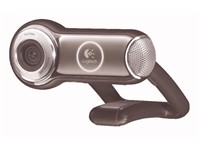
The new Logitech webcam is designed to deliver image-perfect detail and clarity, and video calling with iChat and Skype.
To deliver image-perfect detail and clarity, the Logitech QuickCam Vision Pro webcam for Mac combines Logitech’s premium autofocus technology with Carl Zeiss optics.

The new Logitech webcam uses a voice coil motor for its autofocus system, instead of a stepper motor. Focusing is fast and fluid – crisp even in extreme close-ups only 10 cm from the camera lens.

Logitech’s autofocus system compensates for changes in image-edge sharpness and refocuses images in less than three seconds. And through its exclusive collaboration with Carl Zeiss, Logitech ensures that the lens meets the world-renowned Zeiss standards for design and manufacturing to achieve superior sharpness in a compact, lightweight design.

The 2-megapixel sensor helps the Logitech QuickCam Vision Pro webcam for Mac capture video images in high resolution. It is assisted by Logitech’s RightLight 2 Technology, which enables the webcam to adjust intelligently in dim or harshly backlit situations.


Users can enjoy VGA-quality video at up to 30 frames per second – four times as sharp and twice as smooth as any other video-calling solution – at no additional charge.

The new Logitech webcam is also plug and play right out of the box, so you can make a video call immediately – no software required. When using your webcam to capture video to store on disk or send to friends, the QuickCam Vision Pro records sharp video clips in the 720p high-definition (HD) video format (960-by-720 pixels).

Complementing the style of your Mac computer, the new webcam for Mac computers presents a black-and-silver profile with a prominent built-in silver microphone.
The Logitech QuickCam Vision Pro webcam RRP is $179.95 (inc GST).

Motorola & Apple Do The Litigation Shuffle

Apart from being financial reporting season, it seems it also suing season as not only is Nokia and Qualcomm along with a bevy of many other tech firms lining the pockets of their lawyers, but now it seems Motorola has decided Apple has stolen IP from it used in the iPhone and taking court action.


Click to enlarge

Basically, Motorola is accusing one of Apple’s executives of stealing trade secrets, claiming, that with the knowledge he gained whilst working at Motorola, he held trade secrets that helped launch Apple’s iPhone.

Michael Fenger, who left his position as vice president of Motorola’s mobile device business in Europe, the Middle East and Africa, in March, was quickly gobbled up by Apple and promptly promoted into the position of Apple’s vice president for global iPhone sales.

But according to Motorola, “He was privy to the pricing, margins, customer initiatives, allocation of resources, product development, multiyear product, business and talent planning and strategies being used by Motorola.”

The company also says Fenger “violated a clause in his contract which prevented him working for a rival firm for two years”.


Now these kind of ‘no work for rival firms’ clauses are notorious for being as water-tight as a sieve in legal terms as they basically amount to a restriction of trade, but one cant help but to feel sorry for Motorola, as the company has enough problems in the smartphone space without watching its rivals get all the glory and then some.

However, Motorola doesn’t seem to be going after Apple itself as it is not named as a defendant in the case, and it looks like it is only Fenger whose blood they want.

That maybe a smart move in terms of any future collaboration between the two companies, who have a long history in collaborating in the hardware space, however, one assumes that Fenger will be spending a lot of time in court and a lot less time thinking up of innovative marketing ideas for his new employer.

Perhaps that was the idea by Motorola all along?

HP Invents Super Memory Module

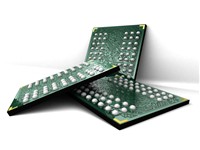
According to a report in techworld.com, Hewlett-Packard (HP) researchers have discovered the existence of a “memristor,” the fourth circuit element in electrical engineering.


Click to enlarge

The researchers said memristors can lead to computer systems with memories that are not erased when power is lost, do not need to be booted up, are very low-power hungry, and, associate information “in a manner similar to that of the human brain.”

The HP researchers also said that memristor-based computers could help the momentum toward “cloud computing,” in which applications and data are stored throughout many servers in-house, or on the Internet and could lead to a new kind of computer memory that could complement or even replace the common DRAM which does not store information when the power is off.

Memristor-based memory can also lead to fundamentally different ways of using computer memory – memristor technology can recall and make associations between events that are similar to how a human brain recognises patterns.

HP said that this enhanced ability to deal with patterns could “allow computers to makes decisions based on past data. This might include, for instance, the development of a more intelligent microwave that knows the heating times that you prefer for different kinds of foods”.

Telstra Offers SMBs Gold In China

SMB exporters will be offered the chance to tap into China’s booming economy during the Beijing Olympics through a joint initiative between Telstra and Austrade.


Click to enlarge

The Win Business Gold in China program will offer practical help to Australian companies which have recently established a presence in China.

Coinciding with the 2008 Beijing Olympic Games, small business owners will gain insights into the prospects and pitfalls of doing business in China while at the same time enjoying the sporting event of a lifetime.

A panel consisting of senior Telstra Business and Austrade representatives will choose 12 businesses to participate in the program with entries to close on May 25.

Telstra Business Group Managing Director, Deena Shiff, said facilitating business opportunities for Australian small to medium enterprises (SMEs), including international trade, ranked high on the priorities of Telstra.

“China is an emerging market with massive potential for Australian SME exporters and Telstra would like to help them reach this exciting new market,” Shiff said.


Austrade’s Business Club Australia is the Australian Government’s official international business program for the Games and has been endorsed by the Australian Olympic Committee.

“Business Club Australia will provide opportunities for Australian companies to leverage business outcomes while enjoying the Olympics,” Austrade CEO Peter O’Byrne said.

“The China market expertise provided to them through Business Club Australia will provide a platform for them to build their presence in this key market,” O’Byrne said.

In 2007, China became Australia’s largest merchandise trading partner, with two-way trade in goods reaching $52.7 billion.
As part of the program, a new website – China Gold – was launched today where Australian SMEs can apply to be selected to travel to Beijing.