Smart Office

Dell To Launch Cheapie Notebook Soon

Dell says it is planning to introduce a low-cost notebook in August to join the booming low-cost notebook market, according to digitimes.com.


Click to enlarge

The report notes that Dell is “coming to the low-cost notebook party relatively late, compared to other first-tier vendors such as Hewlett-Packard (HP) and Acer’.

However, the key word here is cheap as the Dell E series low-cost notebook will be priced at only US$299, some US$100 cheaper than Acer’s offering, according to the report.

Market analysts estimate that Dell will ship 2-3 million of these low-cost units this year alone.

Apple Fans Get Ready For Big Store Opening

Apple’s first retail store in Australia will open on George Street in Sydney on Thursday, 19 June at 5:00 p.m., with the company looking to repeat the success of other Apple stores overseas.


Click to enlarge
Apple expects some excited fans at tomorrows opening of its first Australian retail store

Located in the heart of the city’s shopping district, and near the iconic Queen Victoria Building, the Apple Store features two floors dedicated to Macs and iPods and a third floor entirely dedicated to service, including the world’s largest Genius Bar for free advice and personal training through Apple’s popular One to One membership.

“We are thrilled to bring the unique Apple retail experience to Australia,” said Ron Johnson, Apple’s senior vice president of Retail. “This breathtaking new store will be the ultimate place for the people of Sydney to shop, learn and be inspired.”

The Apple Store Sydney has more than 80 Macs and 60 iPods available for customers to experience hands-on, as well as an incredible range of third party products and the store’s staff includes more than 125 locally hired Mac Specialists, Creatives and Geniuses who are ready to share their expertise and offer customers personalised instruction on everything from getting started with a Mac to building their own web page, creating a podcast or making a digital movie.

Customers can also book a free appointment with a Personal Shopper to get expert buying advice or help selecting the perfect gift for everyone on their list.

The hands-on Apple retail store experience gives customers a chance to test-drive Apple’s entire product line including the all-new MacBook Air, the world’s thinnest notebook, as well as the widescreen iPod touch.

 The Apple Store Sydney also brings Pro Labs to Australia, offering free, in-depth training on Apple’s professional creative applications for digital photography, music production and video editing including Final Cut Pro.

ASUS Does Wireless At 240Mbps

ASUSTeK has entered the wireless race at a blistering 240Mbps with its WL-566gM router and WL-106gM adapter.

The 240Mbps MIMO data transfer rate translates to an actual throughput of up to 100Mbps, according to the company and the coverage area from the access point is eight times the range of standard 802.11g WLAN devices and equals the sort of specificcations from Netgear’s RangeMax.

This sort of throughput makes possible wireless multimedia for the homes or for businesses applications such as retail, notes the company.

Wi-Fi Multimedia (WMM) enhances wireless transfers of multimedia contents, providing wireless network users an improved experience for sharing audio and video files. The Wi-Fi Alliance defined WMM as a profile of the upcoming IEEE 802.11e Quality of Service extension for 802.11 networks.

QoS and multimedia support are critical to wireless home networks, which require video on demand, audio on demand, voice over IP and high-speed Internet access. WMM defines four access categories – voice, video, best effort, and background – that are used to prioritize traffic to provide enhanced multimedia support.

The access point doesn’t sacrifice anything for this speed and QoS, the WL-566gM router employs WPA2, which is based on the IEEE 802.11i standard and coupled with the WEP firewall protocol, the router provides advanced encryption mechanism and security without the sacrifice of physical distance.

Recommended Retail Price on the WL-566gM router is $329, while the WL-106gM adapter is $219.

www.asus.com.au

Dell Did Buy Alienware

Not a company known for growing through acquisition online direct hardware supremo Dell has confirmed it will buy cult game computer maker Alienware.

As foreshadowed on SmartOffice News last week Dell has made the curious acquisition of a small but highly-regarded PC gaming maker Alienware.

The acquisition won’t make much difference to the hardware goliath’s bottom line in the short term. Dell reported revenues of US$55.9 billion last year compared to Alienware’s US$200 million, but the purchase will certainly add a lot of cache to the black box maker’s product list.

Alienware is highly regarded in the lucrative computer gaming market and although Dell’s first foray into that market, the XPS line, has received okay reviews, it has failed to ignite the enthusiasm of the style and power conscious gamers.

The Dell XPS line of gaming platforms is not available locally.

Alienware will continue to operate as a separate unit and keep its product development, marketing, sales and technical support staff as well as its brand, Dell said in a statement.

“This is good news for Dell’s consumer market,” said Ted Schadler of Forrester Research Inc. “It is kind of re-upping Dell’s commitment to that market.”

The acquisition is notable is as the first time Dell has sold computers powered by AMD processors, Dell has remained a stalwart Intel supporter to date and pundits have speculated that the number one PC player would mark a significant coup for AMD.

AMD made significant in-roads against Intel, particularly in the Server and desktop markets through 2005 due to a widely acknowledged price performance advantage of the CPU leader. While this performance edge may be lost this year in the game of leap frog Intel and AMD have played out over the past five year’s AMD’s plans for 2006 are still a closely kept corporate secret.

However, Dell spokesman Jess Blackburn told Reuters that the acquisition was not an indication that the company was contemplating switching chip suppliers. “Our strategy in terms of suppliers that we work with is unchanged,” Blackburn said. “This doesn’t signal that we are changing that.”


Dell’s consumer business accounts for just 15 per cent of its revenues and with growth at the company slowing, Dell sees the consumer market as its next market segment to conquer. As a result, the company has entered into a significant discounting war over the past six months that have forced competitors like HP and Acer to fight a sticker price battle.

While Dell’s volume and direct-to-market business model give it significant advantage the company posted slower-than-forecast growth last year as it lowered prices on entry-level PCs too aggressively.

But Dell Chairman Michael Dell, knows that 20 per cent of consumer PC users are hard core gamers looking for souped up machines and willing to pay a high price for the privilege.

Now we await news that Acer is buying Gateway for much the same reasons.


Terms of the Dell/Alienware transaction were not disclosed, but we are sure it was small change to the global No. 1 PC vendor.


(Additional reporting by Reuters’ Philipp Gollner & Scott Hillis)

Windows Servers Take Lead as Linux Booms

Global server sales declined in the fourth calendar quarter, but revenues for 2005 were at their highest point for five years, says IDC.

The worldwide server market grew to USUS$51.3 Billion in 2005. Factory revenue declined marginally by 0.2 per cent over the prior year’s fourth quarter to US$14.5 billion, but this was the first sequential decline since the first quarter of 2003.

Unit shipment growth slowed modestly to 10.6 per cent in 4Q05 when compared with the year-ago period.

Volume server systems continue to grow strongly adding 7.3 per cent year on year with both Enterprise and SMB buyers taking the punt. Midrange enterprise servers didn’t do so well posting a 11.5 per cent year over year decline after four consecutive quarterly increases. Similarly, revenue for high-end enterprise servers showed a 1.7 per cent decline over the prior equivalent – the fifth consecutive quarter of declining revenue.

“The volume server market continues to evolve as richer server configurations driven by both scale-out cluster implementations and scale-up server virtualization initiatives continue to drive increased customer spending,” said Matthew Eastwood, program vice president of IDC’s Worldwide Server Group. “However, even in the volume segment, the quarterly unit shipment growth of 11.5 per cent was two-thirds the year-over-year unit growth rate observed in 4Q04, illustrating a transition towards more richly configured systems in the market.

“This evolution is driven by IT managers increased desire to consolidate and virtualise their server infrastructures as they seek to maintain balanced and manageable IT growth in the future.” 

Factory Revenue By OS
Windows Servers continued growing in the fourth quarter adding another 4.7 per cent year on year to now account for 33.6 per cent of the market. Windows server revenues for the whole of 2005 US$17.7 billion, which means that for the first time the Windows server segment modestly exceeded spending for Unix servers as customers deployed more fully configured Windows servers in support of scalable enterprise workloads and server virtualization projects.

Just better than a third of the market looks pretty healthy when you consider than Unix servers declined by 5.9 per cent in factory revenues in the final quarter. But the real star performer is the Linux segment which continued its fourteenth consecutive quarter of double-digit growth, with year-over-year revenue growth of 20.8 per cent.

Linux servers generated US$1.6 billion in quarterly revenue (US$5.7 billion for 2005) so have a long way to catch up, but looking like a promising bet.

This result placed Linux in the third spot for the first time ever, behind Windows and Unix in the first and second spot.

Unix server sales represented US$5.0 billion for Q405 at the factory level representing 34.3 per cent of the market by revenue. Totals for the year were US$17.5 billion shunting it out of first place for the first time in more than ten years.

“IDC continues to see end users utilizing a mix of operating systems in their infrastructures,” said Jean S. Bozman, vice president of Worldwide Server research at IDC. “Each platform offers its own advantages in terms of workloads and customer preferences, and there is substantial overlap in terms of ISV applications that run on many of these server platforms. Although the trend is towards volume systems, we do not believe that any one platform will be in a position to force another platform out of the marketplace for many years to come.”

Vendor Shares By Factory Revenue
From the vendor perspective, IBM retained the number 1 spot in system sales with a 38.4 per cent market share in factory revenue. This was only up slightly (0.8 per cent over the year ago quarter). But HP, despite growing faster at 3.8 per cent over 4Q04 it still trailed IBM significantly coming a distant second with 26.8 per cent share. HP picked up 1 point of market share overall, says IDC.

No prizes for guessing Dell is in second place, again a distant third with 9.6 per cent factory revenue market share. Another big gainer though, Dell leaped 7.3 per cent over the prior equivalent quarter leaving Sun in its dust with a major decline.

Exemplifying Sun’s problems the company’s factory revenues slumped 10.9 per cent compared to the last quarter of 2004. In fourth place though, with an 8.2 per cent market share, Sun is only slightly better off than Fujitsu/Siemens.

Starting to look like an ‘also ran’ Fujitsu/Fujitsu-Siemens in fifth with a 4.3 per cent market share suffered a 10.9 per cent factory revenue decline year over year.

Vendor Share By Unit Shipments
In terms of unit shipments, HP maintained the number 1 position worldwide with 30.2 per cent server shipment share, growing shipments 8.8 per cent year over year. Dell maintained the number 2 spot in terms of worldwide server shipments with 23.3 per cent share, up from 21.3 per cent.

x86 Industry Standard Server Market Dynamics
The x86 server market continued to experience strong growth, with revenue of US$6.8 billion worldwide for the fourth quarter of 2005. Factory revenue for x86 servers grew 6.7 per cent, while unit shipments grew 13.7 per cent to 1.8 million servers. HP led the market with 33.4 per cent revenue share due to strong revenue growth of 10.1 per cent year over year. The fierce competition between Dell and IBM for the second position in the x86 market ended in a statistical tie, with IBM and Dell each holding approximately 20 per cent revenue share for the fourth quarter.

Rackable Systems solidified its fourth place position in the U.S. with year-over-year growth of 268 per cent. The rapid transformation of the x86 marketplace into a segment that is 64-bit enabled continued with x86-64 based systems accounting for 78.8 per cent of all x86 server spending, with factory revenue for x86-64 systems more than doubling year over year.

“The number of AMD and Intel-powered dual core systems each grew by more than double on a quarter-over-quarter basis,” said Jed Scaramella, research analyst, Worldwide Server research. “Given customers’ intense focus on performance as well as power, heat, and cooling issues in their datacenters, the move to incorporating dual core processors is a natural move as users look to lower costs and increase computing capacity.”

Blades Show Strong Growth
The server blade market showed continued growth in the quarter, with shipments increasing by 49.3 per cent year over year and factory revenue gaining 56.9 per cent year over year. Overall, blade servers, including x86, EPIC and RISC blades, accounted for US$667 million in the fourth quarter, representing 4.6 per cent of quarterly server market revenue. IBM maintained the number 1 spot in terms of server blade revenues, with 42.7 per cent market share, while HP maintained the number 2 position with 35.1 per cent share. Dell holds the number 3 position with 11.2 per cent share of factory blade revenues.

“Market momentum in the blade market continued in the quarter with blade volumes up 50 per cent year over year,” said Kelly Quinn, senior research analyst, Worldwide Server research. “Blade shipments increased more than 60 per cent year over year in 2005 as IT managers began to adopt blades as a standard building block in their virtual IT infrastructures.”

Worldwide Server Systems Factory Revenue, Q405 (Revenues in US Millions)

Vendor

Q4 2005

Revenue

Market

Share

Q4 2004

Revenue

Market

Share

Revenue Growth

4Q05/4Q04

IBM

US$5,555

38.4 %

US$5,510

38.0 %

0.8 %

Hewlett-Packard

US$3,885

26.8 %

US$3,745

25.8 %

3.8 %

Dell

US$1,390

9.6 %

US$1,295

8.9 %

7.3 %

Sun Microsystems

US$1,185

8.2 %

US$1,330

9.2 %

-10.9 %

Fujitsu/Fujitsu Siemens

US$606

4.2 %

US$680

4.7 %

-10.9 %

Others

US$1,857

12.8 %

US$1,952

13.5 %

-4.9 %


All Vendors

US$14,478

100.0 %

US$14,512

100.0 %

-0.2 %

IDC Worldwide Quarterly Server Tracker, February 2006

Full Year 2005 Worldwide Server Systems Factory Revenue, (Revenues in US Millions)

Vendor

2005
Revenue

Market
Share

2004
Revenue

Market
Share

Growth 2005/2004


IBM

US$16,889

32.9 %

US$16,316

33.2 %

3.5 %

Hewlett-Packard

US$14,183

27.7 %

US$13,028

26.5 %

8.9 %

Dell

US$5,258

10.3 %

US$4,642

9.4 %

13.3 %

Sun Microsystems

US$4,879

9.5 %

US$5,129

10.4 %

-4.9 %

Fujitsu/Fujitsu Siemens

US$2,901

5.7 %

US$2,888

5.9 %

0.4 %

Others

US$7,178

14.0 %

US$7,135

14.5 %

0.6 %


All Vendors

US$51,288

100 %

US$49,138

100 %

4.4 %

IDC Worldwide Quarterly Server Tracker, February 2006

Microsoft Push E-Mail To Rival Blackberry

Microsoft has announced partnerships with Vodafone and US mobile network Cingular, to delvier Blackberry-style push email solutions.

Targeting business customers in the first instance, the new Windows Mobile Direct Push E-mail solution was announced at the 3GSM World Congress in Spain.

Based around the Microsoft Windows Mobile version 5.0 operating system the Direct Push solution will initially kick off in France, Germany and the UK with Vodafone, though the solution is likely to be brought to Australia in good time.

The companies say the service will also be available to corporate and SMB customers in other countries during this year.

The system will allow emails and tasks to synchronise directly from Outlook, and Microsoft Office Excel Mobile and Word Mobile attachments can be viewed, edited and returned.

The service will integrate with Microsoft Exchange Server 2003.

The Mobile v1240 and Vodafone v1640 will support the service and local countries can offer alternative handsets based on local availability.

The system will have a major advantage over the RIM Blackberry service which is currently in danger of a US shutdown due to a patent lawsuit. Rather than routing all emails via the RIM servers in Canada for re-processing, the proposed Microsoft service will work directly from corporate exchange servers.

The potential for mobile email services is widely seen as in the early adopter phase with senior managers already hooked up with access, the market believes widespread adoption to all levels of the enterprise has already begun.

At the server end, the push email capabilities were built into Microsoft Exchange server at its last update in October 2005, so many corporate email systems will only need to be switched onto the new service.

Outdoor AP With PoE

Linksys added Power over Ethernet to its latest Wireless-G access point designed for the great outdoors. The company also released an internal version also fitted out with PoE.

The access points can also be used as a bridge, a kind of “cable-less cable” to connect remote areas together, forming a single network with shared resources.

For businesses with both confidential and public access, the Access Points can be configured with multiple SSIDs and VLAN settings, keeping network traffic separated.  The access points are ideal for small businesses where there are multiple work areas separated by a short distance, or where new wiring would be difficult to install.

“Many of our VARs and small business customers were asking for wireless solutions that had PoE capabilities so they could extend their wireless access to more areas throughout their business,” said Allen Powell, director of channel sales for Linksys.  “These access points provide our customers with the capabilities they need to help make their businesses more productive. Linksys currently has over 70 wireless products in its portfolio and these are the first to provide POE capabilities.”

Both the indoor and outdoor access points support Wired Equivalent Privacy (WEP) and the industrial-strength wireless security of Wi-Fi Protected Access (WPA) which uses advanced encryption to protect wireless transmissions. WPA2 support will be available via a firmware download on the Linksys website by the end of Q1.

The internal version is priced at $469.95 while the external edition, the Wireless-G Exterior Access Point with PoE  is $1079.95.

For more information, visit www.linksys.com.


HP Q3 On Track

In the first full quarter of new CEO Mark Hurd’s tenure at the computer giant, HP has posted good results marred only by a big tax bill resulting from overseas earnings.

HP beat analysts estimates to deliver a net revenue result of US$20.8 billion which was a 10 per cent increase year on year. The turnover delivered a modest US$913 million operating profit, just shy of an even billion.
Amongst the results, HP’s PC division grew by 8 per cent year on year to stand at US$6.4 billion in revenues with unit shipments actually up 14 per cent. The result details were interesting as desktop revenues fell three per cent, while notebooks grew 21 per cent. Similarly, the printing group turned in revenues of $5.9 billion a 5 per cent growth over the prior year, though profits fell in the face of serious price competition from the likes of Dell in the US market.
Servers also performed well with revenues 20 per cent up on the enterprise front and X86 servers up by 28 per cent. Even networked storage revenues grew 15 per cent to turn last year’s loss of US$211 into a US$150 million profit.
During the quarter, on a year-over-year basis, revenue in the Asia Pacific grew 15% to US$3.5 billion.
However, getting all that cash back to the States resulted in a big tax bill for the company. A significant $988 million in tax adjustments and other charges (including US$788 million in taxes) slugging the company’s bottom line to just US$73 million, or 3 cents a share. That’s down from US$586 million, or 19 cents a share, a year ago.

IDT Rolls Out IMD Panels

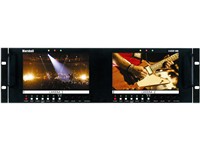
Image Design Technology (IDT) has introduced of the industry’s first full line-up of LCD panels with In-Monitor Display (IMD) functionality from Marshall Electronics.


Click to enlarge

Specially designed for post-production houses, broadcasters and mobile units, the LCD panels are an all-in-one solution that allows information such as video time codes and tallies to be displayed on screen.

The internal IMD functionality means that users are rapidly alerted to changes or problems that might occur with transmission.

For example, if audio drops out when broadcasting, sensitive audio presence indicators will light up on screen in order to notify the controller. Unlike many other LCDs, the Marshall Electronics range is also rack mountable, saving precious space.

 Marshall’s IMD monitors provide a suitable solution for large Video Wall applications and systems. They can also be used as standalone displays with HDSDI loop-through.

The cost effective range is easily integrated and features on-screen Video Time Code, three-color “Soft” Tallies, and Audio Presence Indicator. 

These displays also include Marshall’s new RotoMenu feature which allows fast, direct, and easy menu navigation with just a single digital rotary switch.
 
visit www.idt.com.au


Harvey Norman 2nd Half Profits Down 14%

Despite a profit downfall of 14 percent, mega retailer, Harvey Norman, remains bullish about the potential for future growth from key areas where it claims to be growing its market share.

These areas, namely the convergence products such as plasma and LCD Screens, personal computers, digital imaging, digital hard drive recorders, portable media players and home networking have strong potential for improved revenue and overall market share in the future, said the company.

Consolidated profit from ordinary activities after tax attributable to members for the second half-year came in at only $70 million down from nearly $82 million the year before.

However, after showing some growth in the first half, the company has ended the full year virtually flat.

Operating profit after tax was $171.44 million, down from last year’s result of $176.05 million, a decrease of 2.62% on the previous year. However the company points out that last year’s results included a $4.8 million contribution to net profit from the sale of industrial warehouses in Caringbah and offices/warehouses in Riverwood. Taking this out of the equation puts this year’s result up on last year by a fraction.

The basic earnings per share was 16.20c and the board has announced a dividend of 3.5 cents per share.

Discounting was blamed for the depressed profit results, which the company described as the result of “difficult trading conditions and margin pressures, particularly during the second half”. It also pointed to rising fuel costs impacting family income and the downturn in the residential property market affecting its renovation and commercial franchisees. The company had already blamed sluggish growth in the first half on an unseasonably cool summer which reduced sales of air conditioning and refrigeration products.

Harvey Normans said that the expansion of locations in the Australian market will continue despite the reduced second half profits and revealed that a new convergence concept store is scheduled to open in Sydney’s Castle Hill in November this year.

Shares in the company fell an initial 5 per cent on the news before recovering slightly.