
Smart Office

Navigation Market Looking At Boom Times Says Navteq

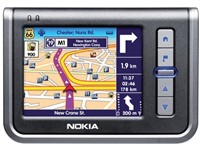
In an exclusive interview this morning with channelnews, Kirk Mitchell, Director, Business Development, Navteq says the market for navigation services is booming for a number of reasons, not least of which is the falling price of navigation devices themselves.


Click to enlarge

Mitchell notes there are a number of key drivers for the uptake of navigation devices, price being one, but the technology too plays its part here.

“These devices are becoming easier to use all the time”, says Mitchell, adding that as time goes on, “the amount and quality of services on navigation systems is increasing all the time, giving consumers more choice with what they can do with this technology”.

Mitchell also notes that according to GfK, some 750,000 navigation devices were sold in Australia over the past 12 months, representing only about 8 per cent of all vehicles in the country, meaning there is still plenty of space for vendors to increase their market penetration.

On top of that, there are big changes afoot in this space, he says.

“Firstly there is the convergence of mobile and navigation technologies which is going to expand the penetration of navigation technologies to areas not now serviced and secondly, there is more value-adding of services and information, like more location-based services onto navigation services”, making them even more appealing to consumers.

In terms of new technology and services, Mitchell these are also having an impact on safety.


“When driving, your eyes shouldn’t have to read the navigation device and in fact should really read the road”, that’s why he notes, Navteq has introduced features such as 3D Graphic Representation of complex intersections, giving users a much clearer picture of turning right into streets where it may be difficult”.

Furthermore says Mitchell, “we have also introduced Phonetic Voice Pronounciation of the many unusual or Aboriginal-sounding names in Australia, thereby, making sure users don’t miss read or mishear the name of the street”.

And in terms of freeway turn-offs, Mitchell also says that Navteq have added “new visualization software”, making it even easier to work out well beforehand the turn-off from a freeway when travelling at high speeds.

So according to Mitchell, it’s all happy days in the navigation device space, with the uptake of this technology for mobile phones and the increasing use of value-added services making him confident to predict that “Navteq is looking to become the number 1 vendor in this space within 12-18 months”.

Gamers Diamonds

Mitsubishi Electric has introduced a new range of Diamond Digital slim-line TFT LCD monitors, with an 8ms response rate targetting the gaming market.

There are two sizes in the range – the 17 inch DV177 and the 19 inch DV197.
Described as the company’s flagship range and designed in Australia, the displays are height and angle adjustable and have dual signal inputs (DVI Digital and Analogue).
The new monitors are available in beige and silver/black with a super slim bezel.
“We’ve made aesthetics and visual appearance a key priority when designing these new monitors.  As well as being suited for gaming purposes, all consumers can benefit from the state-of-the-art technology, with the excellent response rate reducing the flicker that so often accompanies LCD screens,” said Richard Freggi, General Manager, Mitsubishi Electric Australia Digital Electronics.
Pricing on the 17 inch is $499 (RRP) and the 19 inch is $699 (RRP).
A 20 inch model will be introduced later this year.

McNealy Steps Down As Sun CEO

Though he plans to stay on as Chairman, Scott McNealy a Sun Microsystems co-founder will step down after 22 years in the CEO role.

His spot will be taken by heir apparent Jonathan Schwartz, who has been with the company just 10 years.

McNealy’s move out of the day to day running of the company comes amidst criticism that Sun failed to adequately account for the general industry slow-down that came after the end of Y2K and the dotcom boom. While other companies shed staff in an on-going round of redundancies, Sun was slow to act and is paying for it now, say the McNealy critics.

Schwartz, once the CEO of a company acquired by Sun has held numerous jobs with the company before being appointed Sun’s president and chief operating officer in April 2004.

“It is an honour to take the reins of this great company from one of the industry’s true visionaries,” Schwartz said in a company statement.

“I am incredibly excited by what the future holds for Sun and the opportunity to continue working with Scott, and the rest of the management team, to help Sun attain its financial and operational goals,” he said.

Schwartz, described as being behind many of Sun’s open source and standard setting initiatives and an outspoken advocate for the network as a utility, take the role effective immediately, but as part of a planned succession said the company’s Board.

“Jonathan has earned the admiration and respect of our 37,900 employees, our customers and partners, and the industry as a whole. He is the ideal leader to take the helm as Sun’s chief executive officer,” McNealy said.

“Sun has been a labor of love for me,” McNealy added. “We’ve helped shape the industry as it is today and the opportunities before us are immense. I look forward to a smooth transition and to working with Jonathan on company strategy in my continued role as chairman.”

ViewSonic Hacks LCD Price

ViewSonic is emerging as an aggressive player in the LCD monitor market not long after its late entry into the LCD TV market.

In its most recent move the company has taken the red pen to its 19-inch LCD monitor, the VX922, cutting the price from $749 to $499, seting a new price point for the ultra-fast two millisecond (ms) screen.

ViewSonic says the new price point “defines a dynamic and proactive new phase in ViewSonic’s strategy for the Australian LCD monitor market”.

Already this month the company showed the confidence it has in its technology offering a 30 Day Zero Dead Pixel Guarantee for its whole monitor range.

“ViewSonic is setting trends in the LCD Market for having cutting edge technology through to competitive pricing for customers driven by our vertical integration distribution models to vendors,” said John Yeh, Country Manger, ViewSonic Australia.

“This offers the total experience of hyper fast response times of the VX922 to display enthusiasts within a realistic budget. We aim to lead the 2ms LCD monitor market in Australia and increase our 19” LCD monitor market share by offering a price point and warrantees that separate us from our competitors. “

www.viewsonic.com.au

Volante Delay Equals $300k Whole

Volante has announced it will put its proposed acquisition of an as-yet-un-named software company on hold because it is being acquired itself.

The change in strategy will result in a “minor negative impact” on this year’s profitability to the tune of $300,000 in after tax profit.

Volante, which is in the process of being sold off off-market following an unsolicited takeover offer by Commander Communications had announced the acquisition in early February.

“As announced previously, transaction closure for the Acquisition is subject to final contractual negotiations between the parties.  While the price parameters and key terms have been agreed, the final and full terms of the transaction have not yet been settled.  In view of the Board’s unanimous recommendation to accept the increased offer (in the absence of a higher financial proposal) from Commander Corporation Pty Limited  (a subsidiary of Commander Communications Limited), a decision has been made to defer the acquisition of this business pending the outcome of the Commander Offer.” The company said in a statement to the Stock Exchange.

Huawei Busy With 3Com, Nortel

While JV partner 3Com prepared a deal to take a larger stake in the company, Huawei was putting together another JV with 3Com competitor, Nortel.

The 3Com/Huawei joint venture will now be majority owned by 3Com after the US company acquired an additional two per cent interest in the China-based Huawei-3Com, Ltd.

Subject to final approval by the Chinese Government, 3Com will own 51 per cent of the joint venture and Huawei owning the remaining 49 per cent, an unusual situation as most JVs with Chinese companies remain majority Chinese owned.

3Com agreed to pay Huawei US$28 million for the 2 per cent – an amount that was established as part of the original H-3C formation agreements as a “not-to-exceed” price. 

“When the joint venture was formed in 2003, we had three key objectives:  First, to establish a substantial presence in China, the world’s fastest growing market; second, to create a resource capable of building enterprise-class, cutting-edge switching and routing products faster than we could deliver on our own; and third, to capitalise on a rapidly growing pool of engineering talent,” said Scott Murray, the new president and CEO of 3Com.

According to IDC the JV commands 31 per cent of the Chinese LAN switch market with a run rate of around US$111 million per quarter.

Meanwhile, far away in Ottowa, Nortel has done a deal with Huawei to establish a new company to be based there. This business will seek to combine Huawei’s broadband access solutions with Nortel’s VoIP products to develop a new product portfolio.

The new range will be targeted at service providers lookingto deliver voice, video, data and wireless services on a common IP platform. The portfolio will support copper, fibre and fixed wireless networks. The joint venture will be majority-owned by Nortel and headquartered in Ottawa.

Wall Street Spurns Intel Record

High expectations at a time when Intel is under increased pressure from rival AMD spelled bad news on earnings day.

Despite record revenues and income from record unit shipments the company’s shares fell nearly 10 per cent in after hours trading.

Apart from missing its expected earnings by US$200 million, the processor maker also forecast slowing demand in 2006 after three years of solid growth in the sector.

However, a key indicator of whether Intel has lost significant desktop processor marketshare will be revealed tomorrow when rival AMD posts its fourth quarter results in the US.

Indications from late third quarter and early fourth were that AMD was making significant gains on the CPU giant.

Intel’s results weren’t so bad, though. The company posted fourth quarter revenue of US$10.2 billion (up 6% YOY) and an operating income of US$3.3 billion (up 13% YOY). Net income was US$2.5 billion (up 16% YOY). The trouble was this figure fell well sort of the company’s own estimate of US$10.4 to $10.6 billion.

Full year results were healthy with a US$38.8 billion revenue result and operating income of US$12.1 billion. Net income was US$8.7 billion.

Gross margin was 61.8 per cent, slightly below the company’s 63 percent expectation and the company expects this may fall as low as 57 per cent (plus or minus) this calendar year.

Get the full earning statement here.


Seagate's Huge-Capacity 2.5-inch Drive

The industry’s first notebook hard drive featuring perpendicular recording shows the way of the future with a 160GB capacity in a 2.5-inch form factor.

The Portable Hard Drive storage capacity is 30 per cent higher than the current standard thanks to the new perpendicular storage technology which significantly increases the bit density by laying down the data elements vertically instead of horizontally.

The 160GB drive enables users to carry a massive array of business files, digital music, digital photos, digital videos and games in a package that weighs less than one pound.

Engineered to be taken on the road, the Portable Hard Drive features a robust internal shock-mounted design and aluminium alloy enclosure to protect from drops and falls. Additionally, it is powered through the computers’ USB port, eliminating the need for a power cord; delivers up to 480Mbps, optimal for transferring huge amounts of data; and is Macintosh and PC compatible. The Portable External Hard Drive also includes the award winning Bounce Back Express software used in Seagate’s desk-top storage solutions, making backups easier and faster than ever.

The Seagate 160GB Portable Hard Drive will be available in February, 2006 and will retail for $520.


www.seagate.com


Pioneer Computers Quick To Napa

Pioneer Computers Australia has already announced its Dual Core notebook ahead of Intel’s Napa launch tomorrow.

Based on the Intel Napa platform, the Dual Core processor notebook will actually be available for journalists to see at tomorrow’s event in Sydney. 

The Pioneer DreamBook 550 is a 15 inch XGA TFT laptop with beefed up multimedia capabilities including Intel Graphics Media Accelerator, DVMT (Dynamic Video Memory Allocation) 3.0 support, up to 128MB, Full DirectX 9.0 support and hardware motion compensation support for DVD playback.

The sound system includes Azalia High definition Audio Interface, 3D stereo enhanced sound system, Virtual 7.1 channel audio output, Sound Blaster PRO tm Compatible, S/PDIF Digital output (5.1CH), 1x Build-in Microphone and 2x Built-in Speakers.

The company has specified a buch of I/O ports including 4x USB 2.0, 1x Mini IEEE 1394a port, 1x S-Video jack for TV output (HDTV support by transfer cable), 1x External CRT monitor output, 1x Headphone jack, 1x Microphone jack, 1x S/PDIF output jack, 1x RJ-45 for LAN, 1x RJ-11 port for modem, 1x Line-in jack and 1 DC-in jack.

There is also an embedded 4 in 1 Card Reader (MS/MS Pro/SD/MMC), 1x Type II PCMCIA socket, 10/100/1000Base-TX Fast Ethernet on board and Integrated V.90/56K Modem (V.92 compliant.)

According to Intel, Dual Core technologies are set to boost performance, improve battery life and increase 60% processing power.

The devices are offered on a build to order basis and the RRP starts at $1999

http://www.pioneer.net.au


Foxtel Promises HD TV

Pay TV providers Austar and Foxtel have made a series of announcements about their future warning of an analog cut-off in 2007 and promising HD TV by 2008.

Also included in the announcements were plans to deliver more interactive services including on-demand programming and new Electronic Program Guide services that will integrate with personal video recorders. The two service providers also promised to deliver pay TV over 3G networks to handheld phones and other portable personal digital video type devices which integrate with devices in the home.

Kim Williams and John Porter, CEO’s of Foxtel and Austar (respectively) explained their intention to switch off their analogue services by March 2007, three years after the launch of digital services in March 2004. The HDTV channels would be 24-hour-a-day, 7 day-a-week composite channels.

“The majority of Australians watching digital television today have chosen to do so through subscription television because of our superior content choices, service innovation, interactive enhancements and focus on the customer,” Foxtel’s Williams said.

The High Definition services will rely on higher bandwidth from the Optus D2 Satellite and for Digital Set Top Units when MPEG 4 chips are incorporated in the next generation devices.

The two companies have so far made an enormous investment in the provision of digital services. More than a billion dollars has so far been invested in digital services. Between them, Foxtel and Austar have so far attracting 1.1 homes to their interactive digital platforms. Once connected subscription TVs account for 55 per cent of a household’s viewing time, beating out rival free to air broadcasters.

OPTUS about to launch digital services to the general public from November.

Looking to the future, subscription television is increasing its provision of video content to 3G mobile phones, and is exploring the delivery of content over emerging technologies through the current comprehensive trial with terrestrial Digital Video Broadcast Handheld (DVB-H) mobile devices, as well as a range of broadband initiatives which will unfold over the next 18 months.

Speaking at the press conference the two broached Federal Government media ownership laws with Austar executive Porter calling for direct government intervention to be wound back and the ACCC be allowed to manage copmteition.