Smart Office

New AsusTek Flagship

Fast growing notebook vendor AsusTek has added the W2V Notebook Series to its Australian line up. The vendor is also promising to replace panels if even a single pixel fails to close.

The AsusTek W2V.

Under its ZBD (zero bright dot) Policy, the company is offering a free panel exchange if only “one bright dot” is found on the screen.

Bringing Digital TV, a 17-inch widescreen and 5.1 channel audio simulation with built-in subwoofer, the W2V notebook runs an Intel Pentium M 730 or 770 with the 915PM chipset. This chipset, AsusTek points out, incorporates the advanced 90nm technology for mobile processing to support DDR II dual-channel memory (up to 2GB) and PCI Express interconnect.

Integrated WiFi and Bluetooth enables cable-free connection and data transfer between other digital devices.

Graphics are handled by an ATI Mobility Radeon X700 with 128M VRAM.

The notebook weighs in as high as 3.4kg.


www.asus.com.au

HDS Adds Channel Marketer

Following on from our rave yesterday about how HDS is doing in the SMB market, reader might be interested to know that the company has appointed a new Channel Marketing Manager to help boost it channel partners market themselves better.

Andrew Heading will cover the ANZ territory and his main responsibility will be to develop and execute communications strategies for the channel. He’ll also “work closely with partners to develop and execute marketing initiatives” and get involved in “carrying out public relations campaigns for channel partners” says HDS.

Prior to this role, Heading was the marketing specialist for HAL Data Services, an IT finance company, where he managed promotions and incentive programs for channel partners and direct mail campaigns. He has also worked in marketing for Toshiba TEC UK Imaging Systems, where he was responsible for advertising, event management, product launches, direct mail, corporate hospitality, CRM & database implementation and incentives.

Michael Heitz, Channel Director, Hitachi Data Systems – Australia and New Zealand said: “Hitachi Data Systems’ business is growing faster than the storage market based on IDC figures, this result is indeed reflective of the great work of our channel partners.”

“Our commitment to our channel is to invest in them for growth. We will continue to invest more funds and resources into our channel as we see them as being crucial to our success. To this end, we will draw on Andrew’s experience in marketing and communications to ensure our partners have the support they need to deliver the best possible storage solutions to customers.”


1 Millisecond LCD Technology

The response time race is set to enter the sub-millisecond space as LCD makers drive the latest LCD displays faster than ever before.

ViewSonic has announced its latest LCD technology has a rated response time of just one millisecond.

ViewSonic has run a series of “firsts” in the race for response times, the latest is no exception with the 1millisecond screens expected to be available later this year.

The LCD technology features the latest ViewSonic OverDrive chip, a plug-in replacement for a microprocessor designed to speed up the PC in which it is used. This is ideal for handling complex PC gaming and motion video applications with an ultra-fast response time that eliminates ghosting and delay. The technology demonstration is based on Dynamic Structure and Amplified Impulse video response acceleration, says the company.

The serious gaming market, one where consumers are willing to spend extra dollars to achieve high performance, is the main target for the initial release of the OverDrive technology, but the high-speed displays will also be attractive to digital content enthusiasts.

ViewSonic calculates its response times by compiling GTG response time data from 16 starting grey levels to 16 ending grey levels (total: 16×16 = 256 response time data points). They test all displays on a full 256×256 grid (total: 65536 data points). This more comprehensive test increases ViewSonic’s confidence level in the resulting average response time.

www.viewsonic.com.au


Commander Gets Less Than 0.1%: Extends Offer

By yesterday Commander Communications had accumulated less than 0.1 per cent of the voting power in take over target Volante. The off-market offer has been extended another month with no increase in price.

According to its latest filing Commander has accumulated only 87,999 Volante Shares representing voting power of 0.07% sin it began buying on the 9th of January 2006.

The company has now decided to extend the offer to Volante shareholders by another month to close on March 9th, 2006.

Meanwhile, Volante has announced it will proceed with the acquisition of the as-yet unnamed software solutions business as indicated in its Target’s Statement issued to shareholders on 25 January.

While the transaction is subject to final contractual negotiations, Volante says the price and key terms have been settled between it and its target.

Volante plans to pay approximately $5 million (over two financial years) plus additional deferred cash payments dependent on the achievement of various performance hurdles.

However, there is no final date for the acquisition, with Volante only saying the transaction will close before the end of the fiscal year.

In a prepared company statement, Volante CEO, Ian Penman said: ” This acquisition will further complement our existing ICT services offering and provide our customers with a broader solution set.”

The acquisition will add new capabilities to Volante’s existing solutions business and represents a further example of Volante’s commitment to grow its ICT services competences and business. Volante will continue to review acquisition opportunities that add to Volante’s ICT capabilities, said the company


3G Music Download Subscription

The world’s first digital music download subscription will get mobile in Australia thanks to Hutchison’s Three network and destraMusic’s MP3.com.au division.

The announcement is a rare digital content first for Australian users. For a $3.00 per month subscription fee subscribers will get access to ‘all you can eat’ downloads.

The downside is that although the MP3.com.au music catalogue numbers in the 100,000 tracks, these are from independent artists rather than the higher profile songs in other catalogues.

MP3.com.au features 15,000 Australian and 10,000 international artists.

The downloads will be converted into the mobile music standard format mpg4.

“This is the first time in Australia that a mobile network is able to offer such a service,” said Domenic Carosa, destra’s CEO. “3 mobile is adding genuine value to its customer base by making available and simplifying unlimited downloads of high quality digital music to mobile handsets.”

“Working with destra to deliver MP3.com.au on 3 mobile gives our customers access to unsigned, talented music recording artists,” said Annie Mackin, 3 mobile’s Head of Content. “The subscription service allows our customers to download as many tracks as they want from mp3.com.au’s extensive catalogue of songs as often as they want each month.”

destra Media is hosting and managing the service and has developed the user interface and experience for 3 mobile customers.


Intel Australia Launches Napa Notebooks

Intel Australia today showcased its new notebook platform for the local press indicating it intends to shift more than 70 percent of the market to its new Core Duo platform within 12 months.

Intel National Marketing Manager, Kate Burleigh, outlined how the company is ‘re-invigorating’ its brand, with a new logo, tagline and platform name for its mobility range.

The logo gets a work over with two slashes replacing one, while tagline “inside” is taken outside and becomes ‘Leap Ahead’.

The dual core processors will be indicated by the Core Duo brand across all platforms with the notebook chipset upgraded from Centrino to Centrino Duo.

Although most of the mobility announcement was ald news after making headlines at this year’s CES show in Las Vegas two weeks ago, the event offered the first opportunity for the Australian press to see the new systems in action.

Intel was joined by a dozen or so partners all with plans to release Centrino Duo notebooks this quarter. While most system builders were promising stock in late February, at least one admitted that was an “optimistic” estimate and early March seems more likely for volume shipments.

SmartOffice Reseller will detail the specifications for as many of the announced products in a later posting, but most builders were showcasing a range of 13-15 inch widescreen devices boasting 512MB RAM, 60-100GB SATA HDD, 945Gm chipsets, DVD dual combo drives and plentiful I/O port options.

Due to the low power usage and subsequent heat reductions many of the new models are slim, light and have impressive battery life.

Typical models weigh in at around 2-2.5kg and with a six cell battery deliver up to six hours from a single charge. However, some standouts included the Lenovo T60 14.1 inch (4:3 ratio) which feels almost weightless at 1.2kg. However, for you $3,499 RRP the sub-notebook comes equipped only with a CDRW/DVD ROM drive.

Apart from the 40 or so percent power improvement quoted by Intel and borne out by the system builders, the new dual core processors offer a significant improvement in processing power. Quoted by intel at 70% better than the existing Pentium M series, the company offered a benchmarking demo using real world applications.

The results made a compelling argument for an upgrade. In a two notebook shootout: one a late 2005 notebook versus a new Optima Core Duo Cenotris DW sub-notebook (12-inch) the new technology significantly outperformed the legacy system in both multi-media and business productivity scenarios – the multi-tasking capabilities of the dual core processor significantly helped out the latter when two processor intensive tasks were imposed on the systems.

Samsung Cops US$300m Fine

Pleading guilty to price fixing in a US court has landed the South Korean silicon giant a hefty fine.

The company also promised to helpo investigations into other chip makers allegedly in on the deal. Others likely to be under investigation are South Korean company Hynix and the German maker Infineon. A fourth player in the saga is the US-based Micron which has already been assiting prosecuters in return for leniency.

At issue was the long running case of alleged DRAM price fixing between 1999 and 2002 during which time Samsung alone sold more than US$1.2 billion worth of computer memory. Even though the company has agreed to pay the fine and cooperate with further investigations both in the US and overseas, not all Samsung executives will get off without doing the time.

US prosecutors have said that immunity was to be granted to current or former Samsung employees who come to the US to be interviewed by lawyers or testify in court. There are seven exceptions to this offer.

Those seven are Young Bae Rha, Il Ung Kim, Young Hwan Park, Sun Woo ‘Sunny’ Lee, Young Woo Lee, Thomas Quinn, and Yeongho Kang. They have not yet been charged.

Samsung says it has saved up the money to pay the fine, which will be paid in instalments over a five year period – the first of US$50m due within 15 days.

Victims in the case are a blue chip list of IT companies including Apple, IBM, Dell, Hewlett-Packard, Compaq, and Gateway each of which would now be in a position to sue Samsung for damages.

However, the biggest loser was RAM developer Rambus. In a court action last year RAMBUS alleged that Micron, Samsung and Hynix colluded to put it out of business by artificially increasing the price of its RDRAM design in order to sell more DDR RAM for which they would not have to pay royalties.

Though the charges to which Samsung has now pleaded guilty do not directly relate to RAMBUS’ claims, they cover the same period of time, lending more credibility to its case.


Optus Gets Alphawest

Optus has reached the magic 90 per cent acceptance rates to allow it to move for compulsory acquisition of all Alphawest outstanding shares.

An Optus spokesperson said, “We are pleased to have reached the 90 per cent milestone and will be finalising the acquisition shortly.

“The completion of this transaction will add significant scale to both Optus and Alphawest and provide a strong platform for growth,” the spokesperson said.

Optus is paying 68 cents per Alphawest share – representing a 13 per cent premium to the Alphawest closing share price on 20 July 2005 (the last full day of trading before Optus announced the Offer).

To facilitate acceptances, Optus will accelerate payment to accepting shareholders. If shareholders accept Optus’ Offer, Optus will dispatch payment within five business days after the later of today’s date and receipt of a valid acceptance.

The Offer will close at 7pm Sydney time on 3 November 2005.

AMD Outsells Intel

Athlon 64 Media Centre sales in the US pushed AMD to the lead in September.

According to figures released by US-based research outfit, Current Analysis, CPU maker AMD captured more than half the retail desktop sales in the US market during September.

It was the first time the analyst tracked AMD beating Intel for an entire month.

“After facing what seemed an insurmountable decline in desktop sales during the first six months of 2005, processor underdog AMD captured 52% of U.S. retail desktop sales in the month of September,” says the researcher.

Putting the comeback down to a sterling performance in the “all-important” back-to-school shopping season, Current Analysis figures AMD beat out Intel’s 46% share result by six points.

Current Analysis put part of AMD’s success down to the brand’s popularity in Media Center PCs which now account for 46% of all U.S. retail desktop sales.

AMD managed to snare 55% of Media Center PC sales, particularly in the HP Pavilion a1130n. This desktop runs a 64-bit AMD Athlon 64 processor and 1 Gigabyte of RAM. Pricing for the desktop including Media Center operating system was selling for US$679 (post-rebate) (That’s AUD$909 by the way) according to the researcher’s numbers.

Toni Duboise, Senior Analyst of Desktop PCs says: “This is a perfect example of being at the right place at the right time. AMD’s sizeable win in September can be attributed to a myriad of factors, one of the most impressive was being able to capitalise on the success of the most popular Media Center PC and find the consumer’s ‘sweet spot’ on multiple product and pricing levels. There is fantastic momentum surrounding the adoption of Media Centers and subsequently, AMD, in the forthcoming holiday season.”

Back in August Current Analysis reported that sales of Media Center PCs began skyrocketing reaching 43% of the market in late August. The result was driven by hardware price points argued the researcher. It also pointed to the work Microsoft put in to promote Media Center PCs at select retailers.


Click to enlarge

Senior Director of Research, Matt Sargent said at the time, “the desktop market is in dire need of anything that will differentiate it from laptops, which have been stealing sales over the last year. The continued success of the desktop form factor is reliant upon the success of Media Center–this is the reason we are seeing leading manufacturers such as HP rapidly shift their desktop offerings to Media Center.”

Microsoft and HP has so far been reticent to really push the Media Center Edition PCs in the Australian market.

www.currentanalysis.com

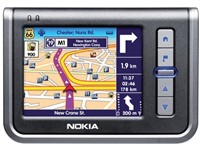
Navigation Market Looking At Boom Times Says Navteq

In an exclusive interview this morning with channelnews, Kirk Mitchell, Director, Business Development, Navteq says the market for navigation services is booming for a number of reasons, not least of which is the falling price of navigation devices themselves.


Click to enlarge

Mitchell notes there are a number of key drivers for the uptake of navigation devices, price being one, but the technology too plays its part here.

“These devices are becoming easier to use all the time”, says Mitchell, adding that as time goes on, “the amount and quality of services on navigation systems is increasing all the time, giving consumers more choice with what they can do with this technology”.

Mitchell also notes that according to GfK, some 750,000 navigation devices were sold in Australia over the past 12 months, representing only about 8 per cent of all vehicles in the country, meaning there is still plenty of space for vendors to increase their market penetration.

On top of that, there are big changes afoot in this space, he says.

“Firstly there is the convergence of mobile and navigation technologies which is going to expand the penetration of navigation technologies to areas not now serviced and secondly, there is more value-adding of services and information, like more location-based services onto navigation services”, making them even more appealing to consumers.

In terms of new technology and services, Mitchell these are also having an impact on safety.


“When driving, your eyes shouldn’t have to read the navigation device and in fact should really read the road”, that’s why he notes, Navteq has introduced features such as 3D Graphic Representation of complex intersections, giving users a much clearer picture of turning right into streets where it may be difficult”.

Furthermore says Mitchell, “we have also introduced Phonetic Voice Pronounciation of the many unusual or Aboriginal-sounding names in Australia, thereby, making sure users don’t miss read or mishear the name of the street”.

And in terms of freeway turn-offs, Mitchell also says that Navteq have added “new visualization software”, making it even easier to work out well beforehand the turn-off from a freeway when travelling at high speeds.

So according to Mitchell, it’s all happy days in the navigation device space, with the uptake of this technology for mobile phones and the increasing use of value-added services making him confident to predict that “Navteq is looking to become the number 1 vendor in this space within 12-18 months”.