Smart Office

ASPs, Excess Stock Hits Cellnet

Despite a record year for revenues Cellnet has indicated it will need to restructure and reduce its inventory if it wants to turn that into profit.

The company has confirmed its earlier guidance of an after tax profit in the region of $6.1 million for the full fiscal year ending June 30. The result was a disappointment after the company’s first half results put it on track for a record year.

The “disappointing” result was impacted by lower than expected performance in the distributors higher margin products coupled with a decline in average margin. “Frankly the second half result was very disappointing,” said Cellnet chairman Dr. Darryl McDonough.

McDonough confrmed that the first job assigned to new Managing Director Adam Davenport was to hold a reviewof the company’s operations with a view to changing the complex structure which grew from the many acquisitions made over the past few years. Although this program of restructuring has been approved by the board, little detail has emerged.

In the company’s results presentation to analysts and investors, a new organisation chart details six general managers reporting into Davenport; CFO Mark Bloomer, GM for the company’s New Zealand operations Mike O’Brien, Darryl Tucker as GM for Corporate, Peter George, GM for Retail and Ben Grootemaat as GM for the company’s mobile phone content production business Mercury Mobile.

A sixth spot, for a General Manager of Supply Chain is as yet unfilled as the company searchers for a logistics specialist to take the role.

Apart from lower margins in the mobile phone accessories business, Cellnet pointed to costs associated with inventory management as a drain on second half profits. In fact, the company elected to write off an increased amount of inventory to free up warehouse space for product from newly signed vendors. The company has done well from industry consolidation (the TechPac/Ingram Micro merger) and says it picked up additional vendors as a result. Both Toshiba and HP signed with the distributor soon after the merger took place.

“We intend to make substantial reductions to the number of individual stock items held and our levels of inventory,” said Davenport.

“Cellnet has recently attracted many new vendor partners and the stock rationalisation programme currently being undertaken will liberate additional warehouse capacity needed to service the new relationships.”

The poor result prompted the board to cancel any plans for a further dividend payment, though the company paid a 7 cents per share dividend in April this year.

Apple Grows While Microsoft Slows

According to a story in seattlepi.com, the biggest cash pile in the technology industry has historically belonged to Microsoft but now Apple has taken the lead, with implications for both companies.


Click to enlarge
courtesy: www.usatoday.com

Cash in this sense translates into the ability to consider acquisitions and other potentially business-boosting deals. Microsoft for example had been planning to borrow money for the first time, before it withdrew its $US44.6 billion Yahoo.

Meanwhile, says the article, Apple’s balance has been growing — reaching $US19.5 billion at last count — as a result of the cash generated by its Mac and iPod lines. Less than four years ago, its stockpile was $US5.5 billion, with investors now watching Apple’s growing cash balance in much the same way they did Microsoft’s a few years ago.

Historically, Apple has “built its business from the ground up, preferring smaller strategic acquisitions of technology and talent”, says seattlepi.com, adding that if the company “continues to follow that pattern, that means it’s not likely to reduce its cash pile through a blockbuster deal”.


However, Microsoft’s $US44.6 billion bid for Yahoo required the proposal to be funded half in cash and half in stock.

And even then, Microsoft said it would have needed to borrow an unspecified amount to finance the acquisition.

So it seems, the wheel has turned – we may well see the emergence of Apple as a new Microsoft-sized company, whilst some analysts have also been heard saying that this is an indication that Microsoft has peaked in its growth and may now start to decline.

Intel To Change Chip Structure

For the first time in five years, Intel will make a major change in the plumbing of its chips by switching to a new design that promises better performance and lower power consumption than today’s Pentium 4.

The world’s largest chip maker will announce the architecture this month at a conference in San Francisco, spokesman Bill Calder said Thursday. Chips based on the new architecture are expected to debut in the second half of 2006. The technology will replace the Netburst architecture that appeared in late 2000 with the Pentium 4 and enabled a path to higher processing frequencies. At the time, Intel hoped that it could boost performance by ratcheting up the speed of the chips.

But Netburst hit a roadblock last year as jumps in frequency failed to produce the expected improvements in overall performance. In addition, the chips required more power and thus generated considerably more heat. “The original theory was Netburst would show increasing performance benefits with increasing frequency,” said Nathan Brookwood, an analyst at the research firm Insight 64. “It didn’t work quite the way Intel had anticipated.” Meanwhile, Intel’s main rival, Advanced Micro Devices Inc., dropped out of the frequency race and engineered chips that do more work per clock tick rather than running at a faster pace. In most cases, AMD’s technology bested Intel’s chips.

Intel new architecture is expected to be based in part on Intel’s Pentium M, which was developed to deliver performance and power savings in notebook computers. It also has roots in the Pentium III processor that Intel launched in 1999.

Like AMD’s chips, the Pentium M’s top clock speed is lower than the Pentium 4, which currently tops out at 3.8 gigahertz.

Brookwood said the change represents a bigger shift for Intel. In the past, Intel launched architectures on chips for desktop PCs and then carried the technology to other platforms, such as servers and notebooks.

“This next-generation part was originally designed and targeted for mobile,” he said. “Now it’s going to be proliferated onto desktops and servers. I think that in some ways is the bigger news than just the microarchitecture change.”

Like the top of the line Pentium 4, the next-generation processors also are expected to have multiple computing engines on a single chip, security features and manageability functions.

“AMD will face tougher competition once Intel moves to the new architecture,” Brookwood said. “But it’s far too soon to be able to predict who’s going to be ahead 18 months from now.”

Dell + Allienware vs Acer + Gateway?

With hardware margins still paper thin and average selling prices getting so low its hard to make a buck out of selling PC hardware, it makes a lot of sense to see some consolidation in this maturing, commoditised business.

IBM kicked off the round last year when it sold its entire PC division to Lenovo. Now Company exec’s are being asked to confirm rumours that their own business is next on the list. So far they steadfastly refuse to divulge what secret talks they may, or may not be in to buy up the smaller players.

But SmartOffice News knows that where’s there’s smoke there’s usually smouldering ruins somewhere.

First Dell hit the rumour rounds this week with unconfirmed reports that the company had struck an as-yet unannounced deal to acquire high performance gaming machine maker Alienware.

Alienware responded to requests for confirmation with a suitably cryptic response than neither admitted nor denied the rumours were true.

In a written statement Alienware told a C|net blogger that: “At this time, Alienware will not comment on any speculative stories or rumors concerning Dell and Alienware’s association. While we do believe that news stories like this are ultimately a strong positive reinforcement of the Alienware brand and the company’s success, we will not comment on speculation or potential future events. As always, Alienware is committed to offering consumers and businesses with the best high-performance, innovative PC products on the market and we remain manically focused on that goal.”

Sounds like a yes to me!

Dell simply refused to comment.

Since then a local C|net reporter asked the local Dell guy how true the rumours were, as if he would know, and as if he would tell if he did know. “I’d suggest you take that speculation with a grain of salt given the origin stated in the blog (Alienware’s competitor) — you can never be sure what the motivation is,” was local Dell spin doctor Paul McKeon’s, (Corporate Communications Manager for Dell ANZ) response to the C|net reporter via email.

So far this speculation has all pretty much been played out in the blogosphere, here, here and here. We’ll have to wait and see.

Meanwhile, either fuled by the speculative frenzy over a potential Allienware Dell hook-up, the latest rumour has come to light about Acer’s possible plans to acquire Gateway to help it wrest the US market out of the tenacious grip of Dell and HP.

Acer chairman JT Wang has been forced to deny rumours that the company has designs on the Gateway business, number three in the US.

Acer certainly has the money and the motivation. Acer has made massive inroads into the PC business in just about every market but the US and cracking the market there is an essential part of the copmany’s strategy going forward.

Wang was a little more convincing the Alienware in his denial, revealing that some investors had suggested it was a good idea. But Wang said he believes it’s not a necessary step for the company to establish itself in the US market.

Sources with Taiwan’s notebook makers commented that the rumors about Acer acquiring Gateway stemmed from Dell’s and HP’s recent active developments in the European markets, where Acer is the number one notebook vendor. Dell and HP are hoping that the pressure they are giving Acer in Europe will slow down Acer’s development in the US, the sources told our Taiwan correspondent.

Wang said because Acer’s notebooks are already number one in Europe, the company expects its growth there to slow down this year. But Acer’s overall sales in Europe could still grow 30% to US$6.5 billion in 2006 from US$5 billion in 2005.

Even if Acer grew only 20% in Europe because of strong competition, its revenues would still grow to US$6 billion in 2006, Wang said. But Acer could make that up from the US and China markets, he added.

Additional Reporting by David Tseng

Ingram Micro Signs Global Display Deal

According to a report in TMCNet, wireless digital signage solutions provider ICG, has signed a distribution agreement with Ingram Micro.

The agreement will initially focus on the US retail market but will later cover other global markets and will include the “industry’s first end-to-end wireless digital signage hardware and services”, according to the article, which did not specify any financial terms to the agreement.

The report notes that research indicates that by 2009, there will be over one million digital signs in North America, with the possibility of nearly 135 million locations over the next 10 years coming online.

For their part, ICG said their wireless digital signage solution “redefines the industry standard by eliminating the costs associated with traditional wired solutions. This capability lowers the overall cost of entry for digital signage”, according to the TMCNet report.

 ICG also notes that their agreement with Ingram Micro’s Digital Signage Division will “now facilitate rapid market penetration into this high growth global market through Ingram Micro’s extensive solution provider network and VAR/reseller channel”, adding that this agreement will also enable I.C.G. to “realise global expansion more efficiently as the global market for digital signage continues its massive growth”.

 Ingram Micro is one of the world’s largest technology distributors and a leading technology sales, marketing and logistics company and a comment from Ingram Micro Australia was still being sought at the time of publication.

Acer Rolls Out Worlds Best HD LCD Monitor

According to Gizmag, Acer has released a first in the world with its 50000:1 HD LCD contrast ratio monitor courtesy of Acer’s Adaptive Contrast Management (ACM).


Click to enlarge
courtesy:www.gizmag.com

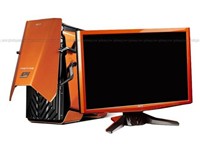
Designed for PC gamers, the G24 supports high-definition (HD) graphics in a high contrast orange-black colored package that matches the Aspire Predator desktop PC, the report says.

Gizmag says the “24” 1920 x 1200 resolution widescreen G24 is designed for graphics-intensive HD games and multimedia applications with its rapid response time of up to 2 ms and 400-nit brightness through Acer’s CrystalBrite technology.

The monitor also features Acer’s OD (overdrive) technology that is designed to significantly improve gray-to-gray levels and is optimised for Windows Vista and supports HDMI and easy connection to DVD players, set-top boxes and HD gaming consoles, according to the report.

Acer has yet to release a pricing or a release date for the G24 monitor.

Canon Shoots Out Laser SMB Printer

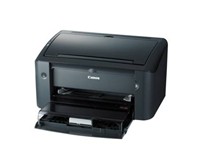
Canon’s Laser Shot LBP-3100 laser printer combines exceptional results with a stylish new look. Documents and presentations will also be delivered quicker and clearer to give a professional look to new business proposals or client reports


Click to enlarge

The laser printer features including print speeds of up to 16 pages per minute (A4) and a stylish back design to suit any office environment. 

Canon’s Automatic Image Refinement (AIR) technology produces high edge definition for font and graphics (equivalent to 2400 x 600 dpi), which help bring life to the most basic of documents.
As part of Canon’s commitment to a green planet with its printer categories, the Laser Shot LBP-3100 contributes by consuming less power (280 watts) than key competitors, which in turn helps businesses reduce ongoing running costs.

 Equipped with Canon’s latest High Performing Printing System “CAPT” (Canon Advanced Printing Technology), the printer can deliver high-speed printing because it works together with the processing power of a PC to process large amounts of data quickly, so there is no need for additional printer memory. 

An Electrostatic Transportation Belt and in-line toner cartridges enable ‘one-shot’ printing for faster print speed, while Canon’s Hi-SCoA compression technology results in super fast print data processing.

For clearer text and imagery in documents, the LBP-3100 is equipped with a Laser printer engine of 600 x 600 dpi resolution and its gradation control enables high-definition print at a resolution equivalent to 9600 x 600 dpi.


 The ‘All-in-One’ cartridge technology also enables users to lower their ongoing running costs. With this technology the Intermediate Transfer Unit, Photosensitive Drum, and Waste Toner Container are combined in one unit, resulting in fewer consumables to stock, low maintenance and reduced running costs.

 The LBP-3100 also features High Speed USB 2.0 connectivity for fast data transfer and to ensure quick printing and energy reduction, the Laser Shot LBP-3100 has adopted Canon’s On-Demand Fixing System for low power consumption and quick start-up. 
This technology enables instantaneous activation of the fusing heater just before printing, meaning that the printer is always ready to print and no time is wasted waiting for it to warm up.

The Laser Shot LBP-3100 Laser printer (RRP $149) is now available through Canon dealers nationally.
 

Appliance Retailing Sales Start To Wobble

The recently released Citi’s Retail Sales Indicator showed a retail spending slowdown with 6.8 per cent growth in March, compared with the 11.1 per cent growth in February 2008.


Click to enlarge

However appliance retailing fell 4.8 per cent in March, a substantial fall from the 5.9 per cent growth reported in February.
Even after adjusting for the holiday in Easter, CTi believe that electronic sales deteriorated in March.

Additionally, using the preferred measure of the three-month rolling average growth, appliance sector growth was only 3.6 per cent, compared to the 16.3 per cent growth for the same three months last year.

However Cti also says that it expects large, listed retailers, such as Harvey Norman, Just Group and David Jones to take market share, given that they have lower costs through economies of scale.

Canon Unveils Printer From SMBs

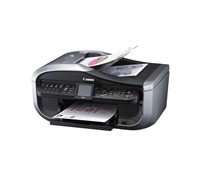
Canon’s new Pixma MX850 has been designed for the growing small business with, what the company says is the “ultimate printing solution”.


Click to enlarge

The Pixma MX850 features high-speed Auto Duplex Automatic Document Feeder (ADF) for double-sided copying and scanning in addition to double-sided printing capabilities.  The Quick Start feature allows for instant operation the moment the printer is turned on.

Creating an easier way to share your printer through multiple personal computers, the Pixma MX850 supports wired LAN connections in addition to USB 2.0 interface.

These features, coupled with faster print speed, are claimed by the company as being “designed to be invaluable for the home office professional”. 

Visit: www.canon.com.au

Snap Server Blitzes The Competition

Mid-market storage maker Adaptec is crowing about the latext VeriTest results which show its Snap Server 550 outperforms the competition three fold.

Testing of the new Snap Server 550 and 520 networked storage solutions against competing departmental storage products from Hewlett Packard and Dell found that the Snap gear delivered the highest throughput scores as well as response times that were more than three times faster than the HP DL100 G2 and Dell PowerVault 745N, says the company in a statement.

The new 500 Series introduced in February are designed for distributed environments and small business deployments. This first mid-range NAS solutions built on AMD’s 64-bit Opteron architecture, supports both Serial Attached SCSI (SAS) and Serial ATA (SATA) and delivers performance described as enterprise class by industry experts Toigo Partners.

According to Jon Toigo, “The introduction of the Model 550 Snap Server from Adaptec is nothing short of a watershed in the history of Network Attached Storage. This product blends the high performance, functionality and manageability that one would expect from an ‘enterprise class’ NAS solution with the economy of design and price tag usually associated with products aimed at small-to-medium-sized business requirements and budget.

In every category of our standard assessment methodology, the 550 is a clear and undisputed winner. We give an enthusiastic recommendation to any business seeking to drive the cost out of storage infrastructure while providing best-in-class support for common applications and workloads.”

High praise indeed! The Veritest report found he 550 and 520 posted throughput scores of 699.3 Mbits/second and 589.502 Mbits/second respectively compared to rates of 204.5 Mbits/second and 187.342 Mbits/second for the competition.”

The complete report can be downloaded at www.veritest.com/clients/reports/adaptec