

The iHome iH10 iPod FM Table Radio features classic rotary knobs for precise, intuitive control; a wood speaker cabinet with tuned speaker chamber technology for richer sound; plays and charges your docked iPod when connected to an AC adaptor.
 Staff Writers
Perth Developer Hits The Big Time
Developer of the Hutchison Three social networking application, Kink Kommunity, is in the UK negotiating to take the service to 4 million Hutchison user there.
Loop Wireless CEO Gavin Bullen also has plans for Three Italy, meetings with Vodafone and has a
Kink is a social networking tool that allows members to incorporate blogging and mixed media content on a range of subjects. A key feature is the ability for users to contribute their own (moderated) content such as commentary, photos or video footage.
The service launched on Hutchison Three’s Australian network back in October last year and while it took a few months to reach a critical mass, the service is gaining in popularity amongst its 18-24 target audience.
Recently judged the ‘Best Mobile/Wireless Content’ at the 12th Annual Australian Interactive Media Industry Association (AIMIA) Awards, for the service has caught the attention of Three UK executives and bullen says the gusto with which they are taking to the idea is exciting for the small Perth-based developer.
Speaking to SmartOffice from the UK where he is currently hammering out a revenue sharing deal to get the service online there, Bullen said the nation’s 4 million Three users represented a significant opportunity compared to Hutchison’s Australian 3G subscriber base of 700,000. If he can do a similar deal with Three in
In
With the Kink Kommunity set to go live in the UK in a little over a month, Three and Loop executives are still working out the details, but Bullen said senior Three executives in the UK are keen to make a move into the social networking space and plan to put on a significant marketing blitz to get the community up to critical mass.
“They will work much harder to get take up. It will be considerably quicker as they are throwing a much heavier marketing spend at it. We should be able to reach critical mass here three or four months ahead of what we did in
“Product managers within a carrier are all trying to jostle to get their product marketed to the user base,” explained Bullen. “A new product like this with unrecognised brand has to work hard to get the marketing space.”
The 3G content system there is a little different from the user interface used locally explained Bullen and has only a limited number of icon positions and significantly something else is getting bumped to give Kink a good position on the grid.
MYOB Revenues Up 30 per cent
MYOB has announced an on-market buyback of up to 5 per cent of its shares following the posting of a healthy year result.
The company today reported revenue from continuing operations of $161 million for the year ended 31 December 2005, up by 39 per cent compared to the year earlier. EBITDA increased a healthy 41 per cent to $61 million, up from $43 million in the prior year.
The company achieved a typically software oriented EBITDA margin of just over 37 per cent, up slightly on the prior year, with a 98 per cent increase in earnings before interest and tax (EBIT) to $25 million.
In releasing the results, Craig Winkler, MYOB’s Chief Executive Officer said, “I’m very pleased to report such positive results at the close of our first full year post merger with Solution 6. We’ve worked to consolidate our position as a significantly larger company around the world, and have put in place the fundamentals for strong growth in revenue and profitability in the medium-term. We have a clear vision for the future and will continue to invest for the long-term.
“Our capital position is excellent, with cash on hand of $44m and access to significant debt capacity to fund appropriate acquisitions. Importantly, we generate great cash flow from our existing businesses, which more than fund our organic growth options. As a result, we have today announced an on-market buyback of up to 5 per cent of the issued capital of the company together with a special fully franked dividend, as we continue to manage our shareholders’ capital carefully.”
The Board has approved a final dividend of 2.75 cents per share fully franked and an additional fully franked special dividend of 1.25 cents per share. The 4.00 cents in dividends will be paid on 21 April 2006 to all shareholders on the register at the books closing date of 3 April 2006. The company’s shares rose accordingly.
Online Storage War Looms
Microsoft is readying an online storage service, called LiveDrive, just a month after Google leaked plans for tis own.
Any announcement would have to be seen in context of Google’s Gdrive project which was leaked in typical Google style last month.
The Gdrive project came to light after a PowerPoint presentation designed for financial analysts accidentally included details of the hosted storage solution. It’s not the first time commercially sensitive information about Google has found its way into the public domain seemingly by accident.
The Gdrive service is believed to be a repository for emails, photos, music and documents saved to the Google servers rather than locally.
Now Microsoft is believed to be working on a similar offering as part of its Live service currently in Beta testing in the
Like Gdrive the
Both Gdrive and LiveDrive would compete with existing smaller players in the online storage space. Streamload for example offers a free service to store up to 25GB of data and then offers subscription accounts to accommodate larger disk requirements or bigger transfer allowances.
US News source IDG managed to obtain confirmation form a Microsoft spokesman, Adam Sohn, last week. Sohn said the project code-named (
CNET Sold For A Song

US news and information network CBS has agreed to buy technology publishing company CNET Networks which operates sites including News.com, ZDNet, GameSpot, TV.com and MP3.com, in a deal valued at $US1.8 billion.
 |
CBS says it will pay $US11.50 per share, a 45 per cent premium over CNET’s share price at closing on Wednesday. The CNET board has also unanimously approved the deal.
The deal will make CBS one of the top 10 U.S. Internet companies, in terms of traffic, attracting 54 million unique monthly visitors in the U.S. and around 200 million worldwide.
The deal will also end a dispute with CNET shareholders Jana Partners, which was attempting to elect new directors and propel the company in a different direction.
CBS chief executive Les Moonves said, “Together, CBS and CNET Networks will have significant additional exposure to the fastest-growing advertising sector and can accelerate our growth through a number of new content, promotion and advertising initiatives.”
Other recent CBS acquisitions in the Internet space include its $US 280 million purchase of social music site Last.fm, and the financial news Web show Wallstrip.
BigAir Buys OzEmail Customers
Wireless broadband company, BigAir, has announced it will delay its pending IPO while the market digests a new acquisition.
The company announced today it has acquired 3,000 new iBurst subscribers from OzEmail. The deal, through recently acquired BigAir subsidiary, Veritel Wireless, will see the budding telco take over management, support and billing of all OzEmail wireless (iBurst) customers.
All 3000 subscribers have already been migrated to the BigAir core network and billing systems. The move follows BigAir Group’s recent acquisition of Veritel Wireless and precedes the company’s upcoming listing on the ASX. The news has prompted the company to delay its listing to allow time for the market to take in the changes.
BigAir managing director, Jason Ashton said that this acquisition puts BigAir ahead of schedule for its target to reach 10,000 customers by November 2006. “Prior to this acquisition BigAir’s customer base had already reached 4,000 and it is growing rapidly. BigAir customers are attracted to the speed and flexibility of our ‘copper-free’ wireless broadband networks and they are also attracted to the premium service levels offered across all of the services that we deliver.”
“It’s a good deal for us,” said Ashton. “We aim to be number one or number two [in the wireless broadband space] and to focus on the business market.” The deal actually puts BigAir well ahead of other iBurst resellers. Ahston said Veritel, an iBurst partner the company acquired recently was the number one reseller, while OzEmail was the second largest.
The consolidation of these two subscriber bases gives BigAir more than 50 per cent of the current iBurst business, according to estimates. Ashton said the salemadesense for OzEmail owner iiNet which adopted the wireless subscribers as part of its acquisition of OzEmail from MCI. “The wireless subscribers didn’t fit in with iiNet’s DSLAM strategy so we said we would take them off their hands,” said Ashton.
“We are the only Australian wireless provider to offer a complete range of fixed, portable and mobile wireless broadband services and we have plans to expand our network and wireless service offerings into the other major capital cities across
BigAir Group’s iBurst service is a completely mobile wireless broadband service. It is an ‘always on’ Internet connection that enables users to surf the web, do email, download files, access office VPN networks, and more, all at speeds of up to 1Mbps. With iBurst, users can access broadband in their home, office, or on the move as it is transmitted though the air waves from local radio towers to a computer within the coverage area, and provides access to the Internet without the need for dedicated telephone lines or cable TV connections.
The IPO for shares in BigAir Group Limited is made in accordance with its Prospectus lodged with the Australian Securities and Investments Commission on
BigAir Group has extended the closing date for its IPO for two weeks in order to allow its most recently acquired customers the opportunity to invest in its IPO.
Dual Display Has Privacy Application
Sharp has developed an LCD technology which is able to display two images at once. Viewing the screen from one angle you see a different image that viewing it from the opposite side.
A technology that is definitely going to be a hit in the signage business was announced by Sharp’s European Laboratories with volume production of the screen to start immediately.
Dubbed Controlled viewing-angle or two-way viewing-angle LCD’s the proprietary Sharp technology seems to have several applications such as shared entertainment/work screens, but another demonstrated application is akin to the privacy LCDs notebook vendor Toshiba is working on. Using the dual image LCDs announced today could let the user of a PDA or notebook see what is really on the screen while those at an angle to the screen would see an entirely different image.
With all the work that’s gone into increasing the viewing angle of LCD displays, this evolutionary technology uses a parallax barrier superimposed on an ordinary TFT LCD. The LCD sends the light from the backlight into right and left directions, making it possible to show different information and visual content on the same screen at the same time depending on the viewing angle.
Controlling the viewing angle in this way allows the information or visual content to be tailored to multiple users viewing the same screen. For example, one user can view the display as a PC screen for browsing the Internet or for editing video shot using a digital camera (IT) while at the same time another user watches video content such as a movie or a TV broadcast (A/V). This ability to enjoy two functions in a single unit in full-screen size will contribute to achieving a full-fledged convergence of digital home electronics A/V and IT, says the company.
Dell Top With LCD Monitors in 2005
Dell beat out its competitors selling the most LCD monitors for the year in 2005, according to DisplayBank.
The company shipped a whopping 20 million units, almost doubling the total of second ranked Samsung, which shipped 10.8 million units, according to the research. In all Dell accounted for 19 per cent of the LCD monitor market for the year.
However, Samsung was the second largest manufacturer of LCD monitors making 12.5 million screens, while Dell OEM sourced its monitors.
|
Top 6 global LCD monitor vendors (brand), 2005 |
|||
|
Ranking |
Brand |
Shipments |
Market share |
|
1 |
Dell |
20 |
19% |
|
2 |
Samsung Electronics |
10.8 |
10.3% |
|
3 |
HP |
10.4 |
9.9% |
|
4 |
Acer |
7.6 |
7.2% |
|
5 |
LG Electronics |
6.5 |
6.2% |
|
6 |
Lenovo |
4.8 |
4.6% |
|
|
Others |
45.2 |
42.9% |
|
|
Total |
105.3 |
100.0% |
|
Top 6 global LCD monitor makers (manufacturers), 2005 |
|||
|
Ranking |
Suppliers |
Shipments |
Market share |
|
1 |
TPV Technology |
17.1 |
16.2% |
|
2 |
Samsung Electronics |
12.5 |
11.9% |
|
3 |
BenQ |
10.3 |
9.8% |
|
4 |
LG Electronics |
9.1 |
8.6% |
|
5 |
Lite-On Technology |
9.0 |
8.5% |
|
6 |
Innolux Display |
8.2 |
7.8% |
|
|
Others |
39.1 |
37.1% |
|
|
Total |
105.3 |
100.0% |
Logitech Releases Comfy Cordless Mouse
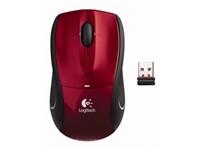
Logitech has released the Logitech V450 Nano cordless laser mouse for notebooks, designed to provide more comfort and productivity for those who use a notebook PC or MacBook.
 Click to enlarge |
The V450 Nano mouse features Logitech’s Plug-and-Forget Nano-receiver.
Because of its small size, people can plug in the USB receiver once and then forget about it – the mouse is always ready for use. The V450 Nano mouse also offers increased productivity thanks to an advanced laser sensor that delivers smoother tracking and better precision on virtually any surface, 12 months of battery life, and Logitech’s advanced 2.4 GHz wireless technology.
The company says that notebook users will appreciate the comfortable, ergonomic design, which includes soft rubber grips.
The V450 Nano mouse is available in Australia now in red and light grey. RRP is $79 AUD.