Smart Office

Amazon: Hello OZ, We’re On Cloud

Tech giant has arrived Down Under.
Amazon cloud service, CloudFront, a pay-as-you-go for content and web delivery is now locally available to OZ players, with the establishment of a Sydney location. 

“We’ve just added an edge location in Sydney, Australia (number 33, to be precise) to Amazon CloudFront and Amazon Route 53,” Amazon announced on a Web Services blog, dated June 20.

The move was based on customer requests and a recent survey, the US e-tailer said.

“We believe that this location will prove to be of great benefit to our customers, providing them with increased performance and reduced latency.”

“CloudFront’s pricing model will provide Australian companies and global companies with a very cost-effective alternative to traditional content delivery solutions.”

This new location will speed up the delivery of static, streaming and content to end users in Australia, and accelerate the resolution of local issues.

The CloudFront location in Sydney supports the entire array of CloudFront features including support for dynamic content, low minimum content expiration periods, live streaming to multiple devices using FMS 4.5 or smooth streaming, streaming media, private content, invalidation, and custom origins.

Facebook Tech Guru Quits

The Social Network is one man down after technology boss leaves.


Click to enlarge

Bret Taylor, Facebook’s Chief Technology Officer, is leaving the network to start up his own venture in the coming weeks.

Taylor joined the company  in 2009 after it acquired his social network aggregator FriendFeed and was one of the co-creators of Google Maps, reports Forbes.

Taylor made the announcement Friday.

This is one of the the first major staff departures from the network which began in 2004.

Taylor said he was “sad to be leaving, but I’m excited to be starting a company with my friend Kevin Gibbs.”

It is not clear what the mystery new start-up will be.

The tech guru said he was “very proud of our recent accomplishments in our platform and mobile products, from Open Graph and App Center to Facebook Camera and our iOS integration.

“I’m even more excited for the world to see all the amazing things these teams have coming.”

Facebook’s fortunes have taken a tumble since it made it debut on the stock market last month with initial $38 price falling over 20%, although its share price rose late Friday.


“I’ve learned more than I ever imagined in my time at Facebook,” Taylor said and gave “special thanks” his boss to Mark Zuckerberg.

“You’ve not only been my boss for the past three years, but my mentor and one of my closest friends.”

REVEALED: Internet Traffic To Boom 7 TIMES

NBN will have its work cut out, if these figure are correct.


Click to enlarge

Internet traffic will grow 7-fold by 2016 in Australia, network giant Cisco has forecast.

Traffic will reach 708 Petabytes – thats 1 million Gigabytes – per month in 2016, up from 97 PB in 2011 – or to put it another way its equivalent to 2 billion DVDs per year.

Cisco forecasts Internet usage among Aussies will grow 49% every year until 2016.

And the gigabyte equivalent of all movies ever made will cross the Internet every 8 hours, according to Cisco’s VNI Forecast.

But it seems we will also be accessing the Net via our smartphone and tablets even more – with mobile data traffic to grow 14-fold in the next four years, at an astonishing 68% growth rate yearly.

There will be 142 million networked devices in 2016, up from 93 m in 2011.

We will be watching more web videos – 14 billion minutes per month – whether its posted on YouTube or streamed content or catch up TV from the likes of ABC iView, compared to just 4 bn now.

Or to put it another way, Aus Internet traffic in 2016 will be equivalent to watching 242,418 DVDs per hour.

And we will each use generate 30.1 GB of Internet traffic per month in 2016, on average – thats a whopping 577% rise from the paltry 4.5 GB we currently use.

And almost 13% of all Internet households in Oz (757,889) will be generating more than a massive 100 GB per month in 2016, up from 54,692 last year.

However, it seems our internet speeds will also be faster – 95% of broadband connections will be “faster than 5 Mbps in 2016” the forecast also indicates.


Last week NBN Co Chief Mike Quigley revealed 37 % of active users on high speed fibre network are opting for the fastest speed tier, 100Mbps down and 40Mbps up.

NBN service is said to be partly completed by 2015, just in time to deliver the high speeds hungry Internet users in Oz will demand.

Telstra Hit Out At ‘High Priced’ NBN

Telstra has written a strongly worded submission criticising the NBN Co pricing and controls over the new broadband network.


Click to enlarge
Sparks will fly: Telstra hits out at NBN Co SAU.

Among the key holes Telstra has picked within the NBN Co’s Special Access Undertaking (SAU), which delineates the terms and conditions of wholesale broadband in Australia for the next 30 years, are its pricing, ability to control price and the 30 years length of the framework.

The SAU is the new framework under which all telcos will have to operate in a NBN high speed fibre broadband world for the next 30 years.

Telstra says its sees “no basis” for the NBN Co’s proposed price increases after 2017 and the lack of cost modelling appears to be further proof the proposals lack reason, it believes.

The undertaking also guarantees fixed wholesale pricing for the next five years, until 2017, after which the NBN Co will have discretion to alter prices as it sees fit, under the SAU, which is still subject to approval from Australian Competition and Consumer Authority.

It also fears fibre broadband prices for the end consumer may end up being far too high, thus going against the social premise of the “broadband for all” NBN project, costing the taxpayer $36bn.

But this isn’t the only aspect of pricing Telstra is worried about – it also criticised the calculation of the weighted average cost of capital (WACC), which is currently 8.6% – meaning (end) broadband prices would be “unnecessarily high” and government as the sole investor would make high returns on the public project.

“Retail prices would also be higher than necessary leading to economically inefficient social losses,” the submission notes.

Telstra has also questioned the public vs private ownership of the $36bn NBN project, considering what it sees to be the (too – high) WACC for a public project.

“The ACCC should consider whether the Government ownership of NBN Co has particular implications for the determination of the appropriate WACC,” Telstra says in its 27 page submission to the competition watchdog, ACCC, dated January 20th.

However, the telco recognised “a private sector WACC (certainly before privatisation) may not be appropriate.”

Telstra appear to have major worries about the NBN Co’s power over price controls it intends to place over broadband products sold to wholesale customers, which includes the likes of Optus, iiNet and Primus, something which it should be worried about considering it will probably be its biggest single customer.

“The price controls appear to provide too much flexibility for the NBN Co ..particularly for new products.”


And the fact that these price controls are to be set in place for the next 30 years is also something unsettling David Thodey & Co. The 30 years term is “too long” and lacks provision for review, its submission also states.

It has also criticised the non-price aspects of the SAU, saying many of these provisions are of “limited value” as they allow the NBN Co too much discretion and not enough scope for the ACCC to intervene:

“The effect of this is to “lock-in” significant discretion for NBN Co to determine the non-price terms of supply (through its WBA) and exclude the ACCC from providing ongoing oversight of NBN Co?s conduc.t”

Other key terms, including supply and regulatory oversight of cost inputs and reporting are also up for criticism.

The SAU is subject to ACCC approval after submissions from all telcos are considered.

Dell, HP PC Sales Tank As iPad Rules

As PC veterans HP and Dell slump, Apple, Lenovo are rising.


Image credit: Fastcompany

The old order for the PC industry appears to be ending as HP, the biggest computer maker globally, reported a 30% net profit slump this week.

HP net profit dropped 30% for Q2 to April 30, amid flat growth in its PC division ‘Personal System Group’, at $9.4bn

The PC maker earnings declined in two out of five of its business divisions including Imaging and Printing (-10%), and Enterprise division which slumped 3%.

The world’s biggest PC maker showed disappointing 0% growth in its computer business – despite the release of a slew of new PCs and Laptops, both here in Australia and worldwide.

PC sales are sluggish globally and grew just 1.9% in Q1 2012, according to Gartner, while the tablet market is growing at an astounding 124% annually, although this is from a low benchmark. Notebooks and mini-notes are growing 12%.

This comes as HP continues to suffer in the face of intense competition from mobile tabs like the iPad and a slew of Androids hitting the market, which analysts re-confirmed this week.

Hewlett Packard notebooks were down 3%, although revenue desktop PCs were up 5% compared to 2011.

However, its Software division grew 22% in Q2- one of the only divisions that witnessed growth, along with Financial Services.

In fact, HP software division is far more profitable than its hardware business, which prompted bosses at Palo Alto to controversially fork out $11 bn for UK software giant Autonomy last year.

The company, under leadership of former CEO Leo Apotheker, even thought seriously of ditching its hardware division altogether, a gamble which later cost him his job and damaged HP’s repuation.

Read: HP Slash 27,000 Jobs, Profits Dive

Another US PC stalwart, Dell, also reported less than stellar performance on the PC front this week, announcing a 4% drop in revenue $14.4 bn, with its Consumer business revenues dropping 12% to $3 bn.

And like HP it is looking to expand its proftiable enterprise division ‘Enterprise Solutions and Services’, which grew 2% year over year to $4.5 billion and is something it has pledged to invest in for future growth.

Dell are focusing on more profitable enterprise services, which now account for 50 percent of our gross margin, confirmed Dell chief financial officer, Tuesday.

PC maker Dell has also confirmed it is contunuing to reform its business to that of “an end-to-end IT provider,” with a major focus on profitable enterprise rather than consumer solutions.

“We saw continued progress in our first quarter with the innovative IT solutions we’re providing – notably our latest Dell servers, storage, networking and services that deliver customers enhanced productivity,” said Brian Gladden, Dell CFO.

“We continued to shift the mix of our business during a challenging environment.”

This comes as new rivals like Apple are grabbing huge chunks of the PC market and are winning the mobile computing war -and has outran HP to the number one spot with 22.5% marketshare in Q1 this year, almost double that of HP’s 11.6% share.


Analysts NDP Display said Apple shipped almost 17.2 m ‘mobile PCs’ in first three months of 2012 – nearly 80% of which were iPads – compared to HP 8.9m units.

However, in the notebook rankings, HP held on to the No.1 spot with 16.2% share, ahead of Acer, Lenovo and Dell.

Read: Apple Swamps HP In Overall PC Market

Rising Chinese player Lenovo also reported stellar performance results this week, on net income of US$473 m – up a whopping 70% year to year with “all-time highs” in revenue, and global market share up 12%.

Lenovo now says it is #2 and the fastest growing major PC Co. for the 10th straight quarter.

 According to NDP, it ranked in the top 5 for both notebook (No. 3) and tablet or mobile PC categories (No.4) with 10.6% and 7.7% share respectively.

Hold It, IPO! Facebook Brakes Sale: Reports

The Social Network may not hit the trading floor till “mid June”, according to reports


Forget IPO’s – this man has other things on his mind.

The most hotly anticipated Initial Public Offering since Google may be put on the backburner for a few weeks, as CEO Mark Zuckerberg focus on other business at hand including “a string of acquisitions and other business distractions”, ‘people familiar with the mater’ told CNBC.

The Social Network were planning to start their investor road show early next month on May 7th, but with the recent impromptu $1bn purchase of  Instagram and litigation with Yahoo, Zuckerberg and Co  may have other pressing matters on their agenda.

Facebook also said it would fork out a massive $550 million to Microsoft for a cache of patents this week, which could prove crucial in its litigation with Yahoo, which it has since countersued, accusing the former Internet darling of pinching some of its patented technology, also.

If Facebook’s investor roadshow is put back several weeks until possibly May 14 or later, it means share trading probably won’t start til mid June.

The IPO could coin up to $5-10 billion for the network, and send it ‘FB’ as it will be called on the Nasdaq, market valuations through the roof.


Just this week Mark Zuckerberg creation showed net profit slump of 12% to $205m on revenues of $10.6bn, which it attributed to rising costs and revealed it now topped the 900 million membership mark.

Read: Facebook Profit Tumble (WHY Socialising Aint Free)

We’re Up: TPG Profit Soar 65%

Cheap broadband is paying off: TPG are flying high on profits of $55m – up 65%.


Click to enlarge

The ISP announced its first half year financials to 31 January 2012 which saw earnings before tax increase 17% to $131.9m.

Subscriber growth was driven by the TPG’s fiercely priced  ADLS2+ and home phone bundle plans, which grew by 49,000 subscribers during the six months, it said yesterday.

However, there was a 23,000 decline in standalone ‘on-net’ services and ‘off-net’ subscribers (7,000), with total net increase of  19,000.

And its fledgling mobile business launched in September is also showing “momentum” with net growth of 21,000 customers in the 6 months, bringing TPG’s total mobile base to 222,000.

Cashflow was “very strong” at $76.6m (after tax, interest and capital expenditure), which enabled the acquisition of cloud firm IntraPower for $12.8 million last year and the purchase of “significant” shareholding in iiNet, which it was rumored to be keen to acquire also.

Net profit after tax was $55.7m, a 65% increase over same time 2011.

The Group is also “well positioned” to achieve its earnings guidance for the full year of $250m-$260m.

During the half year the Group created a Corporate division with the corporate, government and wholesale businesses of TPG, Soul, and PIPE, which delivered “excellent” first half results, providing 44% of the Group’s total earnings.


TPG’s fibre network expansion has also continued over the half with an additional 417km, a 26% increase over 31 July 2011, to a total of 2,264km.

Earnings per share increased by 61% to 7.1 cents per share.

In light of the strength of Group earnings, the Board of Directors declared an increase in the interim FY12 dividend by 22% to 2.75 cents per share (fully franked), payable on 22 May to shareholders on the register at 17 April 2012.

Hacked AGAIN: Sony PSN Shuts Down 93,000 Hit

Sony has detected mass “unauthorized sign-in” on PlayStation, Entertainment and Online Entertainment Networks, it said yesterday.


Click to enlarge

93,000 Sony users have been affected -or “one tenth of one percent” of all users – 60,000 of these were PlayStation and Entertainment  Network online customers, while the remaining 33,000 were affiliated to Sony’s Online Network.

User credit card numbers details on the hacked accounts are not at risk, and activity has been minimal on accounts since the attack, it reassured customers.

The cyber attacked took place between October 7 – 10 US Pacific Daylight Time, Sony said, and has temporarily locked these 93,000 accounts hit.

The attack occurred where hackers succeeded in verifying Sony accounts’ with ‘valid’ sign-in IDs and passwords, allowing it to gain entry and hackers appeared to use large sets of sign-in IDs and passwords to verify accounts.

“Between October 7 – 10 US Pacific Daylight Time, we confirmed that these were unauthorized attempts, and took steps to thwart this activity,” Sony confirmed.

It plans to send email notifications to these account holders shortly who will be required to resets passwords.

“Only a small fraction of these 93,000 accounts showed additional activity prior to being locked.”

“We are continuing to investigate the extent of unauthorized activity on any of these accounts.”

 “We discovered these attempts and have taken steps to mitigate the activity” it said, clearly learning from past mistakes after  a similar security breach occurred earlier this year but took the Japanese giant weeks to fully admit the extend of the attack.

PlayStation Network and Qriocity accounts were attacked in April last, thought to have been carried out by rogue cyber hackers, Lulzsec, with 1.5 million Aussie accounts affected, which was followed by a second cyber attack. 

The unauthorised attackers attempts appear to include large amounts of data obtained from one or more compromised lists from other companies and sources, Sony said yesterday.

Read Sony Gaming Revenues Slump As New Attack Hits PSN Network

Harvey Norman Dumps State Of Origin

No Harvey: Harvey Norman’s logo will not longer be emblazoned across the screens at State of Origin.

The news Harvey Norman was dropping the sponsorship of State of Origin league games between Sydney V Queensland after 15 years, emerged Friday.

NRL is now looking for a new sponsor for the hugely popular event from 2013.

The agreement to end the deal between the retailer and NRL after 15 years was “mutual”, Harvey Norman chief operating officer John Slack-Smith told The Telegraph.

The deal is believed to be worth $3m.

The dropping of Origin sponsorship is no surprise considering Harvey’s precarious position in the CE trade, with annual profits slumping 32%.

Smith also insisted the retailer will still have a “broad range of involvement with the game” and will remain the offical retailer of NRL and Origin, as well as continuing sponsorship of pre-season All Stars games.

“The partnership with the NRL and State of Origin over 15 years has been outstanding,” he added.

The NRL also reckon there will be plenty of other companies looking to fill the space left by Gerry Harvey’s company.


Harvey previously backed the Melbourne Storms and recently sponsored Foxtel’s coverage of the London Olympic Games.

“We discussed with the Harveys the incredible value of State of Origin and agreed to take it to the market from 2013.
We’re extremely confident there will be enormous interest,” a NRL spokesperson told The Daily Telegraph.

HTC Gingerbread: Flash, Fast ..Do You Desire S?

HTC’s new breed of Android 2.3 Desire S and Wildfire S Gingerbread entered the mobile arena with much furore last night.


Click to enlarge
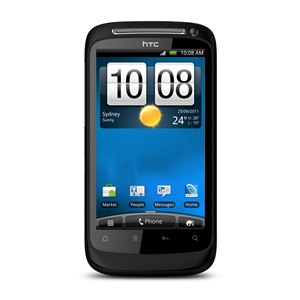
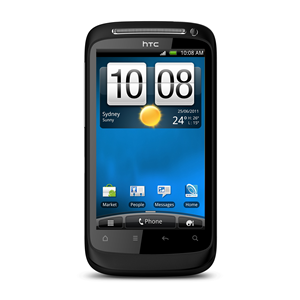
HTC Desire S

The new HTCs running Gingerbread are updates to the original Desire and Wildfire, among the first Androids to hit Aussie shores last year. 

And how times have changed. And not just for Android. HTC is also making its mark in the market here, which was reflected in the launch turnout last night at Sydney’s upmarket Quarter Twenty One venue.
So, down to the hard facts. What is the Desire S and Wildfire S bringing to the table that’s new and not already been done. And why would one want to buy it over the slew of Android’s hitting town every day?

As pointed out by Smarthouse last month, HTC have released dated handsets on to the market here, such as the Incredible S, months after Europe and the US.

The 3.7 inch WVGA touchscreen (480 x 800 res) Desire S is a “next gen” premium device and hits the sweet spot for people who want a “premium Android smartphone experience,” said Ben Hodgson, Manager, HTC Australia.
Specs-wise it comes with HTC Sense, super fast speed with 1GHz processor, 5 MP camera (front and rear), HD video, and “presents multimedia content brilliantly,” say HTC. And if you loved the Desire, this “stays true” to the original model, say its Taiwanese maker. 
The device is made from single block of aluminium making it feel solid and natural in your hand through a slimmer unibody design.  
And for multimedia junkies it delivers crisp virtual surround sound via SRS WOW HD and microSD memory card (which is SD 2.0 compatible) and also supports Flash 10.2. 
 

Click to enlarge
HTC Wildfire S

Up close, Desire S lighter than the original model the screen is crisp clear – the res has been improved 30-40 per cent, say its makers, and seems far more responsive and instant in functionality thanks to Qualcomm’s upgraded 1GHz 8255 Snapdragon processor.

It also runs for longer (about 24 hours) without dying and the battery is bigger. 
Gingerbread 2.3 has introduced 300 new Android changes including more widgets, skins and sounds. 

Price-wise, it can be bought outright for $648 or on a $59 cap for $5 a month additional charge for the phone, identical to the Samsung Galaxy II if memory serves me correctly. (Hmm, funny that). 

And what’s more, it will also be released just a day before the new Galaxy II on May 31, which is getting its Aussie media debut tonight.

Wildfire on the other hand is the middle of the road option, “is affordable and compact without compromising the quality” and aimed at the younger market, Hodgson adds.  
The 3.2 inch touch screen (320 x 480 res) Wildfire S is the small brother to Desire S and has some similar specs with  5 MP camera and the same microSD capability and also boasts a 600 MHz processor. So, almost as fast but not quite. 
Wildfire S is also social networking friendly with Facebook ‘share experience’, Friend Stream (which groups friends’ networking updates including Twitter and MySpace together) and other extras including remembering friends birthdays and other vital information. 
But, it does entertain and has really fast streaming to boot and offers mobile Foxtel capability offering up to 33 TV channels, straight to the Wildfire S screen. 
It is also lightweight at 105 g (3.7 ounces) and comes with other quirks like digital compass and light sensor. 
Both models offer the strong element of personalisation on the user interface which users love with HTC’s and these two new numbers are no different. 

 
Price-wise, Wildfire can be bought for $360 outright but also come with plan although these have yet to be announced, probably before its release on July 19th. 

Telstra has an “exclusive” grasp on both HTCs for now.
“The original HTC Desire was a huge hit with our customers and helped usher in Australia’s interest in Android-powered phones,” said Andrew Volard, Director of Telstra Mobile Products. 
We’re equally pleased to bring the affordable and compact Wildfire S to our customers. It’s tailored especially for our younger customers with strong social networking features and lots of entertainment options including Mobile FOXTEL from Telstra.”