
Smart Office

Revealed: Samsung Galaxy Android 3.1 Tab Hits June

Just as it has been forced to hand over the Tab to rivals Apple in a nasty patents battle, Samsung’s updated Android Honeycomb 3.1 is said to be ‘days away.’


Click to enlarge

The 10.1″ Tab with newest version of Honeycomb 3.1 announced at Google I/O conference earlier this month is to be released in US on June 8th, just confirmed by Samsung via Twitter.

“What is 10.1 inches of Android 3.0 Honeycomb delight? Only a few days away!”

And the good news is 3.1 OS is “is what Android 3.0 Honeycomb should have launched on,” according to Android Universe.
It also promises to be thinner and lighter (sound familiar?) at 595g.

Well Apple think so too and are currently embroiled in a patents war with Samsung over its Galaxy Tab, which could hit supplies of the device the iPad maker can prove the Korean giant deliberately copied its revered slate.

Read Samsung Forced To Surrender Galaxy Tabs 10.1 & S Phones To Apple here

However, the bad news is for Samsung fans who have recently purchased the 10.1v Tab on Froyo 2.2 released here just this month on Vodafone is a newer model is now available.

Specs wise the Galaxy also includes Flash support and 720p HD video but also added Droid 3.1 extras including resizeable widgets, open accessory API and USB host API.

It will allow connections to Google TV and there will be USB hub support, allowing a full size keyboard, console and other adds on’s connect with ease brining more functionality to between the tab and third party devices.

Its new ‘open accessory’ API means Androids can integrate with musical instruments, exercise and other machines.

It also offers media transfer protocol which helps manage, store and transfer files from cameras and real-time transport protocol API audio which enables VOIP, push-to-talk, conferencing, and audio streaming.


Samsung ‘s latest brainchild will set you back US$499 for 16GB and $599 32GB.

No word yet when it will hit here yet. Samsung Australia were not available for comment but here’s hoping it’s soon.

Telstra Hit Out At ‘High Priced’ NBN

Telstra has written a strongly worded submission criticising the NBN Co pricing and controls over the new broadband network.


Click to enlarge
Sparks will fly: Telstra hits out at NBN Co SAU.

Among the key holes Telstra has picked within the NBN Co’s Special Access Undertaking (SAU), which delineates the terms and conditions of wholesale broadband in Australia for the next 30 years, are its pricing, ability to control price and the 30 years length of the framework.

The SAU is the new framework under which all telcos will have to operate in a NBN high speed fibre broadband world for the next 30 years.

Telstra says its sees “no basis” for the NBN Co’s proposed price increases after 2017 and the lack of cost modelling appears to be further proof the proposals lack reason, it believes.

The undertaking also guarantees fixed wholesale pricing for the next five years, until 2017, after which the NBN Co will have discretion to alter prices as it sees fit, under the SAU, which is still subject to approval from Australian Competition and Consumer Authority.

It also fears fibre broadband prices for the end consumer may end up being far too high, thus going against the social premise of the “broadband for all” NBN project, costing the taxpayer $36bn.

But this isn’t the only aspect of pricing Telstra is worried about – it also criticised the calculation of the weighted average cost of capital (WACC), which is currently 8.6% – meaning (end) broadband prices would be “unnecessarily high” and government as the sole investor would make high returns on the public project.

“Retail prices would also be higher than necessary leading to economically inefficient social losses,” the submission notes.

Telstra has also questioned the public vs private ownership of the $36bn NBN project, considering what it sees to be the (too – high) WACC for a public project.

“The ACCC should consider whether the Government ownership of NBN Co has particular implications for the determination of the appropriate WACC,” Telstra says in its 27 page submission to the competition watchdog, ACCC, dated January 20th.

However, the telco recognised “a private sector WACC (certainly before privatisation) may not be appropriate.”

Telstra appear to have major worries about the NBN Co’s power over price controls it intends to place over broadband products sold to wholesale customers, which includes the likes of Optus, iiNet and Primus, something which it should be worried about considering it will probably be its biggest single customer.

“The price controls appear to provide too much flexibility for the NBN Co ..particularly for new products.”


And the fact that these price controls are to be set in place for the next 30 years is also something unsettling David Thodey & Co. The 30 years term is “too long” and lacks provision for review, its submission also states.

It has also criticised the non-price aspects of the SAU, saying many of these provisions are of “limited value” as they allow the NBN Co too much discretion and not enough scope for the ACCC to intervene:

“The effect of this is to “lock-in” significant discretion for NBN Co to determine the non-price terms of supply (through its WBA) and exclude the ACCC from providing ongoing oversight of NBN Co?s conduc.t”

Other key terms, including supply and regulatory oversight of cost inputs and reporting are also up for criticism.

The SAU is subject to ACCC approval after submissions from all telcos are considered.

BigPond Movies, Foxtel, iPhone: Bin Your DVD’s Telstra Fires IPTV Artillary

iPhone remote control, FOXTEL on T-Box, and BigPond on tabs. Cancel your video membership, throw out your DVD’s, Telstra are in TV town with IPTV on tap and say web TV content is now “reality.”


Click to enlarge

The telco have added Foxtel on T-Box for its ADSL customers in “selected areas” of NSW and Victoria, which  gives its broadband users access to 30 new channels.

However, its reach is limited to just NSW and Vic, for now, and follows the switch-on of the service for cable customers in June.

This comes as the telco said in July it would scrap its BigPond movie rental service.

But all is not lost – BigPond Movies service is “coming soon” for tablets, it announced yesterday, as well as iPhone free app, which it says is Australia’s ‘first’ and gives T-Box users the ability to change channels, record and even mute the sound by shaking their smartphone.

The app, which puts the T-Box remote on a smartphone screen allows users browse through channels, record a program from anywhere in their home, meaning if you’re in the bath and realise ‘The Only Way Is Essex’ has just started on the box, this is your job.

But not to worry Android’s, a version of the app for the green man will be available “soon”.

The new IPTV services come as research indicates more than 67% of Aussies haven’t hired a DVD in the past month due to “more convenient” way accessing movies, say Telstra, who are going gung ho on internet content as Optus makes a play for the IPTV user with TV Now mobile service.

Read TV Right Now: Optus Free-To-Air Lands On Phone

“Internet-enabled entertainment is fast becoming the norm as products like the Telstra T-Box and smart TVs become part of the furniture in living rooms across the country,” says Telstra executive director of media, J-B Rousselot.

“The technology has evolved from being a novelty for technology enthusiasts into something anyone can understand and use.”


The telco say they are “delighted” with the early take-up of the service, however, with less than 10% of Telstra cable customers  switching on the FOXTEL T-Box service.

Since the launch of Telstra’s T-Box, more than 200,000 devices have been sold and 1.8m BigPond movies downloaded.

And its a booming market if its internal research is to be believed. 34% of Aussies now have an IPTV product like a smart TV or set top box on their shopping list for the “immediate future.”

“There’s no question the future of home entertainment is digital and the new services launched today, as well as the live AFL content arriving next year, is set to accelerate demand for the service even more,” Rousselot added.

iPod Touch-Up: Apple’s Micky Mouse Revamp $219

Clock faces, Minnie Mouse, cloud storage. It’s hardly a revolution. Either way, Apple is shouting loud over its revamped iPods which come with iMessage, iOS 5, iCloud.
The new iPod Touch features a redesigned user interface, improved built-in fitness features, iCloud storage, while Nano features some slight retouches including fitness programme, new clock interfaces and bigger icons.

Touch comes with iOS 5, Apple’s updated operating system, including over 200 new features including iMessage, Game Center, Notifications and Wi-Fi syncing to iTunes.

iMessage brings the functionality of iPhone messaging to iPod, say Apple, allowing users send texts, photos, videos and contact information to other iOS users only and allows maintain one conversation across all iOS devices for free – and with notifications.


Click to enlarge

The new iPod comes in three versions including an 8GB and 23GB, in black and white and will be available Down Under 13 October. This underwhelming launch comes as iPhone 4S failed to deliver the promised land Apple handset fans were hoping for, in California yesterday.

iCloud storage pushes music, including iTunes as well as Photo Stream and Documents to the Cloud, that work “seamlessly” with other Apple devices like Mac or iPad.

When content changes on one device, all other devices will be updated automatically. Handy.

iPod nano has hardly changed at all bar slight software tweaks but now features larger icons for even easier navigation of its intuitive Multi-Touch interface.

“You can (now) choose from 16 new digital clock faces, ranging from classic analog looks to your favourite Disney characters including Mickey Mouse and Minnie Mouse.”

But if Minnie Mouse isn’t enough iPod nano will at least keep you thin.


Nano, priced at $149 (8GB) or $169 (16GB) can track the time, pace and distance of your run, the calories you burn, and the number of steps you walk.

“iPod nano encourages you with motivational real-time voice feedback during your run, available in seven languages, while listening to your favourite music or FM radio station”. Users can also upload workouts to the Nike+ website.

“iPod has revolutionised the way we listen to music and with over 320 million sold is the world’s most popular music player,” said Philip Schiller, Apple’s senior VP, Worldwide Product Marketing.

“iPod Touch, now available in both black and white, is the best selling iPod ever, and with iOS 5 and iCloud it is better than ever.”

The new nano is available in seven colours including silver, graphite, blue, green, orange, pink and red adn goeson sale here today.

Apple’s “holiday lineup” includes iPod shuffle cut priced at $55; iPod nano with Multi-Touch starting at $149.

iOS 5 will also be available as a free software update for iPod touch (3rd and 4th gen) users allowing them to experience the new features.

Ouch: Optus Profit, Revenues Tumble Q1

Telstra trumps in mobile race as Optus revenue and profit slumps.
Optus endured a disappointing quarter as operating revenues slipped 3% to A$2.24 billion in Q1.

Optus blamed lower equipment sales in Q1, mandated 3c reduction in the mobile termination rates (effective from 1 January) and service credits on device repayments for the revenue slump in April-June period.

The telco’s net profit also fell 3.2% to $916m – telling a different story to the Telstra results released last week, which showed 5.4% hike in profit to $3.4bn.

Optus’ free cash flow declined to A$50 million, impacted by tax payments, workforce restructuring costs and higher capital expenditure – small change compared to Telstra $5,197 million cash flow figure to 30 June.

Mobile operating revenue also fell 4% to A$1.43 billion, although EBITDA margin was stable on lower traffic costs and reduced selling expenses.

Optus added 88,000 net Postpaid customers for the quarter, with internet customers comprising 56% of its total customer base, up 2% from a year ago.

However, there was a drop in its prepaid base of 65,000 bringing Optus’ total customer base to 9.51m as of 30 June.

Yield management initiatives and reducing prepaid device subsidies contributed to a decline in prepaid numbers.

By comparision, Telstra’s FY12 results showed its mobile business is booming, and increased its Next G mobile customer base by 1.6m over the past 12 months, now totalling 13.8m.

Optus’ No.1 rival’s total revenue rose 1.1% to $25.4bn -with mobile Telstra’s main driver of revenue growth – rising 8.5% to $8.7bn, meaning the blue telco still maintains its position as Australia top carrier.

On the broadband front, Optus 3G subscribers rose 3% to 6.82 million, and includes 1.57 m wireless customers.

‘On-net’ broadband customers totalled 993,000 – up 15,000, although revenues also slumped 6%, blamed on lower ARPU from increased broadband data inclusions and lower telephony usage.

Telstra has more than doubled Optus’ number of broadband customers at 2.6m users -adding 203,000 in 12 months.

The Singapore owned telco says it is focused on “growing its business profitably and delivering positive customer experience,” but has cut staff by 475 and lowered device subsidies.

Total operating expenses fell 3 per cent, mainly driven by lower selling and administrative expenses, cost of sales and traffic expenses, although partially offset by higher staff costs.

Optus also cited major investments in its new 4G network, including its U900 spectrum migration programme and upgrading 3G indoor coverage in Q1. It said the acquisition of Vividwireless and the site sharing agreement with Vodafone will result in a 20% increase in the number of mobile sites.


Optus’ Singapore based owners SingTel reported group net profit of S$945 million – up 3% – for the first quarter due improved performance from the regional mobile associates.

As at 30 June 2012, the Group had a total mobile customer base of 462 million, an increase of 11 per cent.

“The Group delivered a resilient performance this quarter despite regional currency headwinds and operating challenges inIndia. This reflected the strength of diversity of the Group’s operations,” said Ms Chua Sock Koong, SingTel Group CEO.

“We are embracing the changes in our industry by strengthening our telco business and establishing new growthplatforms in the digital space.”

“The new organisational structure has settled down well. Our new business units will extendour customer proposition into adjacent industries, new customer segments and geographical markets.”

Hacked AGAIN: Sony PSN Shuts Down 93,000 Hit

Sony has detected mass “unauthorized sign-in” on PlayStation, Entertainment and Online Entertainment Networks, it said yesterday.


Click to enlarge

93,000 Sony users have been affected -or “one tenth of one percent” of all users – 60,000 of these were PlayStation and Entertainment  Network online customers, while the remaining 33,000 were affiliated to Sony’s Online Network.

User credit card numbers details on the hacked accounts are not at risk, and activity has been minimal on accounts since the attack, it reassured customers.

The cyber attacked took place between October 7 – 10 US Pacific Daylight Time, Sony said, and has temporarily locked these 93,000 accounts hit.

The attack occurred where hackers succeeded in verifying Sony accounts’ with ‘valid’ sign-in IDs and passwords, allowing it to gain entry and hackers appeared to use large sets of sign-in IDs and passwords to verify accounts.

“Between October 7 – 10 US Pacific Daylight Time, we confirmed that these were unauthorized attempts, and took steps to thwart this activity,” Sony confirmed.

It plans to send email notifications to these account holders shortly who will be required to resets passwords.

“Only a small fraction of these 93,000 accounts showed additional activity prior to being locked.”

“We are continuing to investigate the extent of unauthorized activity on any of these accounts.”

 “We discovered these attempts and have taken steps to mitigate the activity” it said, clearly learning from past mistakes after  a similar security breach occurred earlier this year but took the Japanese giant weeks to fully admit the extend of the attack.

PlayStation Network and Qriocity accounts were attacked in April last, thought to have been carried out by rogue cyber hackers, Lulzsec, with 1.5 million Aussie accounts affected, which was followed by a second cyber attack. 

The unauthorised attackers attempts appear to include large amounts of data obtained from one or more compromised lists from other companies and sources, Sony said yesterday.

Read Sony Gaming Revenues Slump As New Attack Hits PSN Network

We’re Up: TPG Profit Soar 65%

Cheap broadband is paying off: TPG are flying high on profits of $55m – up 65%.


Click to enlarge

The ISP announced its first half year financials to 31 January 2012 which saw earnings before tax increase 17% to $131.9m.

Subscriber growth was driven by the TPG’s fiercely priced  ADLS2+ and home phone bundle plans, which grew by 49,000 subscribers during the six months, it said yesterday.

However, there was a 23,000 decline in standalone ‘on-net’ services and ‘off-net’ subscribers (7,000), with total net increase of  19,000.

And its fledgling mobile business launched in September is also showing “momentum” with net growth of 21,000 customers in the 6 months, bringing TPG’s total mobile base to 222,000.

Cashflow was “very strong” at $76.6m (after tax, interest and capital expenditure), which enabled the acquisition of cloud firm IntraPower for $12.8 million last year and the purchase of “significant” shareholding in iiNet, which it was rumored to be keen to acquire also.

Net profit after tax was $55.7m, a 65% increase over same time 2011.

The Group is also “well positioned” to achieve its earnings guidance for the full year of $250m-$260m.

During the half year the Group created a Corporate division with the corporate, government and wholesale businesses of TPG, Soul, and PIPE, which delivered “excellent” first half results, providing 44% of the Group’s total earnings.


TPG’s fibre network expansion has also continued over the half with an additional 417km, a 26% increase over 31 July 2011, to a total of 2,264km.

Earnings per share increased by 61% to 7.1 cents per share.

In light of the strength of Group earnings, the Board of Directors declared an increase in the interim FY12 dividend by 22% to 2.75 cents per share (fully franked), payable on 22 May to shareholders on the register at 17 April 2012.

Harvey Norman Dumps State Of Origin

No Harvey: Harvey Norman’s logo will not longer be emblazoned across the screens at State of Origin.

The news Harvey Norman was dropping the sponsorship of State of Origin league games between Sydney V Queensland after 15 years, emerged Friday.

NRL is now looking for a new sponsor for the hugely popular event from 2013.

The agreement to end the deal between the retailer and NRL after 15 years was “mutual”, Harvey Norman chief operating officer John Slack-Smith told The Telegraph.

The deal is believed to be worth $3m.

The dropping of Origin sponsorship is no surprise considering Harvey’s precarious position in the CE trade, with annual profits slumping 32%.

Smith also insisted the retailer will still have a “broad range of involvement with the game” and will remain the offical retailer of NRL and Origin, as well as continuing sponsorship of pre-season All Stars games.

“The partnership with the NRL and State of Origin over 15 years has been outstanding,” he added.

The NRL also reckon there will be plenty of other companies looking to fill the space left by Gerry Harvey’s company.


Harvey previously backed the Melbourne Storms and recently sponsored Foxtel’s coverage of the London Olympic Games.

“We discussed with the Harveys the incredible value of State of Origin and agreed to take it to the market from 2013.
We’re extremely confident there will be enormous interest,” a NRL spokesperson told The Daily Telegraph.

Hello Vodafone… When Is 4G Coming?

When will Voda join the 4G race?
The telco has previously said it will launch 4G LTE services on 1800 Mhz spectrum in the first half of this year.

But the launch of Vodafone’s 4G service will be “sooner rather than later” a spokesperson told SmartHouse this week, although failed to be more specific on timing.

However, the telco appears to be concentrating on getting its 3G network in order, first of all, before it moves on to the next big thing in mobile networks, 4G Long Term Evolution (LTE), which promises much faster download/upload speeds.

“It is on our list of priorities, but our focus is still on 3G,” the spokesperson said.

Vodafone is investing over $1.7 billion into its 3G network, and faster 3G+ (Dual Carrier HSPA+) network upgrades after the network crashed in 2011, leading to a PR nightmare for Australia’s telco No. 3, with thousands fleeing the network.

Vodafone believes the demand for 4G has not yet peaked, and only once the number of 4G-ready handsets increases, will consumer demand spike. Then it will pounce.

However, it is very likely many mobile users upgrading this year will opt for a 4G device, as the telco’s push the technology more and more.

Its base station sites are equipped with 4G-ready network technology and roll out of 4G service will be “rapid” once it kicks off.

4G mobile service is still in relative infancy in Australia, and number of compatible handsets was, until recently, fairly limited.

However, the release of 4G-ready iPhone 5, did a lot to promote the network technology, along with Samsung S III, Note II, HTC 8X and several others, all now sold here at either Optus or Telstra. 
 
Telstra has the biggest 4G network covering 40% of the population, although they say this will increase to 66% by the end of 2013 with a $1.2bn planned expansion.

The telco claims to have over one million 4G customers, although a large chunk of this figure is believed to be mobile broadband subscribers rather than smartphone users.

However, Telstra would not be drawn on the number of 4G mobile users when contacted by SmartHouse, but a spokesperson said the information will be released at its half year earnings announcement tommorrow.


Optus too are on the 4G trail, although its coverage is still limited to a smattering of metro areas in the main cities and Newcastle, NSW, as are iiNet.

However, Optus has been shy of saying how many 4G customers it actually has on its LTE network, so far, although a spokesperson told us customer demand has been “strong but cannot provide customer numbers at this point in time.”

3G + is still Optus’ “workhorse” and “still used by the majority” of customers, Networks MD Guenther Ottendorfer said in December, and is still investing heavily in 3G+ upgrades across Oz.

But although it promises faster speeds, 4G is not all it’s cracked up to be either, as research shows 4G users are prone to higher data bills and ‘bill shock’, due to the inordinate amounts of data they consume without even being aware, due to the far higher data speeds.

Telstra’s typical 4G download speeds are 2Mbps – 40Mbps while Optus says its 4G TD LTE network has typical download speeds from 25Mbps – 87Mbps.

HTC Gingerbread: Flash, Fast ..Do You Desire S?

HTC’s new breed of Android 2.3 Desire S and Wildfire S Gingerbread entered the mobile arena with much furore last night.


Click to enlarge
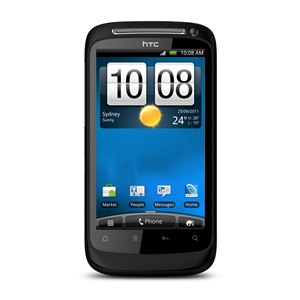
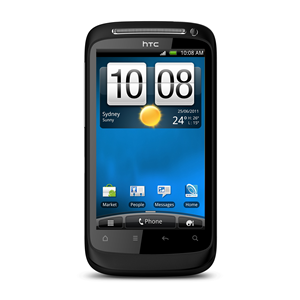
HTC Desire S

The new HTCs running Gingerbread are updates to the original Desire and Wildfire, among the first Androids to hit Aussie shores last year. 

And how times have changed. And not just for Android. HTC is also making its mark in the market here, which was reflected in the launch turnout last night at Sydney’s upmarket Quarter Twenty One venue.
So, down to the hard facts. What is the Desire S and Wildfire S bringing to the table that’s new and not already been done. And why would one want to buy it over the slew of Android’s hitting town every day?

As pointed out by Smarthouse last month, HTC have released dated handsets on to the market here, such as the Incredible S, months after Europe and the US.

The 3.7 inch WVGA touchscreen (480 x 800 res) Desire S is a “next gen” premium device and hits the sweet spot for people who want a “premium Android smartphone experience,” said Ben Hodgson, Manager, HTC Australia.
Specs-wise it comes with HTC Sense, super fast speed with 1GHz processor, 5 MP camera (front and rear), HD video, and “presents multimedia content brilliantly,” say HTC. And if you loved the Desire, this “stays true” to the original model, say its Taiwanese maker. 
The device is made from single block of aluminium making it feel solid and natural in your hand through a slimmer unibody design.  
And for multimedia junkies it delivers crisp virtual surround sound via SRS WOW HD and microSD memory card (which is SD 2.0 compatible) and also supports Flash 10.2. 
 

Click to enlarge
HTC Wildfire S

Up close, Desire S lighter than the original model the screen is crisp clear – the res has been improved 30-40 per cent, say its makers, and seems far more responsive and instant in functionality thanks to Qualcomm’s upgraded 1GHz 8255 Snapdragon processor.

It also runs for longer (about 24 hours) without dying and the battery is bigger. 
Gingerbread 2.3 has introduced 300 new Android changes including more widgets, skins and sounds. 

Price-wise, it can be bought outright for $648 or on a $59 cap for $5 a month additional charge for the phone, identical to the Samsung Galaxy II if memory serves me correctly. (Hmm, funny that). 

And what’s more, it will also be released just a day before the new Galaxy II on May 31, which is getting its Aussie media debut tonight.

Wildfire on the other hand is the middle of the road option, “is affordable and compact without compromising the quality” and aimed at the younger market, Hodgson adds.  
The 3.2 inch touch screen (320 x 480 res) Wildfire S is the small brother to Desire S and has some similar specs with  5 MP camera and the same microSD capability and also boasts a 600 MHz processor. So, almost as fast but not quite. 
Wildfire S is also social networking friendly with Facebook ‘share experience’, Friend Stream (which groups friends’ networking updates including Twitter and MySpace together) and other extras including remembering friends birthdays and other vital information. 
But, it does entertain and has really fast streaming to boot and offers mobile Foxtel capability offering up to 33 TV channels, straight to the Wildfire S screen. 
It is also lightweight at 105 g (3.7 ounces) and comes with other quirks like digital compass and light sensor. 
Both models offer the strong element of personalisation on the user interface which users love with HTC’s and these two new numbers are no different. 

 
Price-wise, Wildfire can be bought for $360 outright but also come with plan although these have yet to be announced, probably before its release on July 19th. 

Telstra has an “exclusive” grasp on both HTCs for now.
“The original HTC Desire was a huge hit with our customers and helped usher in Australia’s interest in Android-powered phones,” said Andrew Volard, Director of Telstra Mobile Products. 
We’re equally pleased to bring the affordable and compact Wildfire S to our customers. It’s tailored especially for our younger customers with strong social networking features and lots of entertainment options including Mobile FOXTEL from Telstra.”