
Smart Office

P Diddy’s TinyChat Gets Legs But Can It Catch Skype?

TinyChat will now move with you – literally. And users are going gaga for it, apparently.


Click to enlarge

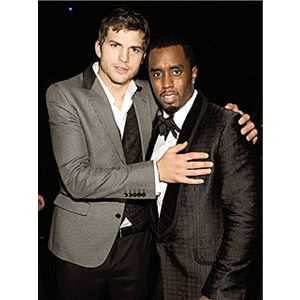
The chat room site, which has a stream of famous backers including Ashton Kutcher and Sean Combs aka P Diddy has announced its first-ever location-based service but can also be used as an simple desktop chat system.

Once registered, it gives a location marking for each user showing their geographic region and location (within a 10-mile radius) and provides a map to help identify fellow chatterers nearby. 

The fledgling provider, based out of New York, says it is gaining 50,000 new users a day and is “second only to Skype for live-streaming web chat.”

Currently, it boasts 8 million daily users and is growing at a rate of 700 per cent y-o-y, since its foundation in 2009.

However, this pales into comparison to VoIP darling Skype, which has around 145 million monthly users on average and another 400m registered. Nonetheless, it seems the market is ripe for other online chat providers.

The new location service will also respect user anonymity, it insists, and users can opt in or out, to build a private or public chat group, or join live interactive online community.

As part of its update, the chat site has developed widget versions of the service are available as well for use with all the leading web browsers, including: Firefox, IE, Google Chrome and Safari. Although it doesn’t require any downloads to use, it does require Flash.

“Offering a location-tagged experience for our users gives a global sense ofcommunity to our burgeoning video group chat portal,” said Dan Blake, Co-Founder of TinyChat.  

“All geotagging and video broadcasting options on the site are at the user’sdiscretion, and TinyChat video group chats bring together dozens of chatters into an interactive community with full audio, video and text chat, along with individual user profile pages and dozens of custom chat room options.”

It currently has 30,000 active chat-rooms hosting nearly one million visits every day. It also has some famous users with Lady Gaga, Justin Bieber and Bruno Mars embedding Tinychat functionality into their websites.


Other backers include Madonna’s manager Guy Oseary, and Ron Burkle and has raised more than $1.5million from its most recent round of funding.

Westpac Backflips On SecurID Tags & Admits Replacements

Less than a week after it denied replacements of RSA SecurID tags to customers after sophisticated cyber attack, Westpac has done a U turn.


Click to enlarge

This followed confirmation by US based SecurID provider RSA earlier this week that it would reissue 40 million SecurID key fobs globally following a “very sophisticated” cyber attack in March.

However, Westpac whose business customers are one of the major users of the key fobs went on to deny it would issue replacements telling ChannelNews “we do have employees who use the tokens but their online account security was not compromised,” a spokesperson said.

It also insisted cyber attack compromsied vulnerabilities in certain types of systems only, which didn’t include the bank.

Read WestPac Wont Recall Thousands SecurID Keys Following Cyber Attack

This was in spite of RSA, owned by EMC, moving to recall key fobs held worldwide, an estimated 40 million, following the discovery last week of an “attempted broader attack” on Lockheed Martin, a major U.S. government defence contractor.

The SecurID key fobs or tokens are used by several high profile US departments including Defence as well as in the Australian government including Defence, Prime Minister and Cabinet, Treasury, Tax Office as well as banks to protect e-mails, networks.

Fobs usually come as a USB assigned to a computer user that generates an authentication code at fixed intervals of between 30 – 60 seconds.

However, the bank still denies the security of customers’ online banking was compromised, despite admitting a recall, saying it was replacing tokens “to ease customer concerns.”

“The Westpac Group confirmed today that it was initiating a token replacement program, as a result of the recent RSA security issue,” it said in a statement yesterday.

“Our customers’ trust in the security of our systems is paramount. Although we do not believe that our customers are at risk from this event, we have initiated a token replacement program to alleviate any residual concern that our customers may have,” Harry Wendt, General Manager Online and Customer Service Centres.

There will be no expense for Westpac customers for any token replacements as part of this program.”


“The Bank takes online security very seriously and protects customers through a multi-layered security approach, including strong authentication measures as well as fraud detection and analytics managed by a dedicated team of security and fraud experts,” he added.

Westpac confirmed St. George and BankSA customers do not use RSA Secure ID tokens and as such are unaffected.

Rival bank ANZ  have also followed Westpac, confirming it will re-issue 50,000 new RSA tokens to all “corporate and institutional clients” as well as staff who using the tokens, 4000 of which were held internally.

“In Australia it’s predominantly ANZ’s corporate and institutional clients who use tokens as just one component of our multi-layered security measures,” a spokesperson confirmed.


Samsung Sues LG AS 3DTV OZ Battle Kicks Off

Samsung Smart TV battle against rival LG took a step further in a Sydney court today.


Click to enlarge

The Korean TV makers are taking their Smart TV battle to courts following airing of a series of comparative ads by LG, shown on Aussie TV screens since May 1.

The ads, Samsung claim, are deceptive and exaggerated, filing an injunction with the Federal Court of Australia on May 12 to further prevent their broadcast.

Despite winning an initial six day injuction blocking the ads from air, the Galaxy maker failed to gain further extensions at a time which is  “uncontroversially the biggest period of sales” a Sydney court heard today from representations by Samsung counsel John Hennessy.

There had been two rounds of ex parte applications and an interlocutory proceedings before today’s hearing, CRN reports.

LG’s controversial advertisements which have screened over the past month, including during major sporting events like last weeks State of Origin and Super15 rugby promoting its new Cinema 3D TVs, which it claim they are far brighter than its rivals equivalent 3DTV range.

And the brand has come back fighting the claims, denying that its ads claimed superiority over Samsung, even though the ads themselves clearly imply so.


The next hearing will be heard on June 21 next.

Carbon ‘Dob-In’ Hotline Calls

Suspect businesses are charging excess carbon tax on the sly?


Click to enlarge

Then you can dob them in via the consumer watchdog’s new hotline, announced today.

The Australian Competition and Consumer Commission’s (ACCC) new Carbon Claims Hotline “invites complaints about false or misleading carbon price claims”.

The hotline will make it easier for consumers and business to complain if they suspect false price claims are being made about the carbon price, the watchdog said.

“The ACCC hotline will make it easier for consumers and small business to alert the ACCC if what they’re seeing doesn’t look quite right.”

“The ACCC is concerned that consumers may be duped into accepting a price increase for a product or service because of the carbon price, when the carbon price is actually not the cause,” said chairman Rod Sims.

Some businesses will pass on the carbon price, which will lead to a “modest” increase rises in prices, according to the Gillard government, which should increase the cost of living by 0.7% during 2012-13, although items like food will be least affected.

“While businesses are free to set their own prices, if they make claims about the impact of the carbon price these need to be truthful and have a reasonable basis,” Sims said.

And businesses seeking to mislead consumers by making false price claims about the carbon price can expect a call from the ACCC, he warned


To report a claim or for further information on the ACCC’s role in relation to carbon price claims and a range of associated publications for businesses and consumers, visit www.accc.gov.au/carbon.

Suspect claims can also be reported on 1300 303 609 and there’s also a online carbon price claim form.

However, the watchdog role does not extend to formally monitoring or restricting price rises.

Consumer Tech Market Slumps 5%

Aussie consumer tech drops 5% in Q4 as “aggressive price discounting” bites, according to Gfk.

However, there were some major growth sectors – small appliances like shavers, smartphones, headphones saved the industry from going into freefall last year.

Total sales of CE goods hit $4.99 billion in Q4 – up from $4.09 bn in Q3.

And also tablets sales like iPad outstripped notebooks for the first time in fourth quarter, GfK Temax latest data shows.

Last year, Consumer Electronics fell a massive 22%, Major Domestic Appliances like fridges remained flat with zero growth, while IT (1%), Small Appliances (4%) and Telecommunications (4%) witnessed growth, albeit modest.

Photo and camera sector also slumped a massive 15%.

However, October-December last was better period for consumer technology than Q3, and saw a bounce back during  Christmas trading.

The rate of decline returned to a  “modest” 3% bouncing back from 11% in third quarter.

“Throughout 2012, the TCG (Technical Consumer Goods) market was characterized by aggressive price discounting and an increased pressure on new model releases and technological innovation to drive sales,” says GfK.

“Traditional retail channels were under significant pressure, and a fundamental re-structure of the Australian retail scene was evident, as the industry began to adapt to new market conditions.”

However, the super fashionable headphones from the likes of Beats and Sennheiser continues to be the “one growth segment” within the CE market.

In TV’s the focus has shifted to the premium, feature-rich,super-large LED segment, with sales of 55″+ screen sizes accounting for 15% of all TVs sold in Q4 in OZ as Sharp, LG and Panasonic all launch bigger sets, GfK figures show.

Small Domestic Appliances was the only sector to deliver consistent growth throughout 2012, peaking at 8% in Q4.

Dental care and hairstylers enjoyed the highest growth rates while food preparation, hot beverage makers and vacuums also drove sales up.

“The market will turn to the Domestic Appliances sectors to continue to provide underlying stability during a period of change and uncertainty”, GfK warned. 

Big Appliance market was flat in Q4 and GfK notes “the reality of an increasingly competitive sector.”

Howver, there was an increase in average price, due to the popularity of high-capacity french door products (700L+) fridges , and front loader washing machines.

The consumer tech industry is also now “increasingly dependent” on telecommunications i.e smartphones for survival, notes GfK.


Telecommunication sales accounted for $4.1 billion in 2012 but sales of iPhone, Android and Co. levelled abruptly in the second quarter and remained “flat” for the remainder of last year.

However, average prices of phones rose 6% and in Q4, a massive 40% of smartphones sold had an average price of $750.

Following a slump in sales the last quarter, the IT sector sales soared 7% – tablets sales more than doubled notebooks, for the first time, in both value and sales.

The Odds Are Off! Gillard

PM pulls odds spruiking off live TV.

Labor clamps down on betting spruiks, announcing live odds would be banned during sports broadcasts. 

Under new live odds code, all gambling broadcast ads will be banned during play. Banner adverts, sponsorship logos are also banned. 
The new measures will curb broadcast of live odds during a game, but still allow bookmakers or sports commentators to spruik betting odds before play, during breaks and after games.
PM Julia Gillard announced new rules on gambling over the weekend and said the ban will be enforced to broadcasters almost immediately. 
The surprise announcement comes days after Communications Minister Stephen Conroy was reported to have made a secret deal with free-to-air body Free TV, allowing betting companies to spruik the odds on live TV.
The new broadcast code also bans gambling companies’ reps from being at or around the game venue. 
“The public have had enough of odds and betting promotions being shoved down their throats while listening to and watching sport,” said Minister for Communications, Stephen Conroy. 
However, some anti-gambling campaigners say the new broadcast code are too soft and don’t go far enough. 
Independent senator Nick Xenophon said, “For the prime minister to announce victory yesterday is a bit like a player walking off at halftime during a game and saying that they have already won,” reports Fairfax.
Free TV CEO Julie Flynn said the new rules were “unprecedented ” for TV networks, but is currently drawing up an alternative code. 
“These are unprecedented restrictions for broadcasters but we accept the Government has acted in response to community concern.”
“The industry continues to hold the view that regulation in this area should apply consistently to all advertising and content distribution platforms, not just television.” 
Free TV plans to submit a revised code within the next two weeks in line with the Prime Minister’s announcement.
“The Government will impose a total advertising ban,” Conroy warned, if the “intensity” of gambling ads (within allowed time slots), goes too far. 

Score! Nine, Foxtel Bag NRL Rights

Nine and new BFF Foxtel have bagged the right to NRL for the next five years


Click to enlarge

Fox Sports and Nine will remain the TV broadcasters of the National Rugby League after penning a new agreement with the Rugby League Commission (ARLC).

The deal, worth $1.025 billion – $925m in cash and $100m in contra advertising – was announced yesterday and followed several rival bids by free-to-air networks including Channel Ten and Seven.

NRL has always been the underdog money-wise, compared to the AFL who has previously commanded over $1bn for broadcasting rights, but the deal marks a major increase on previous price tags for the rugby league.

The additional funds will mean an increase in the salary cap for NRL players and also funds will go back into grass roots level to help breed the next generation of Benji Marshalls.

More funds will also go to rugby’s elite level, said ARLC Chairman John Grant.

Fox Sports will continue its ‘Five Live’ games for the next five seasons, introduce a 6.30pm Sunday night match, show coverage of Monday Night Football and Super Saturday, and will increase its NRL Sunday coverage to two live games.

Free-to-air broadcaster Nine will show three weekly matches (two on Friday and one Sunday), Wednesday night State of Origin matches at the usual 7.15 time and two hours of league every night on digital Channel 94.

Fox Sports has also acquired digital rights to stream its five live weekly matches via IPTV and tablet devices.

ARLC chairman John Grant hailed the $1bn agreement as “the greatest deal ever done” by the sporting code.

“Today we answer the $1 billion question with the $1 billion-plus answer.”

“The cash that comes from the agreement, used wisely, will provide a funding base to sustainably grow our game from its grassroots to the elite levels.”

Nine CEO David Gynell hailed to landmark deal as a “must win for us” and a great sport to watch in the winter.

“It is part of our heritage and a must-win for us and I think the price was fair and reasonable.


“It is the greatest sport for television in the winter months and perfectly complements our cricket coverage.”

Fox Sports CEO, Patrick Delany, said “NRL is in the Fox Sports DNA and we are delighted to have the opportunity to build on our 16-year relationship with the code.

“Our new digital and IPTV rights will also enable us to deliver live streaming of matches to iPad, following the path of Foxtel’s incredibly successful London 2012 app.

“We will also make all of our matches available on demand through Foxtel.”

‘Game of Thrones’, ‘The Raid’: Samsung Galaxy Tab Nabs Quickflix

Quickflix movie invasion continues – next stop Samsung Galaxy Tab 2.

The Galaxy Tab 2 is the latest device to get Quickflix ‘all you can eat’ movies and TV service, announced Friday.

The all you can eat service starts at $14.99 for “unlimited” streaming and can be bundled with Quickflix DVD (by post) plans, with the option of pay per view movies also, streamed staight to your Tab 2.

The Galaxy 2 comes with the Quickflix app pre-loaded, while owners of the original Galaxy Tab, released last year, need to download the app from Samsung’s App store.

Last week, the Aussie-owned content streamer announced the serivice for Panasonic Blu-rays and is set to be unleashed to Microsoft Xbox in the coming weeks.


Click to enlarge

Quickflix movies titles (55,000 in all) include everything from movie houses Warner Bros, Sony, NBC Universal, MGM, Lakeshore and Pinnacle Films, with titles for all tastes – from ‘A Streetcar Named Desire’ to ‘Sherlock Holmes’, ‘The Vow’ starring lovelies Channing Tatum and Rachael McAdams and ‘The Devils Double.’


You can also stream TV series from the likes of BBC, ITV and HBO, including titles True Blood, The Sopranos, Boardwalk Empire and Game of Thrones.

Quickflix already streams to Sony PlayStation, Apple Macs, PC, smartphones and Samsung smart TVs.

Forget Phones – Optus Jump On Smart Money Train

Optus gets smart with Business SmartPay secure payment gateway. Business SmartPay is a managed bill payment system for retailers and financial institutions and Optus is the first ever telco here to get in on the act.


Click to enlarge

Forget smartphones, SingTel owned Optus is now a smart payments partner for many leading financial institutions with SmartPay. 


So, what is it? “SmartPay provides a secure, automated end-to-end payment solution that allows your customers to make payments over the telephone, the Internet, or via your call centre 24 hours a day.” 

It also provides billing solutions, multiple payment options and reporting. 

The managed out-sourced solution is the first payment gateway from a telco to attain PCI DSS compliance in Australia and New Zealand, Optus said yesterday. 

This means it has Payment Card Industry Data Security Standard (PCI DSS) approval, which helps to protect against fraud, hacking and various other security vulnerabilities and threats. 

According to the Reserve Bank, Australians are embracing online payments in droves – with 60 percent of Aussies paying most of their bills online.

And the the biggest deterrent to making payment online is the fraud risk, so Optus says this seal of approval negates these online risks. 

“More and more people are transacting online, so protecting their personal data is critical,” said Trudy Holtzhausen, Acting Director, Fixed Products and Marketing at Optus Business.

“As the payments partner for many leading financial institutions, Optus wants to help its customers stay at the forefront of security standards.”

The certification required the telco to prove it could build and maintain a secure network with strong access control measures and ensure protection of cardholder data. 

Additionally, it must regularly monitor and test its networks as part of its vulnerability management program.


Optus partnered with ANZ Bank as its strategic partner to support the efforts to meet this global security standard.