

“On par with iTunes” 30 million-songs to stream on a tablet, PC, phone and TV.
 Oonagh Reidy
Telstra Nab Publishing Guru As Director
Telstra has just appointed a publishing boss to its board.
 Click to enlarge |
Seale has worked in senior executive roles in Australia and overseas, mainly in global publishing, and is MD for Random House Australia (and NZ).
She also established Random’s China office last year and is President, Asia Development and is now the third woman sitting on Telstra’s Board.
And Seale’s “valuable insights” in transitioning traditional business models to digital environments was hailed by Telstra Chairman, and could be very useful as the telco who looks to expand its Digital Media division and Asian interests.
“Margie has valuable insights into the digital environment and the management of intellectual property here and overseas,” declared Telstra Chair, Catherine Livingstone, saying the board was “very pleased” with the new appointment.
Ms Seale said she was “delighted to be joining the Board at a time when Telstra is seeking to take advantage of digital opportunities from its strong portfolio of businesses.”
Seale was previously CEO of Macquarie Dictionary and Lansdowne Publishing and is a Director of the Sydney Writers Festival and Council Member of Chief Executive Women.
She has a Bachelor of Arts degree in English and History from the University of Sydney.
Telstra’s Board now consists of Catherine Livingstone (Chair), David Thodey, Timothy Chen, Geoffrey Cousins, Russell Higgins, John Mullen, Nora Scheinkestel, Margaret Seale, John Stocker, Steven Vamos and John Zeglis.
Telstra Will Be NBN Core Player, Pilot FTTN: Report
Telstra to play big role in NBN, reports suggestThe nation’s biggest telco is to commence a fibre-to-the node (FTTN) pilot on the NBN later this year, reports Fairfax Media.
The Telstra FTTN project ‘would involve more than 300 node cabinet units, each capable of connecting about 300 homes and businesses to the NBN’. It could become one of the biggest FTTN rollouts and is likely to be extended further, if successful, making Telstra a crucial player in the billion-dollar NBN project, according to the report.
Fibre to the node is the technology favored by the Coalition government who has strongly criticised the fibre-to-the-premises technologies favoured by Labor, mainly on cost grounds.
FTTN would use Telstra copper network, in part, to deliver the high speed broadband to NBN customers. It is no surprise Telstra, with its massive copper infrastructure is likely to become a major player in the fibre network rollout.
However, a deal between NBN Co and Telstra has not yet been finalised.
An NBN Co. spokesperson would not make any comment on the reports, when contacted by ChannelNews.
At the moment, the big focus for NBN Co is to do a broad deal with Telstra and Optus to use their copper and HFC networks to rollout the fibre network using a wider mix of technologies, the spokesperson said.
However, there is no timeline for completion of these talks. NBN Co is already running two small scale FTTN trials in NSW and North Melbourne, using 10 nodes each.
The focus is on delivering fibre-to-the premises services in 2014, with FTTN construction likely to kick off next year, the rep added.
Telstra already has interests in the NBN, having negotiated an $11 billion deal to surrender its copper network, pits and ducts along with other assets to the NBN Co, although this is up for renegotiation.
This week, NBN Co’s new CEO, Bill Morrow, ex Vodafone chief is set to be sworn in.
Takeover: Woolworths Bid $2.15bn For David Jones
Aussie retailer endorses $2.15bn takeover by Woolworths, a South African owned company, announced today.David Jones board announced it has received an offer to acquire the company, and has entered a Scheme Implementation Deed (SID) with South African retail group, Woolworths.
The offer, worth $2.15 billion is being backed by DJ’s board and senior management, and, if accepted by shareholders, means any offer by Myer is off the cards.
South African retailer, Woolworths, is proposing to buy all David Jones shares outstanding for $4 per share cash payment, subject to shareholder approval of both companies.
The cash payment of A$4 per share represents a 25.4% premium to the closing price of David Jones shares on 8 April and implied market capitalisation of A$2.149 million. DJ shares are currently trading at $3.19.
DJ’s shareholders on the register on 10 April will also receive the already declared interim dividend of A$0.10 per share.
The takeover bid comes just weeks after Myer’s proposed merger with David Jones went public, although DJ’s was said to be seeking a higher offer than what was put on the table.
DJs board is endorsing the proposal and unanimously recommends shareholders vote in favour of the takeover, in the absence of a superior proposal and subject to an independent expert judging it to be fair and in the best interests of shareholders, it said in a statement.
Chairman, Gordon Cairns, branded the deal as “a compelling proposal which represents a significant premium to not only our intrinsic value but also to broker valuations and to recent share prices. It represents a substantial earnings multiple.
“In reaching our conclusion that the Proposal is in the best interests of shareholders, customers and employees, the Board has considered a number of alternatives, including standalone value creation opportunities; realising the value of the freehold properties owned by David Jones; or pursuing a merger with Myer in accordance with its proposed terms.”
CEO Paul Zahra said “the Woolworths proposal is an endorsement of our Future Strategic Direction Plan and our management team.”
He was “pleased” the proposal recognises the attractive outlook for the high end department store.
DJ’s confirmed it will appoint an independent expert to examine whether the Proposal is fair and reasonable and in shareholders’ best interests.
The experts report is expected to be distributed to shareholders in late May.
Woolworths’s CEO, Ian Moir, said: “We believe that David Jones is a truly iconic Australian retail business. Woolworths is a very similar business, closely aligned in terms of our target markets and our values.”
The combination will create a leading southern hemisphere retailer with meaningful scale, able to leverage common fashion seasonality with enhanced sourcing capability.”
DJs shareholders will vote on the proposal in late June, while Woolworths shareholders vote in mid June.
Subject to the conditions of the Scheme being satisfied, the A$2.15 bn acquisition expected to be implemented in mid July.
David Jones is being advised by Gresham Advisory Partners Limited, Macquarie Capital (Australia) Limitedand Herbert Smith Freehills.
Online Sales Up 25%, WA Big Spender
Online sales “strong” but electronics remain “weak”, according to the NAB Online Sales Index
 Click to enlarge |
Traditional retail sales totalled $220 billion to the 12 months to June 2012, while online retail spending hit $11.7 bn as both traditional and online experienced strong growth rates in recent months.
The NAB retail sales Index shows that Aussie retailers remain the dominant force in online as they take a multi-channel approach, developing an online presence alongside a traditional storefront as big names like Harvey Norman, Myer and David Jones have all been forced to do.
Online sales were “volatile” in early months of 2012 but now appear more stable over the last quarter, the Index also shows.
However, online sales figures are modest compared to bricks and mortar – just 5.3% of traditional retail transactions.
But bricks and mortar sales are growing by just 4.9% , while online is growing at five times that figure – at 25% – although from a modest base.
Domestic retailers continue to be the dominant force in online sales, says NAB, however sales in Household Goods & Electronics and Toys & Media categories have been “weak.”
This is because these products are discretionary in nature.
Local retailers accounted for 72% of all web sales in the past 12 months.
But is also appears Aussies are flocking to international retailers in big numbers with online sales to foreign stores growing at a faster pace than domestic sales – 29% year-on- year – compared to 24% for domestic sector.
Those aged in the 30s and 40s are among the biggest online consumers age group, while the under 30s are buying more from international retailers than any other age group.
Western Australia residents are among the biggest web consumers in Australia and the state outperformed the rest of the country, thanks to more buyers in their 30s, 40s and 50s.
However, NSW, Vic and Qld were also among the biggest spenders by state.
“Retailers are no longer viewing online simply as a sales and marketing channel but as a distribution and supply chain optimisation strategy,” the NAB Index states.
Vodafone Snap Up Windows Phone
Vodafone has jumped on the Windows 8 Phone bandwagon after rivals Optus and Telstra got there first.
Score! Nine, Foxtel Bag NRL Rights
Nine and new BFF Foxtel have bagged the right to NRL for the next five years
 Click to enlarge |
Fox Sports and Nine will remain the TV broadcasters of the National Rugby League after penning a new agreement with the Rugby League Commission (ARLC).
The deal, worth $1.025 billion – $925m in cash and $100m in contra advertising – was announced yesterday and followed several rival bids by free-to-air networks including Channel Ten and Seven.
NRL has always been the underdog money-wise, compared to the AFL who has previously commanded over $1bn for broadcasting rights, but the deal marks a major increase on previous price tags for the rugby league.
The additional funds will mean an increase in the salary cap for NRL players and also funds will go back into grass roots level to help breed the next generation of Benji Marshalls.
More funds will also go to rugby’s elite level, said ARLC Chairman John Grant.
Fox Sports will continue its ‘Five Live’ games for the next five seasons, introduce a 6.30pm Sunday night match, show coverage of Monday Night Football and Super Saturday, and will increase its NRL Sunday coverage to two live games.
Free-to-air broadcaster Nine will show three weekly matches (two on Friday and one Sunday), Wednesday night State of Origin matches at the usual 7.15 time and two hours of league every night on digital Channel 94.
Fox Sports has also acquired digital rights to stream its five live weekly matches via IPTV and tablet devices.
ARLC chairman John Grant hailed the $1bn agreement as “the greatest deal ever done” by the sporting code.
“Today we answer the $1 billion question with the $1 billion-plus answer.”
“The cash that comes from the agreement, used wisely, will provide a funding base to sustainably grow our game from its grassroots to the elite levels.”
Nine CEO David Gynell hailed to landmark deal as a “must win for us” and a great sport to watch in the winter.
“It is part of our heritage and a must-win for us and I think the price was fair and reasonable.
“It is the greatest sport for television in the winter months and perfectly complements our cricket coverage.”
Fox Sports CEO, Patrick Delany, said “NRL is in the Fox Sports DNA and we are delighted to have the opportunity to build on our 16-year relationship with the code.
“Our new digital and IPTV rights will also enable us to deliver live streaming of matches to iPad, following the path of Foxtel’s incredibly successful London 2012 app.
“We will also make all of our matches available on demand through Foxtel.”
Telco Mobile Caps Create Confusopoly, Let The Crackdown Begin: ACMA
This is what the ACMA said today following investigations into telcos, who through shrewd marketing have created a “confusopoly.”A draft report by the Communications & Media Authority into the telcomms sector has condemned telco advertising which it says it is gravely misleading consumers about the services on offer.
In March, the Telecommunicaitons Industry ombudsman in Australia said it received 671 calls a day, on average, in the last six months, noting a 20 percent increase in complaints about mobile services. “Bill shock” and the quality of information available to users were two of the key sources of complaint, the report states.
Among its major concerns are the common usage of the term “caps” which it says implies a limit on the amount users pay when in fact it is the minimum spend required.
And just this month, Optus recieved a rap for “misleading” $49 Max Cap ads by the ACCC and fined $200,000.
Unit pricing is also set to be introduced which will allow users gauge how mcuh their $49 or $60 plans is actually costing them and a break down of the allowances and conditions.
The use of “unlimited” another common adjective used by the likes of TPG, Telstra and others when advertising broadband as well as mobile plans also needs to be substantiated or else dropped, the ACMA says.
Under the new rules yet to be finalised, telco’s would also be required to provide consumers with a one-page information sheet which summarises the terms and conditions.
Huge bill shocks would also be a thing of the past with carriers required to notify consumers when they are approaching their limit, which they can nominate if they wish.
And another boon for consumers: if mobile carriers fail to comply they will be forbidden from charging any more than 30 per cent over the cap price.
And several telcos are already jumped the mark, with Vodafone and Telstra’s already announcing anti bill shock therapy, with text notifications and in the case of the latter data speeds will also slow down with no extra charges made.
And Vodafone, one of the first to respond to the ‘Reconnecting the Consumer’ draft report, has also gone one extra introducing ‘Rate Plan Health Check’ for customers who may be on the wrong plan, announced today.
Read Vodafone: We’re Reducing Bill Shocks Too As It Fights Telstra Creep
And it looks like the Authority means business and issued an unequivocal threat to telcos to ship up or pay the price.
“The outcomes that we are seeking … are non-negotiable,” warns ACMA chairman Chris Chapman.
“Marketing and advertising practices in this industry are simply not good enough,” another ACMA exec also warned.
The office of the Telecoms Ombudsman received more than more than 167,955 new consumer complaints last year.
The final draft report is due out in August.
The Australian Communications Consumer Action Network has welcomed the proposed changes.
Facebook : Sue U2 Yahoo
Bono has shares in Facebook but it really was case of U2 this week when The Social Network decided to countersue search giant Yahoo.
P Diddy’s TinyChat Gets Legs But Can It Catch Skype?
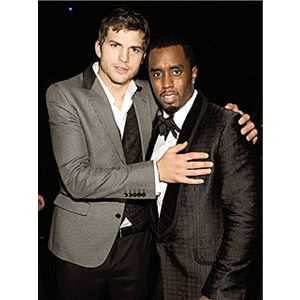
TinyChat will now move with you – literally. And users are going gaga for it, apparently.
 Click to enlarge |
The chat room site, which has a stream of famous backers including Ashton Kutcher and Sean Combs aka P Diddy has announced its first-ever location-based service but can also be used as an simple desktop chat system.
Once registered, it gives a location marking for each user showing their geographic region and location (within a 10-mile radius) and provides a map to help identify fellow chatterers nearby.
The fledgling provider, based out of New York, says it is gaining 50,000 new users a day and is “second only to Skype for live-streaming web chat.”
Currently, it boasts 8 million daily users and is growing at a rate of 700 per cent y-o-y, since its foundation in 2009.
However, this pales into comparison to VoIP darling Skype, which has around 145 million monthly users on average and another 400m registered. Nonetheless, it seems the market is ripe for other online chat providers.
The new location service will also respect user anonymity, it insists, and users can opt in or out, to build a private or public chat group, or join live interactive online community.
As part of its update, the chat site has developed widget versions of the service are available as well for use with all the leading web browsers, including: Firefox, IE, Google Chrome and Safari. Although it doesn’t require any downloads to use, it does require Flash.
“Offering a location-tagged experience for our users gives a global sense ofcommunity to our burgeoning video group chat portal,” said Dan Blake, Co-Founder of TinyChat.
“All geotagging and video broadcasting options on the site are at the user’sdiscretion, and TinyChat video group chats bring together dozens of chatters into an interactive community with full audio, video and text chat, along with individual user profile pages and dozens of custom chat room options.”
It currently has 30,000 active chat-rooms hosting nearly one million visits every day. It also has some famous users with Lady Gaga, Justin Bieber and Bruno Mars embedding Tinychat functionality into their websites.
Other backers include Madonna’s manager Guy Oseary, and Ron Burkle and has raised more than $1.5million from its most recent round of funding.