
Smart Office

Optus Expand Coverage Aus, NZ

Largest satellite in Aus history to arrive in 2013, could help land Optus lucrative NBN contracts.

The current generation of satellites here are not thought to be capable of delivering 12Mbps, the speed set to be delivered under the NBN. 

Optus 10 will deliver customers the flexibility to provide high quality broadcast, and voice and data communication services to areas well into the future, the Singapore owned telco said in a statement today.

And it looks set to be particularly important for areas without access to terrestrial telecommunications infrastructure.

 “Satellite continues to make sense for Australia and Optus are honoured to continue to fly the country’s largest satellite fleet providing this unique capability to our customers,” Vicki Brady, Managing Director, Optus Wholesale and Satellite.

We continue to invest in our fleet and bring the latest communication technology into homes and businesses around the country, especially in regional and remote areas,” Ms Brady said.

Optus 10 is scheduled to be delivered in 2013 and will be built in Palo Alto, California by Space Systems/Loral and follows the expansion of its existing satellite fleet with the state-of-the-art D-Series satellites launched in 2006, 2007 and 2009.


Singtel owned Optus, who launched the first of Australia’s satellite fleet 25 years ago, also  provides satellite services to Government departments, FOXTEL, ABC, SBS, Seven and Nine Network and Sky TV.
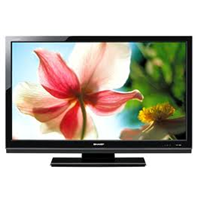
Sharp LCDs Take off, Profits +300%

The TV maker’s annual profit jumps 300 percent as LCDs demand booms.


Click to enlarge

The Japanese electronics giant said its net profit for the year ended March 31 surged to 19.4 billion yen or US$237.4m.

This reflects a phenomenal 341 percent profit hike from 4.4 billion yen this time last year.

Huge demand for its liquid crystal display (LCD) screens boosted its figures, it said yesterday, which are used for smartphones, tablets, TVs and game consoles.

Total sales increased 10 percent to US$37 billion with revenue from LCD displays increasing 21 percent to 614.3 billion yen.
It also sold almost double its number of LCD TV sets compared to a year ago – 2.18 million in China alone, according to Sharp spokesman Toshiyuki Matsumura.

However, its not all good news for the Osaka based giant, who issued a warning to shareholders that the earthquake which hit the eastern region earlier this year would have a huge impact on business.

Net sales and profit fell 30 billion yen below forecasts, however, due to the drop in demand following the disaster as well as the reorganisation of its LCD facility.

Sharp also warned it was unable to provide a specific earnings forecast for the current fiscal year through March 2012 because of uncertainties remaining after the quake.

“It is extremely difficult at this time to reasonably estimate the impact of the earthquake on our financial results, which will be broad across our entire business activities from production to sales,” Sharp said.

Sharp also announced changes to its joint LCD venture Sony,  called Sharp Display Products, announced in July 2009 and are to thrash out a new agreement which will see the ownership structure reconfigured.


Sony was originally to own 34  per cent of the LCD business.

E-Shopping V In-Store, Who Wins?

I’ve been scanning the shelves of the likes of Harvey Norman, JB Hi-Fi and Dick Smith recently trying to find a decent, quality yet pocket friendly notebook.On the advice of several friends and technophiles I was told a Samsung would probably be my best bet.

HP and Dell were also other brands I contemplated from past user experience.

Ok, I thought that the brand(s) were pretty much clear in my head. Now, where do I buy it?

Having been searching for a Samsung notebook in-store for several weeks, it was to my surprise that some of the best deals I found were in a small, independent store in North Sydney, beating their larger rivals in the price stakes by miles.

The prices were among the most competitive I had seen, with HP’s Mini 210-1051VU starting at $269 and a Samsung N150 at a very tempting $349.

The same Samsung model was $498 in JB Hi Fi – almost $150 of a price jump. Harvey’s didn’t stock an equivalent model.
Bing Lee’s online price for the Samsung was $429, but said it was negotiable.

However, whilst browsing in any of these stores, I was never once approached by a member of staff asking if I needed help, which is hardly encouraging, especially considering that personal experience is one of the main pros of in-house shopping.

In JB Hi-Fi I had to ask the security guard where the laptops were kept and in the past have found staff, at best, indifferent to its customers.

To see what else was on offer, I turned to my PC and found, on price comparison site shopbot.com.au, the same Samsung went from $447 to $510 depending on the store – almost $100 more than the same model offered from a bricks and mortar retailer.


This also didn’t include delivery charges of about $10 on top of the sale price.

Similarly, the exact same HP Mini laptop was offered with an online starting price of $299 and $339 – $30 more than my local computer shop.

This quick test proves that in spite of the common perception that online offers better deals and choice, for my netbook purchase this definitely was far from the case.

However, stores that are lamenting the demise of their sales figures due to online competition should keep one important thing in mind – their service offering and the guarantee of after-sales care are two of their main strengths over online.

Some vendors themselves, including Sony, are already working towards providing more customer information, which could very well bridge the huge information gap between online and in-store, that so many customers now find themselves stranded in.

“In recent months several retailers have realised that there has to be a lot more education on the shop floor. We know that Harvey Norman is one retailer who is looking at better ways to service clients” says Toshiba’s Rob Wilkinson,  General Manager of  Australia’s Information Systems Division.

They should now be using these to the max.

Can Optus’ Android MyTab Hit The Button?

A budget 7 inch Android tablet from Optus has hit the shelves, but will it hit the mark with lower end users.
The telco appear to be confident the device, which is available since yesterday, will make its mark on the tablet market, competing with Telstra’s T-Touch Tab released last month, which retails at $299, offering a phone, internet content and 80,000 apps.

The tab has received good market reviews so far, with users impressed with its good value, resistive screen and decent performance compared to pricier models like the Apple iPad.

Although no projections on how much of the total tab market budget tabs will account for, Optus told ChannelNews they “expect the MyTab to perform favourably against other entry level products from manufacturers and telecommunication providers”.

The Optus My Tab will be available on Pre-Paid from mid-December for $279 on pre-pay and includes up to 3GB of Pre-Paid data and unlimited access to Facebook, Twitter and MySpace within Australia.

“With a number of tablets entering the market in 2011, we expect the entry level tablet market to remain competitive and we’re confident that the MyTab will be one of the most compelling options for consumers who are looking for a product which offers ease of use and bang for buck,” an Optus spokesperson said.


Made by ZTE, the cheapest tab on the Australian market will run on Android 2.1 and comes with a 7-inch screen, a 3-megapixel camera, upgradable memory (2GB MicroSD included) and WiFi compatibility.

Announced in November, along with the Samsung Galaxy Tab, which proved a massive hit with Australians so far, Optus were confident their entry-level offering, with “high-spec entry level tablet which provides the Android Tablet experience at an affordable price,” will take off.

However, it is likely to move to a post pay package after Christmas, although the exact cost of the plans has yet to be released.

The low price tab option is part of Optus’s bid to give its customers the option to choose the device, pricing structure and contract length that best suits their needs, Michael Smith, MD of Optus Consumer said last month.

BREAKING NEWS: New Years Day Start For Warburton At Ten

James Warburton will be the next chief of Channel Ten, but not until 1 January 2012.


Click to enlarge
Pictured: James Wharburton, Ten’s Chief-In-Waiting.

The ruling handed down by Justice Michael Pembroke at NSW Supreme Court this morning means Warburton, the former former group sales and digital boss at Channel Seven, will have to wait five months after his originally planned start date to become the new head at Ten.

Warburton was originally due to commence employment on July, 14, however Seven was looking to prevent this from going ahead until October 2012 next.

Channel Seven brought legal action against Warburton, following Ten major shareholder, Lachlan Murdoch’s, alleged poaching of the sales ace from under David Leckie’s nose at Seven, announced on March 2 last.

Seven argued Wharburton’s defection was ”contending the existence of employment and post-employment restraints,” a reference to his existing contract.

Ten denied it acted improperly considers and said the July start date was consistent with Mr Warburton’s employment obligations.

Warburton, as the network’s new CEO, will be taking over Grant Blackley’s spot, who got the sack earlier in the year following a disappointing earnings slump at the channel.

Telstra Profit Slump 36% But $11B NBN Deal Lift Spirits

Telstra revenue has fallen 0.5 percent to $12.283 billion – from $12.342 for the same half year period in 2009.

Profits have fallen 36 percent in the period.  

The communication carrier has seen growth in sales of their T Hub and T Box. They also claim to have seen an improvement in customer satisfaction during the second half 2010.

David Thodey CEO said that they have signed nearly one million new mobile customers and 139,000 new retail broadband customers in the period. 

Operating expenses for the period fell 10.7 percent due in part to the axing of over 300 senior management.

Mobile revenue increasesd $566 million while mobile subsidies increased 44 % to $457 million. 

Total PSTN revenue (landline) declined by 8.4% which is a slight improvement on the 9% decline in the previous period.
Tesltra confirmed their guidance issued in August 2010 claiming that they expected ” flattish sales revenue and a high single digit decline in EDITDA. ”

Operating expenses increases by $750 million.  

Telstra say they have finalised key commercial terms for NBN and expect to deliver approx $9 billion in value to Telstra. 

They also said they had reached in principal agreement with the Federal government over the specific measures that are expected to deliver a further $2 billion in post tax net value.

More To Follow 

iiNet Releases No Contract Mobile

Post pay mobiles to give users greater freedom, breaking the divide between pre-pay and fixed contracts.

iiNet’s latest innovation is contract free mobile phone plans, which are extremely competitively priced and start at $10, offering $150 worth of free calls and texts with 200MB of internet.

The move is set to ruffle some feathers among some of the bigger players in the mobile phone market including Telstra and Vodafone.

Its top plan allows an impressive $750 in calls and texts and 1.5GB of 3G data for $40 and no time commitments although users will be required to provide their own mobile device.

They will also allow internet and unlimited access to social networking sites including Facebook, Twitter and MySpace.

Customers will also receive automatic call usage notifications once limits are exceeded.

These tariffs appear to be one of the best mobile value for money deals on the market, when compared to the likes of Virgin Mobile’s $39 post paid contract equivalent, which offers $300 of calls and SMS and 300 MB of memory.


Vodafone’s $45 cap, plus an additional $15 per month for the handset offers unlimited calls with 1GB but subject to a two year contract, and costs rise even further if consumers choose a one year deal.

3’s equivalent, with the $39 cap, offers a lot less voice calls at just $250 and 200 MB of data.

This strategic move into the mobile market marks the latest bid by broadband provider iiNet to become a one stop shop for users completing the ‘quad-play’ service of broadband, voice, mobile and TV.

The company currently provides 1.3 million broadband, telephony and Internet Protocol TV (IPTV) services in Australia.

“Customer feedback was crucial during the development of our mobile plans. We asked what was important in a mobile offering and we’ve responded with unmetered social networking, call usage notifications and great value monthly plans, minus the binding contract,” said iiNet’s CEO, Michael Malone.
 
Business customers can also avail of the new mobile service plans, which they have said will operate on the Optus network.


JB Hi-Fi, Harvey Norman Vulnerable From Online Trading, Warns Analyst

Retailers including JB Hi-Fi and Harvey Norman are set to make major financial losses as the growth of online rivals continues, warns Morgan Stanley.The ASX listed electronic giants are vulnerable to major market share as growth in online shopping gains pace together with the continued unprecedented strength of the Aussie dollar, which makes international goods purchased online much cheaper, says analysts at Morgan Stanley.
 
“We estimate that if by full-year 2015 Australian online retail penetration reaches the current US level, then internet retailing could take 22 per cent of the incremental growth in Australian retail sales,” said analyst Thomas Kierath, in an interview with the Australian. 

Internet-based retailers will also pose a major threat to small retailers, according to Ed Prendergast of Pengana Capital, although, forecasts elsewhere from IBISWorld suggest only modest growth in online retailers’ market share in the next five years.

Earlier this week, Smarthouse.com reported on how Harvey Norman Chairman, Gerry Harvey, confirmed he was planning to start selling into Australia from web sites operated from Southern China, hot on the heels of an earlier announcement by retailer Myer some days previously.

“I spoke to our online man this morning, and I said why can’t we do that? And he said there is no reason we can’t do that at all,’ said Gerry Harvey.

This follows frustration expressed by both organisations with the tax-free and duty-free prices offered by overseas competitors and inaction by the federal government.

Amazon Cloud Saved Wikileaks… Until They Were Cut Off

Hosting of Wikileaks is being passed around like hot cakes.In a week when Wikileaks has been the main topic of conversation in the media, it emerged that cloud computing, the latest craze in the storage world, played a vital part in keeping the website alive, well for a time at least.

After being ceremoniously dumped by several ISPs who took on the task of hosting the site, Amazon dutifully took up the task, confident its powerful systems would take more than a few hackers to take it down.

Amazon’s high capacity EC2 or Elastic Cloud Compute system, allowed it to rent out the computing cloud which it uses to run its online store. It was thought the service was unbreakable given the high percentage of visitors to its site; Google revealed it was among the top 10 searches for 2010.

Unfortunately, it didn’t need a bunch of nerdy hackers to bring it down, US Senator Joe Lieberman did it instead.

The decision by Amazon followed hot on the heels of capitulations from the likes of PayPal and Mastercard, who refused to process donations to the online hacking site, as well as EveryDNS, providers of the domain name wikileaks.org.

“I will be asking Amazon about the extent of its relationship with WikiLeaks and what it and other web service providers will do in the future to ensure that their services are not used to distribute stolen, classified information,” warned Senator Lieberman.

Amazon attributed the cut off of cloud services to Julian Assanges’ brainchild to its failure to abide by the terms of its contact with the internet giant.

“It’s clear that WikiLeaks doesn’t own or otherwise control all the rights to this classified content. Further, it is not credible that the extraordinary volume of 250,000 classified documents that WikiLeaks is publishing could have been carefully redacted in such a way as to ensure that they weren’t putting innocent people in jeopardy,” Amazon said in a statement.

The information leaking website replied with a Twitter comments stating, if “Amazon are so uncomfortable with the first amendment, they should get out of the business of selling books.”

WikiLeaks is now said to be hosted by servers in Europe.