

In a week that has seen top tech companies Apple and Google tracking users, it seems GPS giant Tom Tom has also struck.
 Oonagh Reidy
Microsoft Slips On Apple iPad Fortune
Software giant slips behind as battle between platforms continues.
Yesterday, Microsoft announced Q3 revenue of $16.43bn compared to Steve Jobs’ Apple $24.7bn equivalent figure (wth a net profit of $6bn) on the back of huge iPad and iPhones sales, reported last month.
This means for the first time ever since 1991, the software ace has slipped behind its iOs rival, in spite of the fact that the latest revenue figure to March 31 represents a 13 percent jump on the previous year.
And Google is also catching up, although at a lesser pace, with Q1 2011 profit of $2.3bn, on $8.58bn revenue stream.
Net incomes also rose 31 percent to $5.23bn at Microsoft as did operating income, up 10 per cent, but despite this its search business, which includes Bing continued to drag, with a recorded a loss of $726m on revenues of just $648m.
Revenue for Windows 7 OS also fell 4 per cent although this is “in line with the PC trends” it admitted.
This points to another major trend and one of the principal reasons behind Microsoft’s profit demise: the decline of the PC.
Microsoft are hugely dependent on the PC industry to fuel its core software business. Sales of computers fell in the first quarter of this year.
“The concern is PC markets are being disrupted. There’s some validity [in that],” said one analyst.
And with the ascendancy of portable devices like the iPad and iPhone, as well as Google’s Android, which run off its own OS, is reducing demand for applications like W 7 further.
In addition, research firm Canalys has announced Apple was the world’s fourth-largest PC maker in Q1, after it changed the way it compiled its figures, counting the iPad into its worldwide PC shipments category, for the first time.
This sliding demand could also explain why Steve Ballmer’s company was so keen to sign Nokia into a developing a joint OS for Smartphones, which would run on its Windows 7 platform and HTC have also launched a handset running on the platform here.
And revenues could take a further hit if Google Docs, which has emerged as a cheaper version of Office, takes off.
However, Microsoft insist its search operation is still is growing and noted Bing’s US search share increased to 13.9 percent this quarter and insist they are not fazed by the results.
“We delivered strong financial results despite a mixed PC environment, which demonstrates the strength and breadth of our businesses,” said Peter Klein, chief financial officer.
“Consumers are purchasing Office 2010, Xbox and Kinect at tremendous rates, and businesses of all sizes are purchasing Microsoft platforms and applications.”
And Office 2010 has become “the fastest-selling version in history,” it also said in a statement.
Entertainment division also fared well, fuelled by Kinect for Xbox 360, which was the fastest-selling consumer electronics device in history and continued strong Xbox 360 console sales.
The Washington based giant also reaffirmed its operating expense guidance of $26.9 bn to $27.3 bn for the full year ending June 30, 2011.
HP WorkStation With Intel Xeon Grunt
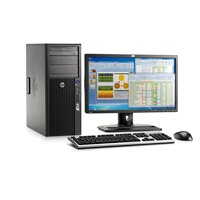
The PC giant has brought out a new range of workstations traditionally used in high end servers.
 Click to enlarge |
Hewlett-Packards new Z210 workstations, which come with the new Intel Xeon processor E3 1200 (with HD Graphics P3000), are “changing the definition of the entry-level workstation,” said Graham Tucker, Intel Australia’s Technical Manager.
That means visual and 3D graphics capabilities, previously available only with use of a graphics card, will now be accessible as the processor “integrates the CPU and graphics engines on the same die,” says Tucker.
The high end processor, which HP are now using comes from Intel’s Xeon E3 family, normally used to power servers so its little wonder it is claiming to have high performance, available in convertible mini-tower (CMT) or small form factor (SFF).
The SFF is 65 per cent smaller than the CMT version and come with the option of the Xeon E3 or the second-generation Intel Core i3/i5/i7 processors as well as a range of professional graphics options, including 2-D choices from AMD and NVIDIA that incorporate dual graphics card capabilities supporting up to four 2-D displays.
3D choices include next-gen processor-integrated Intel HD graphics that lower the entry cost for professional 3-D graphics, and entry and midrange options from NVIDIA and AMD.
Palo Alto based HP, who have emerged as the Australian PC market leader in Q4 last year with 22 percent share, taking over from Acer, who slipped back to number two spot with 15 percent.
And worldwide, it held an impressive 45.8 per cent global market share during the same period, according to IDC figures.
 Click to enlarge |
“The Z210 models raise the bar for entry-level workstation performance while providing workstation-class reliability at a highly affordable price,” HP said today.
And they are designed for intensive tasks in industries that require high computing power, and are used in the financial sector, the oil and gas industry, in education and hospitals.
The Z210 also reduce energy usage and carbon footprint and come with a carbon footprint calculator which allows users to see how they can reduce their environmental impact and costs of computing.
The devices are out from next Friday, 13th May, starting at $1499 for both the SFF and CMT versions.
Optus Mobile Cloud Sets Sail…But Not To iPhone

Telco launches its first consumer ever cloud service for mobiles.
 Click to enlarge |
Optus ‘Smart Safe’ will allow users to store and back up content from their mobile or computer and access it easily online, irrelevant of location.
The service is free of charge to pre-Paid and post-Paid consumers with 3G handsets as well as SMB mobile users, and will have “access to 500MB of cloud storage,” it announced today.
And bad news for iPhones holders, the cloud service won’t be available to them and the same goes for tablets.
And, fixed line broadband users will have to wait a while yet, with its service tipped to arrive “in the coming months,” Optus said.
And if 500MB is not enough, there is an option of adding 10GB of storage for $5.99 a month or 300GB for $15.
Smart Safe “gives customers peace of mind to store and protect their important data in a single storage product across supported mobile handsets and PC based platforms.”
The cloud system, where a network of computers make up the cloud in a remote location, is one of the hottest technologies of the moment for commercial use, and now means a back up of data is available on home PC and handsets.
If you lose a mobile or PC hardware crashes, then no problem as the cloud will have a back up of all music, files and other media.
The MyZoo web portal manages the service, which allows users to download and view backed up files online and will “unlock the true potential of their multimedia library”.
The cloud service will also allow sharing of files with their friends, by sending a link that allows instant access.
Customers are also able to set up time-saving automated back up – automatically backing up information whenever a change is made.
The solution has been developed in partnership with F-Secure.
To register for Optus Smart Safe, please visit http://optussmartsafe.optus.com.au.
Social computing, context aware computing and pattern based strategy are also tipped to grow as major technologies next year, says Gartner research.
Plan B: Fujitsu & Optus Cut NBN Deals
‘Plan B’ appears to be coming to fruition as Fujitsu, Optus jump on NBN bandwagon. And no sign of Telstra, so far.
Fujitsu has signed a major $100m – a year deal with NBN Co, reports indicate.
The deal, said to be announced in the coming days, will see the tech giant play a key role in the national rollout of the controversial broadband network, set to cost $36 billion, say industry sources.
Fujitsu will be responsible for connecting homes up to the fibre optic network from the nearest hubs, as well as managing the access ducts.
The company may sub-contract a lot of the fibre delivery work to Service Stream, a Melbourne-based technology firm.
However, all parties to the agreement are keeping tight lipped on any agreement, although the NBN Co has confirmed negotiations are in “final stages” but failed to disclose who with.
Optus are also said to have signed a lucrative deal with the NBN to control satellite solution servicing users in rural areas, according to The Australian.
If these deals come off unhindered, it will mean the NBN can breathe a sigh of relief considering the furore that has surrounded the rollout of the network, so far, and could signal a minor victory against its detractors.
Just last month, tender negotiations between Mike Quigley’s NBN Co and a number of major building contractors including Telstra were called to an abrupt halt, accusing the bidders of gauging excess profits out of the government backed project.
Following the talks collapse, the broadband company promised a ‘Plan B’ was in place.
John Holland, Transfield and EDI are reported to be among the players involved in the collapsed talks.
Telstra: You’re Never Too Old 2 Call

First it was phones for rugged outdoors, then there was no need to buy a phone with its BYO deals. Now the telco is reaching out to the elderly with its latest device, the EasyCall 2.
 Click to enlarge |
Telstra’s EasyCall 2 is a simply designed mobile with big buttons, audible key tones and a quick switch to make calls quickly.
It also has handy features like an in-built torch, T-Coil hearing aid compatibility, FM radio.
The “switch” also activates the speaker phone and dials their preferred phone number meaning users can hold the phone up to their ear and still speak.
“At the same time, it will send a SMS message to four pre-programmed numbers, so seniors can simultaneously contact friends and family,” Telstra Consumer Exec Director, Rebekah O’Flaherty, said.
The device, which retails at $99 on Pre-Paid comes with a Blue Tick, giving full coverage in regional and rural areas on Next G network.
It also comes with $10 credit and can be bought online or in Telstra Shops.
OMG: Harvey Norman Web Epiphany Turns To Twitter

All of the retailer’s high and lows can now be found..on Twitter.
 Click to enlarge |
The once web unfriendly retailing giant has now gone a step further to the other side by opening a Twitter account.
One of its first utterance was a promo to flog the new iPad.
“iPad 2 now is available at our Funan Center, West Mall, Suntec city, Square 2 and Parkway Parade outlets.”
Since Twitter holders often vent their anger or annoyance about anything from what they ate for breakfast to bad traffic on the highway, one wonders if such Tweets are to come like…”pesky JB Hi-Fi with their new fancy concept stores…who do dey think dey r!”
Or another might be:”OMG, Apple have just told us dey have no more iPads in stock!”
But the biggest shock of all is its complete U turn with regards to online selling. Until now consumers have been unable to purchase its goods online.
In 1997 it’s Chairman Gerry Harvey famously uttered: “No one will ever make money selling online,” when the Internet was emerging as a sales platform.
Even as late last year, it refused to bring its brick and mortar network fully online and was part of a major retailing campaign pressuring the Federal Government to slap a 10% GST on Internet purchases made from overseas web sites, claiming they were losing business to foreign rivals.
However, last month it unleashed a deal of the day website selling everything from cosmetics to garden beds and hammocks. It also now has a Facebook site, answering customer queries and promoting new products.
And this was following the seller’s pledge to have “sizeable internet presence” this year, although Chairman Harvey is still sceptical about the move, despite evidence to the contrary.
“My heart’s beating very strongly on whether we make any money out of it,” he said earlier this year.
The Twitter account currently has ten followers and you can join in the fun at @harveynormanSG.
Telstra Lands New International Boss

Martijn Blanken is the new chief operating officer of Telstra International.
 Click to enlarge |
Based in Hong Kong, Blanken will be responsible for its global network, IT and operations, as well as “strategic planning and control of the group’s technology roadmap,” Telstra said in a statement.
He will report to Tarek Robbiati, Group MD Telstra International, which is headquartered in Hong Kong.
Blanken joined the telco in 2009 and led “a major restructure program” focused on the network services business, which was attributed to the massive growth experienced by the division.
Prior to Telstra, Blanken was the GM and vice president, of Openwave Systems (Asia Pacific, Japan) as well as held several senior positions at European telco KPN Royal Dutch Telecom, including managing director of the Managed Services and Outsourcing division.
“With more than 16 years of sales, marketing, operational and executive management experience in telecommunications, software and service integration businesses, Martijn brings extensive expertise and talent to Telstra International, ,” said Robbiati.
“Martijn will play an integral role in realising the benefits of our recently-added capabilities from Reach and will be a key driver of the group’s strategy to deliver greater customer and shareholder value.”
Telstra’s International arm manages its assets outside Australia and New Zealand including Hong Kong’s mobile operator, CSL, China-based search and advertising businesses as well as global networks.
Google & Facebook’s Skype Scramble
It’s the battle of the titans.. over Skype.
Retail Sales ‘Dismal’, Dept Stores Big Loser
March retail figures slump as department stores and household goods are the biggest losers.The Australian Retailers Association said the ABS’s trading figures March, which showed a 0.5 percent decline compared to the previous months, was down to cautious consumer spending in light of flood threats and looming carbon tax.
“Dismal sales across all retail categories as the threat of flood levies and the carbon tax kept consumers’ wallets shut,” said ARA Executive Director Russell.
This is in line with recent market outlooks by the likes of Harvey Norman who has cited poor weather and the strong
Australian dollar as mitigating factors in its battle to increase profit margins.
And department stores were the biggest losers although sales were poor across the board, Zimmerman admitted.
Department stores (-3.0 percent), food (-0.4 percent) and household goods retailing (-0.3% percent) all showed drops.
And these latest trading figures, released by the Australian Bureau of Statistics, bucked previous upward trends in retail which witnessed a 0.3 per cent jump in January and 0.8 per cent for February.
However,the retail boss warned any new taxes introduced by Treasurer Wayne Swan in next Tuesday’s Federal budget would bring a further drop in retail.
“Disappointing March retail trade is a sure sign to the Government that household discretionary spend is tighter than ever and consumers will react to any new taxes announced in Tuesday’s Budget by further tightening their purse strings.
“The Government must make sure any attempt to reduce debt in the Budget is done by cutting back on Government spending, not by taking more cash away from consumers with new and increased taxes.
And what is more worrying is analysts are now suggesting the decline may point to an overall slump in the economy.
“Today’s weak data – while likely overstating the extent of weakness across the broader consumer sector, and the floods remain a point of uncertainty – reinforce a now likely negative first quarter GDP print,” said UBS chief economist Scott Haslem.
Queensland showed the biggest monthly retail decline in sales of any state with a 2.9 percent fall, followed by New South Wales (-0.1 percent), Tasmania (-1.4 percent) and the Australian Capital Territory (-0.3 percent).
Victoria bucked the trend showing a 0.9 per cent rise in sales as did South Australia and the Northern Territory.
“Year-on-year growth for March is also well below the current rate of inflation at 2.2 percent and is yet another blow to the sector that has been struggling with poor trading conditions for over 18 months,” he added.