Smart Office

Internode Refreshes 3G Wireless Broadband Plans

Internode announced that its NodeMobile Data 3G wireless broadband service now comes with more data quotas.The company’s NodeMobile now offers 1.5GB of data for $19.95, 5GB for $29.95, 9GB for $39.95, 12GB for $59.95 and 18GB for $79.95. Internode will also offer additional 500MB of data for $19.95 if the monthly data quota is exceeded.

All existing NodeMobile customers will either receive an automatic quota boost on their previous plans; or a free upgrade to one of the improved value plans.

Existing customers are being notified of these improvements to their service, which are being provided without any additional charges or contract commitments. They are also welcome to change to any new plan that may better suit their needs. Previously the entry level plan was 500 MB per month; and the maximum available plan was 6 GB per month.

Internode’s Product Manager, Jim Kellett said, “Many customers upgraded to multi-gigabyte 3G plans after finding that a 500MB plan did not meet their needs. We’re now providing a much wider range of plans from 1.5GB for $19.95 to 18GB for $79.95, which better reflects how people are using their 3G broadband plans in the real world.”

Internode has also cut $30 from the cost its premium 3G wireless broadband modem, the Huawei E1762. 
First Windows Tablet Revealed By Viewsonic

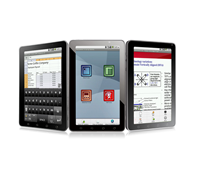
The battle in the tablet market has just moved up another notch with Viewsonic launching a 7-inch Android tablet and a 10-inch tablet that runs on both Windows 7 and Android.


Click to enlarge

Priced at $699 for the 7-inch and $799 for the 10-inch model, the products will go on sale in January of next year by mass retailers in what is fast becoming a cluttered marketplace. Shortly after the Viewsonic launch to retailers, vendors like Toshiba, Acer and Research In Motion will bring their tablet offerings to the market.

While the strategy for the 7-inch tablet is clear, the marketplace for the 10-inch model appears to be clouded with issues as the device has to compete with the iPad which at this stage has a better screen and faster processor.

Viewsonic Australia’s Country Manager, William Tse, told ChannelNews that he is currently talking to carriers and retailers and that in 2011, Viewsonic will expand its display offerings while investing in the tablet market.


At this stage, Viewsonic has no deals with carriers, who appear to be reluctant to stock both tablets and smartphones made by PC vendors. Various PC vendors have presented smartphones to companies like Vodafone, Optus, and Telstra to have them rejected during the past 6 months.

The Viewsonic ViewPad 10 has dual operating systems: Windows 7 Home Premium and a Google Android OS running on an older version (1.6). It utilises an Intel Pine Trail-M N455 processor, has 1GB of RAM, offers 16GB of storage, and offers Wi-Fi. It also comes with two USB2.0 ports, a mini-VGA port as well as a 1.3-megapixel camera.

The Viewpad 7 is 11.5mm thin, weighs 375 grams and has a 7-inch screen with a native resolution of 800×480. It runs on the latest Android 2.2 operating system and is Google Mobile Service certified, allowing users to gain access to the Android Market, Google Maps, Voice Search, Gmail and Youtube. Users can also perform calls and 3G video calls, navigate using the GPS software, and edit documents on the go with the Documents-to-Go program. The ViewPad 7 also supports microSD card for maximum storage capacity and is equipped with Bluetooth for wireless communication devices.

Review: Clickfree Wireless Backup For Storing Precious Files

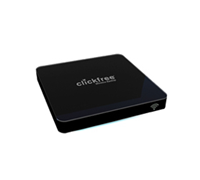
If you have a lot of important files stored on a PC or notebook, then backing up is a must in order to keep them safe. However, despite the availability of backup software on portable hard drives, there are still a lot of people who don’t do it because it is ‘difficult’ and time consuming. Clickfree’s Wireless Backup simplifies data backup and is able to connect and automatically back up data wirelessly.

What’s unique about the Wireless Backup is that it comes with Wi-Fi built in that automatically backs up data from connected computers wirelessly. Like the C2N that we reviewed a couple of months ago, users need to connect the drive via USB to start backing up important files.

The Wireless Backup comes with an embedded USB 2.0 cable which is a bit short as well as a power adapter for the wireless function.

The time it takes for the initial backup process to complete itself depends on how much files you have stored on a notebook or PC. The Wireless Backup stores photos, music, e-mail files, text documents, spreadsheets, presentations, videos, favourite websites, as well as other files such as ZIP, XML, CAB and HTML.

After everything has been set up, the drive will obtain wireless settings and users can then remove the drive from the USB port and plug its power adapter into the wall.


Click to enlarge

After a couple of minutes, the drive will be ready and will back up data from synchronised computers wirelessly depending on the schedule. Backup is scheduled for 3AM by default, but can be adjusted accordingly. Wi-Fi backup is a bit slow, but it was still able to automatically save all our new files at the end of the day.

If you have more than one notebook at home that you want backed up, then all you need to do is to connect the drive to the notebook, perform the backup, and remove the drive. Once it is plugged into the wall, it will automatically backup each and every single computer that was connected to the device.

In addition to backing up data, the unit can restore selected files to the original location or transfer them to a new folder, import music from your Apple iPad, iPhone or iPod, or create a backup DVD using a separate application.

Overall, the Clickfree Wireless Backup delivers an easy backup solution to users who want to backup multiple computers. The whole process of backing up is simple and once you are done connecting all your notebooks/computers, you can place it on a corner and forget about it. The 500GB drive is available now for $199.

Fritz VoIP and DECT-enabled Router Coming To Oz

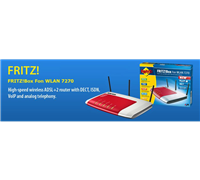
PCRange has announced that it will be bringing a new home and SOHO ADSL2+ router which comes with Ethernet and wireless connectivity as well as VoIP and DECT capabilities.


Click to enlarge

The Fritz!Box is developed by German company AVM and supports both ADSL2+ and Ethernet WAN upstream connections. It also supports the ADSL2+ Annex M protocol to deliver upstream speeds as fast as 2.5 megabits per second as well as 802.11 a/b/g/n Wireless LANs with full encryption.

It also contains a built-in DECT cordless handset base station, supporting as many as six wireless handsets, plus two wired VoIP handset ports and a voice port. The FRITZ!Box even supports both IPTV and IPv6 and includes integrated PABX functions including call diversion and “email-enabled” answering machine and fax service functions.

PCRange will launch two FRITZ!Box models in Australia, with the top model including gigabit Ethernet ports, dual-band wireless network signals on the 2.4Ghz and 5Ghz frequencies and support for VDSL2 as well as Ethernet WAN running as fast as 100 Mbit/s.

The Internode online store will sell FRITZ!Box products from January 2011, offering special FRITZ!Box pricing with new or renewed Internode broadband services on a 24-month term.

FRITZ!Box models and accessories that will be available in Australia are:

  • FRITZ!Box Fon WLAN 7270 (RRP $369) provides high performance Internet connections via ADSL2+, four 100-Mbit/s Ethernet ports and dual-band Wireless LAN a/b/g/n support
  • FRITZ!Box Fon WLAN 7390 (RRP $469), with four gigabit Ethernet ports, ADSL2+, VDSL2, concurrent dual-band WLAN access points, ISDN support and on-board storage for media services and NAS functions
  • Stick ‘N Surf dual-band wireless USB stick (RRP $89) for computers with no wireless support
  • DECT cordless phone handsets (RRP $129) optimised for the FRITZ!Box.

Online Transactions Gaining Traction Says ACMA

More and more Australian consumers are purchasing goods or services online, with ACMA finding that close to 90 per cent of household Internet users in Australia have engaged in one or more e-commerce activities.According to the research released at the annual Communications Policy and Research Forum in Sydney, 69 per cent of respondents purchased at least one good or service in the last six months.

The most popular goods and services purchased by Australian consumers were: travel goods and services (56 per cent); event, concert or movie tickets (43 per cent) and household goods-such as furniture, electrical appliances, computer equipment (37 per cent).

The research also revealed that consumers with higher levels of education, income and in some form of employment were more likely to engage in e-commerce. More than 54 per cent of respondents spent less than $1000 during the previous six months, while 43 per cent spent in excess of that.

Convenience was cited as the most common reason for purchasing online (74 per cent). The next most common driver was lower cost (38 per cent).

However, those who do not purchase goods online said that the main reasons why they didn’t was that they ‘lack trust of the internet (25 per cent), want to shop the old fashioned way (19 per cent) and have no desire to do so (17 per cent).

ACMA Chairman Chris Chapman said, “These are suggestive of increasing consumer confidence with making online transactions. The internet is empowering consumers to purchase more economically and efficiently by making it easier to locate goods and services and often to compare costs.”

“E-commerce is one of a number of internet activities performed by Australians online and this is the first time the ACMA has explored the nature of Australian participation and engagement with e-commerce in any depth.” 

Lexmark Wireless Printer Scans In A Flash

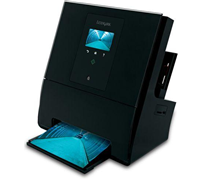
Lexmark Australia has today unveiled a new all-in-one inkjet printer that can scan photos in less than five seconds. Called Genesis, this printer sports a unique upright design and uses a 10-megapixel sensor instead of a conventional scanning bar for faster image or document digitalisation.


Click to enlarge

Unveiled at a press conference this afternoon, the Genesis (S815) comes with a 4.3-inch colour touch screen that lets you choose a task without having to go to your computer. Scanned images are instantly displayed on the screen, while its card reader and USB port allow users to print photos and documents instantly.

The unit is also Wi-Fi enabled, allowing users to read the news, upload images and saved documents to cloud-based applications such as Stamps.com, Evernote, Box.net, and Tripit, as well as access to Twitter and Facebook.

Lexmark’s Director of Worldwide Product and Solutions Marketing, Bill Lucas, demonstrated to the media how easy users can scan pictures or documents. If a user has a photo to scan, he/she simply needs to open the lid, place the photo, and close it. Within 3 – 5 seconds, the Genesis shows a preview of the photo and asks what to do next. Every single process, including changing the ink was shown on the 4.3-inch screen, which is good especially if you do not know your way around a printer.

“Instead of looking at a piece of technology and asking ourselves what we could do with it, we ask users what they want on their printers. This method allows us to create products that make life a bit easier,” said Lucas to SmartHouse.

The Lexmark Genesis will be available in Australia at the end of this month at participating Harvey Norman, Domayne & Joyce Mayne outlets for $449.

Help Button To Keep Aussies Safe Online

The Government has today launched a Cyber Safety Help Button that can help Australian children and families to stay safe online.

The help button is a free application that is easily downloaded onto any computer. It provides help and advice on a range of online risks including cyberbullying, unwanted contact, scams and fraud, and offensive or inappropriate material.

All a user needs to do is to download it from the Cybersafety help button download page and install it on a computer desktop. “Click it twice if you ever need help or advice about something unsafe or upsetting that you have encountered on the internet,” said the website.

Minister for Broadband, Communications and the Digital Economy, Senator Conroy said, “The internet offers our young people many exciting opportunities but there are also some dangers and the Help Button will provide valuable information for students, teachers and parents.”

“The Button offers a direct link to Kids Helpline, so if children are worried by cyberbullying or any other upsetting issue, they can phone or chat online to a professional counsellor. Young people can also report cyber safety issues directly to participating social networking and online game websites such as Facebook, MySpace, Twitter and Moshi Monsters,” continued Conroy.

Senator Conroy also said that future enhancements were planned for the Help Button such as making it suitable for mobile platforms, network downloading and additional resources for users to access.

High-End Acer Aluminium Notebook Revealed

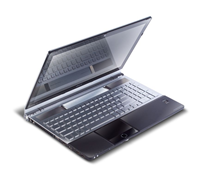
Acer Australia has rolled out two new notebooks that sport an aluminium casing. These new notebooks also utilise Intel’s new processor, come with large storage capacity, and use a powerful dedicated graphics card.


Click to enlarge

According to the company, the Aspire Ethos 8943G and 5943G run on Intel’s Core i7 Quad Core processor, can store 750GB (8943G) and 1.5TB (5943G) of data, and is powered by a dedicated 2GB ATI Broadway 5850 Graphics Card.

In addition, the notebooks also come with a dual-mode touchpad, which lets you switch between a multi-gesture touchpad to a media console. Aspire’s 18.4 inch (1920×1080) or 15.6 inch (166×768) screen comes with Dolby Home Theater technology that includes CineSurround, True 5.1 output and a special subwoofer. The Aspire Ethos models can be equipped with either a Blu-Ray Disc reader or a DVD-Super Multi double-layer optical drive. In addition, the Aspire Ethos series also features a multi-in-1 card reader that supports the most common card formats.

Acer’s Product Manager for Consumer Notebooks, Chris Osborne said, “With the Aspire 5943G and 8943G we’ve really lifted the benchmark. They are also very competitively priced and that gives the consumer a compelling reason to choose an Aspire Ethos”.

The Acer Aspire 8943G and 5943G are available now for $2999 and $2499, respectively.

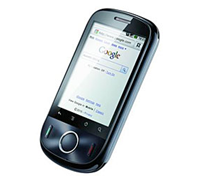
Huawei Launches Budget Android 2.2 Smartphone

Huawei has unveiled its new smartphone that runs on Google Android 2.2. Called IDEOS, the company plans to sell this product for about US$100 to US$200.


Click to enlarge

According to the company, the IDEOS promises downlink speeds of more than 7.2Mb/s, offers WCDMA + WiFi dual network support, and mobile broadband services. The device also doubles as a Wi-Fi router for up to eight devices at a time.

Kevin Tao, CEO of Huawei Device, said, “The popularity of the smartphone is one of the key tools to bringing people into the ‘Golden Age of Mobile Broadband,’ which is linked to Google’s mobile Internet strategy.”

“We are proud to have already achieved our goal from early 2010 of developing a US$150 smartphone with an excellent user experience. The IDEOS is an affordable option, designed to lower barriers to entry to allow easy mobile Internet access.”

Available in black, yellow, blue, and purple, the IDEOS runs on Android 2.2, supports functions such as voice dialing, voice navigation, and has the ability to run applications off the SD card. 

Australian pricing and availability will be announced at a later late.