Smart Office

Panasonic Projector Offers 3D For $1

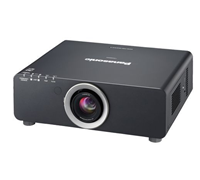
Panasonic has unveiled a projection system that allows a person to see 3D images by using disposable glasses sold for $1. The solution is ideal for high-traffic venues like museums and convention centres as users do not need to spend close to $100 for a pair of glasses.

The solution consists of two Panasonic 2D PT-DZ6710E projectors stacked on top of each other to display 3D content. One projector’s lens is used for the left-eye image and the other for the right-eye image, projecting two ‘side by side’ images that are then combined to produce a 3D image when projected onto a screen or wall.

The 3D image can then be viewed using disposable 3D glasses.

Panasonic Australia’s AV/IT Group Manager, David Cuckney said that this solution allows large audiences to view 3D on a big screen.

“It’s ideal for the professional rental market and for museums and convention centres that want to create their own 3D displays for key exhibitions and events – playing 3D movies, advertisements or any other 3D promotional material,” said Cuckney.

The Panasonic PT-DZ6710E is a 6,000-lumen single-chip DLP projector that offers wide-aspect WUXGA projection with 1920 x 1200 pixels and a 2,000:1 contrast ratio.

Panasonic’s PT-DZ6710E projector is available now priced from $30799rrp.

Disposable 3D glasses are available from third party-suppliers and typically start from $1.00.
D-Link Wireless Router Fits In Your Pocket

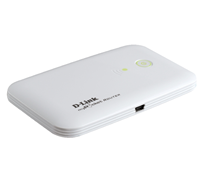
D-Link has launched a rechargeable, battery-powered wireless router that can be carried in a pocket.


Click to enlarge

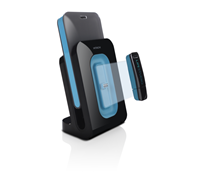
The myPocket 3.75G HSUPA Router connects to a 3.75G mobile network by inserting a UMTS/HSUPA SIM card and share their mobile Internet connection with up to 16 wireless devices within the area.

In Wi-Fi mode, the DIR-457U supports 802.11g and 802.11b, WPA/WPA2 wireless encryption, and comes with a built-in firewall to prevent potential Internet attacks.

The D-Link myPocket 3.75G HSUPA Router can also be configured to work as a 3.75G Modem with the flick of a switch and connected to a PC or laptop for dedicated Internet access.

Storage installed via a built-in microSD slot also conveniently supports sharing of files between connected Wi-Fi devices.

D-Link’s Marketing Director, Maurice Famularo said, “D-Link’s new 3.75G myPocket Router can be used to share a high-speed mobile Internet connection almost anywhere, even when users are on the move. It is battery-powered and small enough to be easily carried around.”

The DIR-457U myPocket 3.75G HSUPA Router is now available for $329.95.

Sony Vaio 3D Notebooks Coming In 2011

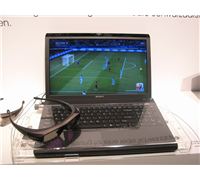
Sony has announced that it will be launching notebooks that can display 3D video and games in Full HD quality. However, users would still need to wear glasses in order to utilise this feature.


Click to enlarge
Photo from: techon.nikkeibp.co.jp

The company has revealed a couple of prototypes at IFA that come with a 3D button that instantly displays a video or game in 3D.

According to reports, the 3D Vaio notebooks is able to display video at 240 frames per second and will utilise a function called “black frame insertion” that improves pixel response.

Sony’s Chief Executive, Howard Stringer said that the new 3D Vaios will debut next spring, with pricing to be announced at a later date. 

Hitachi Drive Syncs With Online Content

Hitachi has today launched its new line of external hard drive that not only backs up data, but is also able to automatically organise content stored on the network and online.


Click to enlarge

According to Hitachi, the LifeStudio family automatically pulls in, organises and protects stored digital content – photos, videos, music and documents – and unifies it with online content from social networks such as Facebook and photo sites such as Flickr and Picasa Web Albums. The digital content will then be laid out in chronological order on a ‘3D’ visual wall.

Consumers will also receive both local and cloud backup within one single application, making it easy to view, download, and share protected cloud content from any web browser, anywhere.

The Hitachi Backup offers default options that cover virtually every Mac or PC users’ backup needs. When using Hitachi’s cloud service, all content is stored in its natural format, so files are protected and easy to view, download and share from any web browser, anywhere, even from an iPhone and iPad.

Every customer receives 3GB of online storage for free and for more storage there is an option to upgrade to 250GB for only US$49 per year, which includes multiple computer protection.


In addition, the LifeStudio Plus family also comes with an integrated 4GB USB key, allowing a user to remove the key and take what they need. On return, the key docks on the drive to automatically sync everything back together.

Hitachi’s Vice President for Asia Pacific, Robert Chu said, “Our LifeStudio drive starts where others stop. These drives aren’t just about interfaces and capacity, or backup. While these elements are important in an external storage solution, the value comes in creating lifestyle solutions that become part of the way we organise and relive digital memories.”

“Our LifeStudio solution connects consumers to their online and local content in a more intimate way than ever before. For the first time, consumers truly have an integrated experience – one solution to find, view, protect and relive their digital memories. This is a huge milestone for our category,” concluded Chu.

Hitachi LifeStudio external drives will be available exclusively at JB Hi-Fi at the end of this month.

LifeStudio Mobile: $119 (320GB); $149 (500GB)
LifeStudio Mobile Plus: $149 (320GB); $179 (500GB)
LifeStudio Desk: $159 (1TB); $249 (2TB)
LifeStudio Desk Plus: $189 (1TB); $279.99 (2TB)

One Receiver For Logitech Mouse And Keyboard

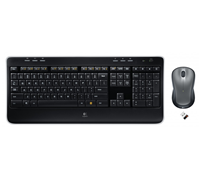
Logitech has launched a new wireless mouse and keyboard combination that uses one receiver.


Click to enlarge

The Logitech Unifying receiver is as small and is able to wirelessly connect the mouse and keyboard to your computer. Users can also able to add other compatible products from the range without using additional receivers says the company.

Logitech Director for Australia and New Zealand, George Saad said, “With the Wireless Combo MK520, we’ve combined advanced wireless technology, with a mouse and keyboard that offer the features and capabilities that our users want most. With a long battery life, a high-performance laser, and quiet, low profile keys, the MK520 is going to make a lot of people happy.”  

The included mouse claims to have one year battery life, while the keyboard comes with a concave design and has incurve keys that position your fingers properly and make it easier to glide from key to key. The keyboard has a three year battery life and also incorporates one-touch media controls.

The Logitech Media Combo MK520 will be available in Australia from early September 2010 for a suggested retail price of $99.95

Convenience Fuels Mobile Shopping Growth

A research study conducted by Pure Profile has found that more users are shopping online using their mobile phones because of the convenience.The research conducted on behalf of eBay has found that as of July 2010, more than 87,000 shoppers have visited the online shopping site via a mobile phone. This is double compared to January 2010 where only 44,000 have shopped on the site. 

eBay said  that Australians have so far purchased more than one million items on their site using mobile devices. The research also found that nearly 25 per cent of Australians now use their mobile phone to shop online,  43 per cent of Australians spent $50 – $250 a month shopping on their mobile phone and 17 spend over $250 each month.

It was also revealed that the reason why users shop on their mobile was because of convenience (44 per cent), being able to shop 24/7 (23 per cent) and as a cost comparison with retail stores (16 per cent).

Deborah Sharkey, Managing Director, eBay Australia & New Zealand Pty Ltd said, “We’ve seen a huge increase in 2010 in the number of eBay customers using mobiles to shop as people realise they can buy anywhere and at anytime. In fact, eBay mobile sales are growing faster in Australia than in any other eBay market with one item bought every 15 seconds.”

13mm Thin Monitor Hangs On The Wall

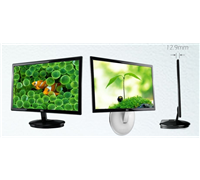
AOC Australia will tomorrow launch its 12.9mm thin LED monitor that can be wall-mounted.


Click to enlarge

The new Razor e2043F monitor claims to have an ultra slim cabinet measuring just 12.9mm thin. The 20-inch LED panel promises a dynamic contrast ratio (DCR) of 50,000,000:1, saves power with its LED backlighting and comes with an “e-Saver” technology which enables the user to set the monitor to a lower power configuration when the PC is in screen saver mode or powered off.

The Razor monitor’s base can also be turned into a wall mount, allowing users to elevate the monitor and has a tilt function for ergonomic viewing.

Other features of the Razor include a response time of 5ms, a native resolution of 1600×900, HDCP compatibility, and RGB and DVI input, as well as plug-and-play compatibility.

Various online website have begun selling the product for as low as $166 (RRP is said to be $199).

More Cyber Attacks Hit Mid-Sized Businesses

Security company McAfee has revealed that 41 percent of Australian businesses have suffered an IT security incident or hacker attack.According to the McAfee report called The Security Paradox, more than 40 percent of companies surveyed have had data breaches. In addition, 33 percent of Australian businesses surveyed fell victim to a data breach last year. 85 percent of businesses believe that there is some chance of a serious data breach putting them out of business.

Despite the rise in data breaches, McAfee has reported that more than 20 percent of Australian businesses have decreased their security budgets in the last year, whilst 53 percent have maintained flat budgets.

The report also said that 42 percent of the Australian companies surveyed do not have a full-time dedicated IT security specialist and every hour of network downtime costs an average of AUD $663, with the average security incident costing them AUD $221 per computer.

McAfee’s Sales Engineering Manager for ANZ, Sean Duca said, “Businesses today are faced with the challenge of continuing to utilise new devices and technology to grow their business yet have to protect corporate assets and information with limited budgets. Our research reveals that the majority of respondent’s still lump IT security and general IT budgets together. Given the rise in security attacks, it’s time information security receives its own budgetary attention”.

Optus Internet Ads Misleading Says Court

The Federal Court has found that Optus breached the Trade Practices Act with its advertising of its “Think Bigger” and “Supersonic” internet plans.According to ACCC, Optus said in its advertisements that for a monthly payment, a consumer would receive a headline data allowance of broadband which was then split into peak (midday to midnight) and off-peak (midnight to midday) data allowances.

However, Optus had not sufficiently disclosed that the service would be speed limited to 64kbps once a consumer exceeded their peak data allowance.

“The consequence was that any unused off-peak data would no longer be available at a broadband speed, and as such the consumer would not obtain the headline data allowance of broadband,” said the ACCC.

Justice Perram found Optus’ television advertisements “misleading, in my opinion, seriously so.”

Justice Perram also commented on the recent halt in the television commercials for the “Think Bigger” campaign, saying that he was, “far from convinced either that Optus recent cessation is anything other than opportunistic, or that it signals some newly obtained underlying comprehension of the need to avoid such tricky behaviour in the future.”

Justice Perram rejected Optus’ position in which they said that had not breached the law because any consumer who may have been misled by the advertisements had their misapprehensions corrected through the Optus’ call centre or website before they signed up for a plan.
 
 ACCC Chairman, Graeme Samuel said, “Consumers were told in these ads that they were going to get a certain amount of broadband, and only after you work through confusing and vague disclaimers that you realise that it’s just not the case. Consumers and the ACCC are, frankly, tired of telcos using complex, confusing and deceptive advertising to fool consumers. This should serve as yet another reminder, that if these companies don’t clean up their act, the ACCC will be here to take you to task, and you can expect to be hit with the full force of the law.”