Smart Office

Review: Trident Case For Heavy Duty Smartphone Users

The new Trident range of smartphone and iPad cases turn the typical, delicate handset into a builder’s dream, with durability unseen since the Nokia 5100.

The range is made of an impact resistant polycarbonate, featuring a shock absorbing silicone ring underneath a thick, rubber outer layer. All that is just a fancy way of saying it’s a big lump of plastic that insulates your phone really well at the expense of your new smartphone’s attractiveness. Coming in a range of colours that all look tackier than your already glamorous smartphone, these cases aren’t quite built to be sexy, but instead functional.

Trident boasts its ‘no-slip hold design,’ but while that is true it also means that the bulky, rubbery exterior makes it hard (or even impossible) to carry around in your pocket. The thick exterior does come in handy for pressing the exterior buttons on some of the phone models, oddly enough, with large, firm buttons that act as extensions on the phone’s outer interface.

The cases really do mean ‘shield’ when they claim it, with phones and iPads going unscathed when dropped from heights of up to around six feet onto a flat surface. The iPad cases go so far as to be waterproof when doused in a bucket of water.

PET screen protectors make for seamless covers that will keep messy fingerprints off touchscreens at the expense of some functionality. Bubble-free was a pretty accurate description after flattening out an initial bubble when first using the case, with the case maintaining the tight fit from then on. The screen was barely noticeable throughout the use of the phone. What was noticeable though was how quickly dust would collect on the plastic film.


The downside of the screen doesn’t come from the plastic coating though, but from the rest of the case. Where tablets’ and smartphones’ flat faces allow for seamless integration of the touchscreen and its border, the Trident cases encroach on this border, making it hard to reach buttons and menus on the outer limits of the screen. While testing the Samsung Galaxy case, trying to reach the pull-down menu for messages and missed calls was a constant hassle, even for users with smaller fingers.

The Trident cases come in two varieties: Kraken and Cyclops. Kraken cases are the upgraded versions of the Cyclops cases, sporting extra padded corners for those extra-accident-prone individuals and a detachable belt clip that doubles as a stand for the housed phone. There is also an Aegis variety for iPod Touch 4, though we did not test that model.

If you use a Trident case, you’ll most likely never damage your phone – and with the sizes of them, you’ll probably never lose it either. If you’re a tradie who still wants a function-filled phone but don’t want it breaking the instant you take it to work, these cases are a dream come true. If you’re just clumsy as hell, these cases will also save you. For everyone else, there’s no satisfaction to be found from these cases that effectively limit the use of phones and take a lot of mobility out of the ‘mobile phone.’

Trident cases are available through their Australian distributor, iWorld Australia, through a range of consumer electronics stores. The iPad cases sell for an RRP of $69.95, while the phone cases which come in two varieties sell at $59.95 for ‘Kraken’ cases that come with more features and $39.95 for the smaller ‘Cyclops’ cases.
Kingston Digital Delivers Enterprise USBs With Top Security

Kingston Digital, a leader in premium USB memory products, is releasing a handful of security-driven business USB thumb drives on March 7th.

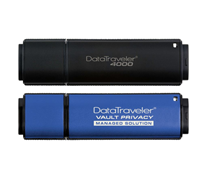
The sizes range from 2GB to 32GB, with a high price per gigabyte for its military-grade security. The drives come in two categories: the DataTraveler 4000 (DT4000) and DataTraveler Vault-Privacy Managed (DTVPM), both aimed at the enterprise and SMB market.

The DT4000 series offers military- and government-grade encryption for the corporate sector’s sensitive information transfers, with FIPS 140-2 Level 2 encryption on top of its security processor.

The DTVPM series offers SafeConsole server software from BlockMaster offers more diverse security functions like password control, device state management, a file audit log and restriction options for file transfers and managing what file types can and can’t be saved onto the drive.

The two ranges, totalling nine USB products, will be available in Australia from March 7, with recommended retail prices as listed below:

DTVPM Range:
2GB – $44
4GB – $72
8GB – $106
16GB – $214
32GB – $633

DT4000 Range:
2GB – $65
4GB – $82
8GB – $129
16GB – $225

D-Link Fuses Router & Port Switch

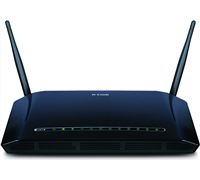
D-Link’s upgrade to the Wireless N range with the DIR-632 has melded the typical 8-port switch with the high-speed wireless router to create one device to link together the home network.

With home improvement pushing toward digital controls and home networking under the likes of Control4 and Powerline connections, networking companies like D-Link are expanding their products to meet the rising demand for connectivity.

The DIR-632, directed at homes and small offices rather than big offices that would already feature large port switches, provides wireless networking for high-speed Internet while offering an additional eight 10/100 LAN Ports and one 10/100 WAN Port for physical connections with the maximum networked speed.

Security with WPA and WPA2 encryption and dual active firewalls mean that data is protected, while coverage is expanded by the two ‘intelligent’ antennae that eliminate dead spots around the home environment.

Additional features including parental controls for children’s Internet access, Wi-Fi protection and Shareport for printer and flash drive sharing.

The D-Link DIR-632 Wireless N 8-Port Router runs at an RRP of $129.95

Imation Defends USB Data With High Security

Imation, specialist in AV products, accessories and storage, has released a range of security-heavy portable storage products in its ‘Defender Collection.’

The range, now available in Australia, consists of flash drives and external hard drives with FIPS-grade security – the standard used by US government organisations. The target market here is enterprise and government organisations willing to pay a premium price for high security on portable data.

The Defender F200 Biometric Flash Drive is the leader of the series, ranging from $189.95 for 1GB to $674.95 for 32GB, featuring biometric fingerprint identification and password protection.

The lower grades include the F50 Pivot, F100 and F150 which still all include hardware encryption. While these are currently stocked at up to 32GB capacities, Imation is expecting 64GB varieties to appear at a later Australian launch for the Defender series.

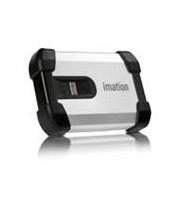
There are also a range of external hard drives that house up to 500GB with fingerprint scanning in a metal frame.

Still to come are security-centred re-writable CDs, DVDs and Blu-ray discs.

The release comes ahead of Kingston Digital’s range of enterprise USBs set for launch on March 7, each running at competitive prices to each other. The Imation products have an added level of security based on the FIPS scale.

Mobile Touch-And-Go Payments 2 Years Away

The use of mobile phones for touch-and-go payment systems is still at least two years away according to a survey by mobile commerce provider, Sybase, Inc.While Near Field Communication (NFC) technology that allows phones to be used similarly to credit cards is widely received in Asian markets like Singapore and Japan, the technology is yet to develop in most of the Western world, particularly absent in Australia.

Australian banks have tested pilots of NFC in Australia with fair results according to vice president of Sybase’s mCommerce division, Matt Talbot.

“The big issue is replacing all the current handsets in the market,” said Talbot.

MasterCard has been ahead of the game in Australia, launching PayPass touch-and-go payments for purchases under $100 in Australia in the same way that NFC payments would work. In overseas markets like Singapore, Visa and MasterCard have already integrated their services with NFC technology.


Talbot noted that credit, banking and payment companies like MasterCard already have the retail-side infrastructure to make switches to new technologies work, while NFC requires a co-ordinated market that Australia doesn’t have.

NFC has been popular in Japan for years now, being used for everything from interacting with advertisements by scanning integrated chips with an NFC-enabled phone to paying for public transport. This is mostly attributed to operators like SoftBank, which is both a bank and telecom company, which can control the market.

40% of Sybase’s survey respondents from the industry cited lack of co-ordination between these sorts of stakeholders as the main inhibitor of remote mobile payment with NFC in the Western world.

“In 18 to 24 months we’ll start seeing live NFC,” said Talbot.

Europe is slowly beginning to take up remote payments, with companies in Germany beginning to run Sybase services of NFC-enabled phones.


Samsung has recently announced NFC-enabled phones at CES that will be available across Asia Pacific, Europe and North America, and Research in Motion’s (RIM) co-CEO Jim Balsillie stated that NFC will be stocked in “many, if not most” smartphones this year.

The point of NFC technology for payment is to speed up the process, but companies like Nokia have delayed mass launches on their handsets despite having the technology because of the lack of support for it and consumer concerns about security.

Industry insiders still see a future for NFC though – and soon.

“It’s the gimmick underlying the phone you’ll buy next year, with which, if you live in the developed world, you’ll almost certainly conduct the lion’s share of your daily monetary transactions,” said Ex-design chief of Nokia, Adam Greenfield on his WordPress blog last week.

Lenovo ThinkPad Links Laptop And Tablet

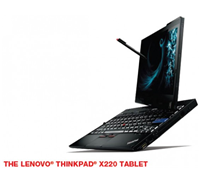
Lenovo is releasing its ultraportable ThinkPad X220 laptop and X220 convertible Tablet PC this April in Australia, aimed at business professionals.

The new 12.5 inch ThinkPads look to push battery life and portability for all day use on the go in the corporate environment, with 15 hours of battery life on the standard battery and 24 hours with a ThinkPad external battery added.

The convertible tablet weighs in at around 1.8 kg but can be lighter with a downgraded battery at the expense of battery life. If you’re willing to sacrifice some portability with the bigger battery and external battery pack, the tablet can run for 16 hours.

Weighing more than typical consumer tablets, the X220 runs Sandy Bridge Intel Core i5 and i7 processors rather than smaller tablet- and smartphone-specific CPUs, increasing performance.

The business-centric functions like Lenovo Enhanced Experience 2.0 come stocked for quick boot-up and shut down for jumping in and out of work. Coupled with Instant Resume, users can keep their wireless connections active during PC sleep for up to 99 minutes.

Connectivity options are given a slight upgrade with USB 3.0 slots over the usual 2.0.

Durability, profile and utility are all upgraded on the latest ThinkPad models, with greater drop resistance and spillage resistance for the keyboard on the slimmer, lighter design.

These ThinkPad models start at $2749 and range up to $3699, coming in multi-touch tablet form or in an ‘outdoor’ version that includes Gorilla Glass for durability and enhanced visibility.

Hitachi Storage Drives Up In The Cloud

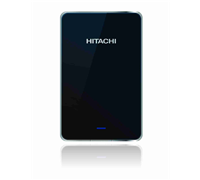
Hitachi is releasing a range of external hard drives that link portable storage with cloud storage.

The Hitachi Touro range of external hard drives starts at 320GB and extend up to 3TB of storage space.

3GB of online storage is coupled with the hard drives, with extra cloud space going for US$49 per year for 250GB. Upgrades come with iPad and iPhone apps to navigate the stored data.

Cloud storage allows physically backed-up data to be accessed on devices that aren’t fit for ordinary USB connections like iPads and smartphones, while USB 3.0 compatibility allows the USB connections to run fast.

In-built back-up software is customisable for scheduled back-ups of your selected data on PCs and Macs.

The Hitachi Touro External Drive Family is coming this May, distributed by both Altech Avnet. Prices start at $74.50 for a ‘mobile drive’ and $94.50 for a ‘desk drive.’ The full RRP list for the range is on the next page.


Acer Aspires To Multi-Touch Notebooks

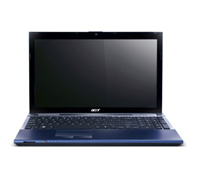
Acer is bringing out the 2011 rendition of its Timeline series of notebooks that push battery life and mobility.

The Aspire TimelineX family is the third generation of the series and this time comes in three separate sizes with some of the latest connectivity options.

The three models include the 13.3 inch 3830T, 14 inch 4830T and the 15.6 inch 5830T. All models are thinner than an inch and range between Intel Core i5 and i7 processors, with Nvidia graphics cards in tow.

While still not much of a tablet, the typical touchpad on these notebooks includes multi-gesture functionality for pinch, flick and swipe navigation.

The laptops have three USB ports and a single USB 3.0 port for faster transfer speeds and the ability to charge devices even when the notebook is off.

Other inputs include HDMI, VGA, a card reader for multiple storage card sizes and audio jacks. Other features include an in-built 1.3 megapixel webcam and surround sound speakers.

According to Acer, battery life expectancy is over eight hours on a single charge.

The Acer Aspire TimelineX range of laptops are set for release later this month, retailing from $1,199.

Epson Pro Printer For The Serious Photographer

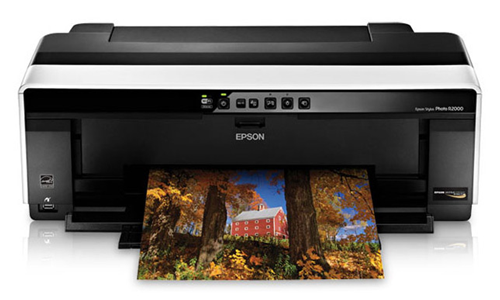
Epson is bringing its upgraded printer for professional photographers to Australia this June that can handle more connectivity and more media than before.
The Epson Stylus Photo R2000 A3+ printer can ink up a range of different paper types like cut sheets, roll paper, photographic paper and canvas, as well as the more digital variety of surfaces like CDs and DVDs.

The printer uses Epson’s eight-colour pigment ink sets, UltraChrome Hi-Gloss 2, that produce water, smudge and fade resistant prints at gallery quality. Auto-selecting Photo and Matte Black inks deliver deep blacks on either matte, fine art or glossy media, depending on the intended look.

The print head produces a max resolution of 5670 x 1440 for high quality on large scales.

The ink cartridges have been upgraded from the last Stylus model, with a larger capacity that can produce up to 50 percent more prints on the one refill.

Range is expanded on the R2000, both in connectivity and media handling. It can connect to devices through Ethernet, Wi-Fi and USB, and can load in paper on multiple levels.

There’s a top-loading, high capacity option, a single-sheet fine paper slot dedicated to heavier fine art and a frontal straight-through path that can take media up to 1.3mm thick (like CDs). It can also take roll paper to produce panoramas up to 44 inches long.

The Epson Stylus Photo R2000 hits stores this June and runs at $1099.

Western Digital 3TB Hard Drives Too Big For PCs?

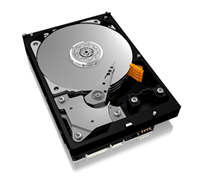
Western Digital has upped the capacity of its media streaming internal hard drives to up to 3 TB, though the bigger sizes may not play nice with PCs.

The 3.5 inch AV-GP hard drives are aimed at the audio-visual market with a keen eye for storage space-intensive applications.

The AV-specific hard drives run fast and efficiently during high temperatures from continuous usage like with content streaming.

High read speeds and the reliability of 24X7 for optimal power consumption makes these drives run smooth while capturing up to 12 HD video streams simultaneously without overworking.

After 2.19 TB of storage, some operating systems like Windows XP stop supporting hard drives. 32-bit version of Vista and Windows 7 detect these larger drives as ‘secondary drives.’ In any case, it’d be a clever to check out WD’s white paper on the topic to see whether the extra-large drives are compatible with your PC or other AV devices.

The 2.5 TB version (WD25EURS) comes in at $199, while the 3 TB (WD30EURS) runs at $219.