

Shopping on the job is likely to cost Australian businesses nearly $1000 per employee due to lost productivity and expose the company to increased security risks, says a new survey conducted by global IT association, ISACA. 50 percent of IT professionals said they expect employees at their organisations to conduct their holiday shopping online at work.
 Marie Jones
Smartphones Set To Drive Mobile Shopping: Survey
Nearly half of smartphone users say they have already, or soon will, use their phones to do mobile shopping, and 53 percent also use, or intend to use their smartphones for mobile banking, according to a new survey of 2000 consumer technology users in the US.
A senior analyst at ABI Research, which conducted the study, said there are indications that mobile commerce is finally achieving mass market appeal in the US because of its widespread use among even those with non-smart mobile phones.
Mark Beccue from ABI, said: “These are very exciting findings for merchants and service providers promoting mobile commerce,” says senior analyst Mark Beccue. “It’s not just smartphone owners: non-smartphone mobile users’ interest in mobile banking and commerce services is also on the rise, with 17 percent of non-smartphone users surveyed using or intending to use mobile banking services.”
“These findings are part of a larger picture which quantifies smartphone users’ consistently higher use of a wide range of activities and features, from mobile browsing through multimedia to navigation,” notes primary research director Janet Wise. “Smartphone users behave differently. They score higher for all these activities ‘because they can’ (their devices are capable), and also because they have the money, resources, and time to do all these things.”
Among other trends identified, advertising is also said to be a growing attraction for mobile phone users. Mobile market strategies practice director Neil Strother said: “About one third of smartphone owners surveyed … have clicked on at least one mobile advertisement.”
ABI Research’s “Consumer Technology Barometer: Mobile (Q3 2010)” was also conducted to provide dynamic insight into the constantly changing US consumer mobility market. In addition to phones, it analyses consumers’ use of MP3 or portable media players, satellite radios, standalone digital cameras, digital camcorders/video recorders and portable video game devices.
IBM Gains OZ Clients As Cloud Adoption Soars
IBM says its Cloud services are increasingly being adopted by businesses across the world, including the Australian Bureau of Statistics (ABS) and Zoo and Aquarium Association of Australia.
Following recent IDC research showing worldwide spending on Cloud services will grow almost threefold, reaching $44.2 billion by 2013.1, IBM announced two new partnerships for its LotusLive email, Web conferencing, social networking and collaboration cloud service.
The company is to work with Ariba and SugarCRM to help its clients take advantage of social commerce and customer relationship management (CRM) in the Cloud.
As well as the ABS and Zoo and Aquarium Association of Australia, new clients include C&D Foods, Crawford & Company, FIDM/Fashion Institute of Design & Merchandising, General Milling Corporation and General Motors Components Holdings.
“With the increased interest and adoption, businesses across the world are embracing IBM’s public Cloud services for easy-to-use collaboration tools to connect with colleagues, partners and suppliers quickly,” the company said in a statement.
Additionally, according to a recent IBM survey of more than 2,000 midsize companies, there’s growing adoption of Cloud computing among midsize firms, with two-thirds either planning or currently deploying cloud-based technologies to improve IT systems management while lowering costs.
Organisations including the Australian Bureau of Statistics and the Zoo and Aquarium Association of Australia have adopted LotusLive Engage to drive increased collaboration across geographically distributed teams.
The ABS adopted LotusLive across its 3,200 person organisation for increased project collaboration with other international statistical agencies.
LotusLive Engage allows its international project teams to quickly share skills and intellectual property and assets, design and co-develop statistical standards and applications — all within a secure, cost-effective environment that LotusLive provides.
Additionally, the Zoo and Aquarium Association of Australia integrates more than 90 zoos and aquariums across Australia, New Zealand and the South Pacific in a network for wildlife conservation, environmental education and wildlife research.
Its main activity is the Australasian Species Management Program (ASMP) which has a mission “to plan and manage animal collections cooperatively, in ways that promote sustainability and contribute to species conservation.”
The Association has adopted LotusLive Engage as its collaboration platform to support more than a 100 species programs that involve teams implementing best practice policy across the region.
The Association says it has found the platform to be secure and easy to use and a good way of disseminating current information and collecting feedback.
Bing Lee And Harris Technology To Sell ViewPad
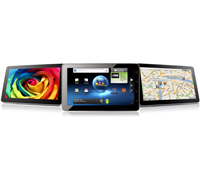
With a deluge of tablets due to enter the Australian market this year, and tablets become the must-have gadget in 2011, ViewSonic has announced retail and reseller partners who will take its 7 inch and 10 inch ViewPad tablet PCs to market.
 Click to enlarge |
Bing Lee is stocking the tablets at its 45 retail stores nationally, while Harris Technology will resell the products to small and medium sized businesses and home business market both online and through its 5 nationwide outlets.
ViewSonic launched the ViewPad late last year, but the race is on for a share of the consumer dollar, with several other manufacturers lining up to release their tablets this year. ViewSonic cranked up the rivalry however, by launching the tablets – a 7-inch Android tablet and a 10-inch tablet that runs on both Windows 7 and Android.
While the strategy for the 7-inch tablet is clear, the marketplace for the 10-inch model appears to be clouded with issues as the device has to compete with the iPad which at this stage has a better screen and faster processor.
William Tse, Country Manager at ViewSonic Australia, said: “The tablet market is on the rise with growth anticipated to at least double within the next 12 months. With the support of partners like Bing Lee and Harris Technology we are able to distribute the ViewPad to the wider community.
“Bing Lee and Harris Technology are leading Australian retail and IT specialist operators and we are thrilled to have the ViewPad ranged in their stores,” he added.
The ViewPad 7 has a slim 11.5 millimetres form factor and weighs just 375 grams load, with a 7 inch multi-touch screen. It eliminates the need for additional electronic devices, integrating unique and innovative tasks such as full mobile phone functionality, computing and gaming, along with e-book capabilities, and is powered by Google’s Android 2.2 operating system.
Ritchie Djamhur, IT Buyer at Bing Lee, said: “We see the ViewPad as a definite contender in the fast rising tablet category. In particular, Android devices are boosting its share of tablet PCs as it is cost effective, just as intuitive and easy to navigate. Many apps are being ported to multiple platforms, so it is getting easier to find applications appearing on both the Android Marketplace and the Apple iTunes App Store.”
Andrew Whiting, National Merchandise Manager at Harris Technology, said: “Harris Technology is committed to providing leading technology products. We cater predominantly to small-to-medium businesses and early adopters and the ViewPad 10 is an ideal product for this segment. It represents an optimised mobile experience with Google Android or the familiar Microsoft Windows for dynamic business users demanding high end requirements.”
No doubt other retailers, resellers and telecommunications companies won’t have to wait long as ViewSonic says it intends to announce new distribution partners as soon as they come on board.
The ViewPad will retail at $699 for the 7-inch and $799 for the 10-inch model.
ACMA Crunches Numbers For VoIP
New rules came into effect this week that will allow VoIP Services to charge customers for use of the service based on geographic areas.
ACMA (the Australian Communications and Media Authority) said it has changed the geographic numbering rules, such as those with 02, 03 or 08 area codes, which will now be issued to customers using outbound VoIP services.
The move removes limitations on outbound only services (including VoIP) and provides a framework governing the use of geographic numbers when used for services outside their normal area.
‘The introduction and uptake of new services such as VoIP has challenged the relevance of parts of the Numbering Plan, which dated back to 1997, to meet industry and consumer needs,’ said ACMA Acting Chairman, Mr. Richard Bean.
‘The implementation of these amendments represents a small but important step in regulatory transition for VoIP and other converged services. It will support innovation in the new telecommunications services being offered to Australian consumers,’ he said.
While VoIP services have been available in Australia for some time, the new rules give VoIP providers more certainty about how numbers can be used and what information they must provide to consumers if the geographic numbers are issued to customers out of area.
ACMA is currently examining a range of emerging numbering issues and has already released two issues papers, most recently customer location information and numbering data.
Increasing pressures on numbering include the dominace of mobile phones and the move by consumers to move away from fixed lines to dynamic services.
The growth of IP-based voice services, and widespread use of alternative communications which don’t use numbering at all, including chat and social network services, is having an impact on location data required by emergency services.
One of ACMA’s challenges is in finding out how the numbering plan could be used to provide accurate and dynamic location information to emergency services in an all-IP environment.
Domains Strike A .Au Goldrush
What’s in a name? Quite a lot it seems, as companies rush in to the mis-spelt arena buying up domain names that look vaguely similar to their own.
According to Smh.com.au, big Australian companies such as Qantas, Westpac, Woolworths and Australia Post are buying up mis-spelled domain names in an effort to stop others from making money from their brands.
Domain registrations including qantas.com.au spelt with a ‘u’, woolworths.com.au spelt without the ‘s’, or a missed ‘r’ in australiapost.com.au have been snapped up by Qantas, Woolworths and Australia Post to enable their customers to get access to their website and prevent ‘typosquatters’ from getting their first.
The SMH report claims the Internet regulator, Australian Domain Name Administrator (auDA), has a list of more than 1900 domain names on its List of Prohibited Misspellings including bigpong.com.au, fightcentre. com.au, kommbank.com.au and wirlpoo.com.au., which can net illicit ‘domainers’ $20 per click from advertisements that are run on the sites.
Savvy companies like Zoupon, a group buying website, have also just paid $100,000 for the domain name deals.com.au because its 400,000 customers have issues with the name Zoupon when trying to access a website that offered deals, according to the Daily Telegraph.
The auDA recently sought public comment on a range of policies relating to the management and operation of the Internet in Australia, including whether restrictions on registrants being Australians should remain in place.
Small Appliance Sales Steaming Ahead
Small kitchen appliances are making a comeback according to a report out by Mintel International Group, which says the value of the market over the last five years has increased by 11 percent to around $920 million by the end of 2010 in the UK alone.
Broadband Beloved By Britons As Technology Wins

With a result that will keep Australian Online retailers optimistic and NBN supporters’ hopes alive, a new survey conducted in the UK says Britons rank home broadband as the innovation that has contributed most to their lives in the past decade.
 Click to enlarge |
Respondents also ranked Online Shopping and Google as having made the biggest positive impact on their lives since the turn of the millennium. In fact, technology accounted for 7 out of the top 10 most beloved innovations since the turn of the century.
The research, conducted by The Foundation in its inaugural Innovation Index, also rated products which had the most negative influence. Of these, social networking sites Facebook and Twitter scored badly coming in as bottom 2nd and 4th respectively, with Reality TV listed as the most offensive innovation.
A survey of how Australians spend their time online, last week, found that Aussies spend 22 percent of their time on social networks, with Facebook grabbing the lionshare of attention. However, 56 percent of Britons cited irritation and 43 percent said time wasting were the biggest reasons why they chose the social sites as their ‘innov-hates’.
Asked to give reasons as to why they found their favoured innovations beneficial, respondents most commonly cited usefulness and the ability to save time (with 66 and 55 per cent citing these as reasons respectively). Cost savings were cited less by 40 percent. However, only 28 per cent identified cutting-edge technology as a factor.
Charlie Dawson, Partner at The Foundation, said: “This survey shows what good and bad innovation looks like to customers. Home broadband was the winner, perhaps surprising if you thought innovation was all about shiny new gadgets.
“It’s a reminder of how useful broadband has become for most people in the UK. It allows us to do lots of things more quickly, more effectively and with a lot less effort, from shopping to dating to finding stuff out. Perhaps this explains why 71 percent of UK households have broadband despite it being an extra cost that no one had to pay before it existed,” said Dawson.
Most loved: the 10 products/services that have contributed most over the last decade.
1 Home broadband
2 Online shopping
3 Google
4 Chip and Pin
5 Digital cameras/photography
6 Online comparison sites
7 Community Recycling
8 Health labelling on foods, e.g. traffic lights
9 Low-cost air travel
10 Consumer GPS/Sat-Nav
Innov-hates: the 10 products and services that have contributed the least over the last decade.
1 Reality TV
2 Facebook and similar
3 Pop-up advertising
4 Twitter
5 IVR/Interactive voice response on telephones
6 Congestion charging
7 Paid-for plastic bags
8 DVD membership schemes, e.g. Lovefilm
9 Tracker mortgages
10 Public bike schemes
Nokia Launches E7 Aimed At Business Use
Nokia’s E7 smartphone, which is aimed squarely at the business professional, takes to retail shelves in Australia today, claiming to give users a new meaning to the mobile office.
With its tilting 4 inch touchscreen AMOLED display and full qwerty keyboard, it includes a range of business applications from Microsoft and IBM, built with the professional user in mind.
Chris Carr, Nokia Australia’s managing director, said: “The smartphone is now the primary business device for many Australians, but business users – like all consumers – don’t just want functionality. They expect flexibility, reliability and style. With the Nokia E7’s touchscreen and slide out QWERTY keyboard there’s no need for compromise, and synchronisation with key corporate apps gives users access to critical business information.”
The Nokia E7 provides direct, secure and real-time access to email, calendar, contacts and tasks through Microsoft Exchange servers, as well as Office Communicator Mobile.
Other key features include private and business email along with fast, secure intranet access with the built-in VPN; access to edit and share .pdf files with Adobe Reader; an 8 megapixel camera and dual LED flash for high resolution photos and HD video; Nokia’s Ovi Maps feature which gives voice guided navigation with built in travel guides; HDMI connectivity; 16GB onboard flash memory including USB on-the-go; integrated social networks; multi-party conference calling as well as access to thousands of business-related apps from Nokia’s Ovi Store such as Bloomberg, Salesforce for Symbian and Australian apps such as BNET and Flying Solo.
Wrapped in a brushed aluminium casing with metallic finish, the Nokia E7 is available now in dark grey and silver white. A blue and orange version will launch later in the year.
The E7 is available from selected retailers now, and will be carried by Optus and Vodafone from April. It retails at $929.
Google Updates Street View
Google has updated its Street View website in what appears to be a bid to quell the disquiet over privacy issues which erupted last year when the company’s StreetView cars were involved in tapping into WiFi networks of homeowners in several countries.
The revamped website gives more of an insight into how Street View cars, trikes and snowmobiles are operated in capturing images from around the world as well as highlighting some of the more exotic imagery and history of its ‘pegman’ icon.
A slideshow greets visitors to its homepage, and visitors are also now directed to a gallery of landmark sites, including UNESCO World Heritage Sites.
The site also gives a background of the technology used to capture its imagery. Google said: “After several iterations of the car and camera technology, the latest car has 15 lenses taking 360 degrees of photos. It also has motion sensors to track its position, a hard drive to store data, a small computer running the system and lasers to capture 3D data to determine distances within the Street View Trike.
While Street View cars were first introduced in capturing images of five US cities in May 2007, the site has now expanded its 360 degree panoramic views to incude locations on all seven continents.
It now also uses a bicycle baed camera system on a Trike, a snowmobile to explore locations in Whistler and a Trolley system which takes its technology through some of the world’s greatest museums around the world.