Smart Office

Social Networking A Gateway For Criminals, Says Expert

LinkedIn, Facebook, Twitter and social networking in general are proving to be a gateway for criminals trawling the internet for information that can be exploited to do harm to both businesses and consumers, according to security analysts.

Lloyd Borett, security expert at AVG (AU/NZ), which specialises in security software solutions, says: “Online social networks have sprung up for business, hobbies, schools and religious groups. Used properly, they are a unique communications tool to keep in touch with friends and colleagues. But like any online tools, social networking sites can be abused by hackers and cyber criminals.”
While social networking has been argued to provide tangible benefits for business, a survey by Manpower claimed only 20 per cent of companies worldwide have a social networking policy in place. 
Leading research and advisory company, Gartner, predicts that social networking will overtake email by 2014, and according to a new survey by Regus, 40 per cent of businesses have used social networking successfully for business development. 
Meanwhile, in the first six months of this year, LinkedIn‘s members grew by 40 per cent to 70 million, and Twitter grew to 190 million users. Around 250 million people log into Facebook everyday. 
Borrett warns that both casual and business users should be careful about what they post online, so as not to provide ‘gateway data’ to criminals.  He advises companies to get acquainted with the privacy settings and tools on the social networks that are used. “The bottom line is – all employees should be aware of which social sites they are allowed to use during working hours,” he said.
 

The term “gateway data’ was coined by Herbert ‘Hugh’ Thompson, a professor in the Computer Science department at Columbia University in New York, to refer to the confidential information harvested from social networking sites.

“Criminals have got to be able to leverage the information that people are sharing to do harm at some point,” he said. The gateway data identified by Thompson can be used in a variety of ways. 
For example, discovering someone’s mother’s maiden name from Facebook could, in turn, be used to answer a password prompt question on an email account. Even if that account is a personal account, the user will have been compromised and the hacker is one step closer to all the business information they want.
Hackers look for lots of fragments of data to reveal a larger piece of confidential information. So the separation between personal and business data is not as distinct as people think. In fact there could be no boundaries between them at all, says Borett.
Borrett also warns about the popularity of shortened URLs on sites such as Twitter. “The problem with shortened links is that they usually don’t bear any resemblance to the original URLs, which means that users don’t know what they’re clicking. People click with the intention of going to a specific site, but the link can be easily hacked to send them to a site containing Trojans, spyware, rootkits and other malware instead.” 
 

The danger of an unguarded approach to social networking is not just about risks to physical property on a personal or corporate level. Identity theft is also a serious concern. The Australian Government web site Stay Smart Online contains useful advice on using social networking sites safely at www.staysmartonline.gov.au.

The shift in attitudes about personal information sharing among its user base caused Facebook to change its privacy rules in late 2009 with some of its 350 million worldwide users concerned that the company was out of step with identity theft and online security.
Industry opinion suggests that while businesses have adopted Facebook (and perhaps even more prevalently LinkedIn and Twitter) as a networking tool, the privacy improvements that the social networking giant brought to bear were not commensurate to the risks that now exist at a corporate networking level. 
A central part of how social networking sites engage their audience, is getting users to post more personal content. This builds up profile and identity. “Within the business environment this identity becomes intellectual property – and this needs to be locked down,” says Borett.
Some advice on how to manage information briefs include restricting information detailing which companies you are meeting to avoid highlighting your business partners and prospects to competitors, not revealing your product innovations prior to their official launch so not to weaken their impact, and not pumping out details of which companies you can’t stand dealing with, or whose products you hate, which might just be one step away from a defamatory court case.

HTC Incredible S Makes Oz Foray With Optus

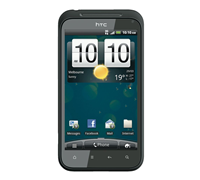
It’s got a sculptured look and feel, and sports HTC’s own unique user experience ‘skin’, the Sense, which puts its own flavour to the Android experience, claims HTC, as its first Gingerbread offering, the Incredible S, which is also the company’s first Android smartphone of 2011, makes its entry into the Australian market.


Click to enlarge

Offered exclusively on the Optus network from May, it will remain with the carrier for a three month period, says the telco, and will be ‘very competitively priced’, according to Optus marketing director of consumer, Gavin Williams. 

Ben Hodgson, country manager at HTC said the phone’s cutting edge design together with the Sense experience, which is a tight integration between the hardware and software, is a focussed attempt at taking a customer-centric approach. The phone’s 8mp colour camera, for example, is ‘only part of story’, said Hodgson.

Hodgson reckons HTC has raised the bar with the Incredible S’s contoured body, which sports a 4 inch super LCD touch screen with 480 x 800 resolution, super fast 1GHz processor, and the capacity to capture video at 720p HD and virtual surround sound gives a good multimedia viewing experience.

The phone also carries a 16GB class 4 microSD card on top of its own internal memory and is also a DLNA certified device which makes sharing pictures and video simple with other DLNA devices. Battery life has also been extended with a 1450mAH battery which gives talk time of 10 hours and lengthened standby operation, claimed HTC executives.


Click to enlarge

Certainly, it has a weighty feel to the phone, but unlike other 4 inch Androids on the market, it feels relatively slim. There are quirkly little apps which make it a standout, including its iconic weather application, smart dialler which speeds up connection to 10 seconds, and wifi hotspots, which are aimed to grab the customer’s attention.

Optus’ Williams said the company had high hopes for the device, and said 50 percent of the carrier’s range in May would be Android phones, which now has 230,000 apps and is fast catching up with rival Apple.

Hodgson said the powerful new offering “exudes a mix of style, innovation and features that customers have come to expect from HTC”, a sentiment echoed by Williams, who said “the features found on the HTC Incredible S such as High Definition video recording and multifunctional cameras are becoming more important for our customers. When combined with the Optus Open Network we believe our customers will have the perfect combination to get the most out of this great handset.”

Time to Opt For Smart Energy & Security, Says Ovum

Consumers may baulk at the idea of paying more for additional services, but broadband service providers keen to grow their business with additional connected services would gain new business by targeting home security, smart energy control and media sharing.

This is the finding from new research conducted by telecoms analyst, Ovum, to gain insight on the uptake of new connected home services from broadband providers.

While email, techical support and PC security are currently the most popular services requested by customers, the interest in receiving home security and monitoring, smart energy control and meda sharing services by consumers shows potential, according to Ovum.

The key to realising this potential is however price, says Philpott. “As with all connected home services, low willingness to pay is a major factor.”

“When it comes to home security, where broadband providers could potentially offer services such as monitoring and control via smartphones, our research found that 22 per cent of the Australian respondents would be interested in receiving this service. At the same time, only 17 percent of respondents would be willing to pay more than a month for $5 per month for it”, said Michael Philpott, Principal Analyst.

Furthermore, only six per cent of Australians who expressed an interest in these connected services would be willing to pay the high monthly fees associated with the product that are currently on the market, said Philpott.

Smart energy solution is a very hot topic in Australia with 29 percent of respondents showing interest in the new technology.


Globally too, smart meters are amongst the fastest growing markets in smart grid technology market offering benefits to  households, utility companies, and others.

A key advantage is that consumption of energy, gas, water, and other services can be monitored from a remote location and accurate information can be provided for billing and the billing errors can be minimized.

However, says Philpott, most Australians are not yet willing to pay, with “42 percent of them stating they want it for free”.

Another 20 per cent said a media sharing service, connecting all the devices used by the home owner would be something they would potentially like to receive from their broadband provider.

“Although starting from a low base, media sharing is another service with significant potential, in Australia. However, pricing is again an issue, with almost 50 percent of the consumers surveyed stating that they would expect to get this service for free.”

Qantas Trials Next Generation Check In System In Perth

Qantas is trialling its Next Generation Check-in system at its domestic terminal at Perth Airport, with around 100,000 Qantas Frequent Flyers invited to take part.

Qantas Chief Executive Officer, Alan Joyce, said Next Generation Check-in would dramatically reduce check-in times, and eliminate queues for customers, allowing them to move quickly through the check-in area.
 “The majority of these customers will have received their new Qantas Frequent Flyer Card embedded with “intelligent Q” chip technology.
“With one touch of their Frequent Flyer Card on our new Q Card Readers, passengers will now be checked in within seconds. The new card will also act as a permanent boarding pass,” said Mr Joyce.
The check in facility includes a priority security lane with new walkthrough equipment to the screening area. New self check-in kiosks and automatic bag drop facilities will also benefit passengers with service agents able to circulate throughout the terminal to assist customers.
 “Perth is a very important market for Qantas and the recent $75 million upgrade of our domestic terminal made it the perfect choice to launch this trial phase of the project,” said Mr Joyce.
Throughout the Perth trial, construction and training will continue in Sydney, which will be ready to launch Next Generation Check-in later in 2010, followed by Melbourne, Brisbane, Adelaide and Canberra in 2011. The program is scheduled for completion in the second half of 2011.

Google Launches New Tool To Manage Personal Online Identity

Google has launched a new tool to help people manage their digital identities including their public profiles on social networking sites and blogs as well as track their online mentions by other people and delete unwanted content.

‘Me on the Web’ is now available to anyone with a Google account and is accessed via your Google Dashboard as long as you have a Google Profile.

It lets you set up search alerts for yourselves so you can take control of third-party information about yourself, and will let you display links from your user’s profiles on Facebook, Twitter and LinkedIn.

“Your online identity is determined not only by what you post, but also by what others post about you — whether a mention in a blog post, a photo tag or a reply to a public status update,” Google said in a blog post.

“When someone searches for your name on a search engine like Google, the results that appear are a combination of information you’ve posted and information published by others.”

The search giant’s tools crawl the Web and ranks pages it finds, and those who avidly keep their digital profile in top shape will find it a useful way to manage privacy, especially since a global ‘erase button’ for the web is still in the political pipeline.

While Google Alerts has been available for some time, and we have all googled ourselves at some time, users can now cyberstalk themselves using ‘Me on the Web’ looking for any mentions of themselves.

The sceptics among you might think it is yet another tool for the search giant to keep tabs on your online connections, rather than actually giving you control of your digital identity.


However, Google appears to believe in a right to privacy.

The company has built in various identity options that let you remain anonymous, as well as resources to control third party information posted about you online.

But what’s more important is that it helps you clean up forgotten blogs, tagged photos and other casual online mentions about yourself and helps you manage your online reputation.

Qantas Expands Fleet For Regional Services

Qantas and Bombardier Aerospace, headquartered in Canada, have sealed a deal for the purchase of seven new Q400 NextGen aircraft to be delivered from 2011.

The new aircraft will be operated by Qantas’ regional airline subsidiary, QantasLink, which operates more than 2000 flights each week to 54 destinationa across Australia. 
The contract, which is valued at approximately US$218 million, will see the Q400 NextGen aircraft equipped with upgraded cabin interiors and larger overhead compartments.
Qantas Chief Executive Officer, Alan Joyce, said: “The aircraft really suits QantasLink’s operations and is extremely popular with the airline’s customers. We have therefore made the decision to acquire another seven aircraft for delivery from the
first half of 2011.”
Joyce said the airline had invested over A$600 million in 21 Bombardier Q400 aircraft over the last four years, representing a significant commitment to the Group’s regional operations and increased capacity on existing routes. As part of its commitment to investigate further network growth, QantasLink recently began international aircraft Q400 aircraft services between Cairns and Papua New Guinea.
 
Gary R Scott, President of Bombardier Commercial Aircraft, said: “Bombardier Q400 and Q400 NextGen airliners are replacing or complementing jet services, replacing smaller and older turboprops, and reaching out to new markets while providing a superb passenger experience and cost-competitive advantage to operators.” 
Launched in March 2008, the Q400 NextGen turboprop airliner is the most recent development in the evolution of the Q400 aircraft, and the advanced successor to the Dash 8/Q-Series family of aircraft. It provides an ideal balance of passenger comfort and operating economics with a reduced environmental footprint.
Bombardier has also delivered 300 out of a total of 385 Q400 and Q400 NextGen aircraft as part of an additional order from Qantas. 

iPad To Dominate Automation And E-Commerce Sectors

It seems there is no let up for tablet manufacturers looking to knock Apple off the top spot, as a Gartner report claims Apple’s iconic iPad will continue take centre stage even in the automation sector.

The research firm claims half of all major marketing automation vendors will develop applications specifically for the iPad by 2016.

The report also examines how and whether tablets will be absorbed further into the workplace as an aid to business.

“The initial use of iPads and tablets by marketers will be the extension of existing marketing applications, such as campaign management and marketing resource management  functionality, to be supported by the device, either disconnected or connected to the network and home-based application,” said Kimberly Collins, managing vice president at Gartner.

In the automation sector, Collins expects 65 percent of vendors to extend 25 percent of their functionality to the iPad, with marketing resource management using it for reviews and approvals processes.

“The biggest benefit includes the ability of marketers to work remotely while traveling, enabling them to complete tasks and projects faster, and in a more timely fashion,” Ms. Collins said.

“They also have fast access to content and collateral in the field. Cycle times can be greatly reduced, yielding increased staff productivity and decreasing program/campaign costs.

“Chief marketing officers (CMOs) and creative users will have the biggest need for remote access, followed by campaign managers and designers.”


The iPad’s visual appeal is credited for its adoption by CMOs and senior marketing leaders, and according to Gartner, over the next three to five years, the development of existing or new applications to be fully used on the tablet, as opposed to partial functionality from existing applications used in the office, will be key to its success.

The firm also states that new marketing vendors may develop iPad-only applications for internal use by marketers, and that e-commerce organisations are also seeing the appeal of tablets and e-readers.

It expects 95 percent of e-commerce websites to have a tablet or e-reader presence by 2014, but warns that 40 percent will fail due to lack of customer understanding of their usage.

“It’s crucial for organisations to understand what type of buying experience is needed by their users for tablet- and e-reader-based sales,” said Gene Alvarez, research vice president at Gartner.

“They will need to determine how many devices they will support, as they will be faced with not only supporting browsers and tablets, but also other mobile customer touchpoints. As a result, an organisation’s analysis of its customer base, and its usage of various different touchpoints are critical to its success in the new mobile world.”


Tom Tom Releases Charger For The Fast Lane

Tom Tom has announced the release of a fast in-car charger for up to three devices at once with its new High Speed Multi-Charger.

The new device is a first for the company, which says it can charge devices such as navigation, mobile s or even power-hungry portable DVD players up to four times faster than other chargers at the same time.

The High Speed Multi-Charger, which boasts the company’s philosophy in design to bring a sleek and small, neat in-vehicle charger to market, ensures that the PND always receives the right amount of power under all circumstances.

It includes two dedicated USB ports that provide full power at all times, without splitting the charge between ports.

As well as a 1.2 amp USB charging port suitable for mobile phones or MP3 players, there’s a 2.1 amp port to speed-charge high power USB devices such as tablets or smart phones, and charging up to four times faster – without impacting the other port’s charging capability. There’s also a dedicated port for powering 12V in-car devices like DVD players.

This multi-port full power functionality means that drivers who are always on the road can charge and use all their electronic devices during the trip. Those planning an upcoming weekend getaway, will also be able to keep the kids happy with on-the-go charging of items such as tablets and mobile phones – all while navigating.

Nick Saisanas, marketing communications manager at Tom Tom, said the device was “truly a game changer”.

The new TomTom High Speed Multi-Charger is in stores now at an RRP of $39.95.

Qantas Opens New Airport Domestic Transfer Facility

Qantas has launched a new domestic transfer facility at Sydney International Airport that will enable faster transfers for international travellers transferring to Qantas domestic flights.

The purpose built transfer facility is said to be 50 per cent larger than the current facility and includes a spacious check-in area, six additional check-in counters, an additional bag drop area and additional seating capacity.

Similar to regular check-in at the airport, the new transfer facility will house both premium and economy check-in counters, and remains on the arrivals level at Sydney International Airport.

Qantas Group Executive Customer and Marketing, Ms Lesley Grant, said:
“Additional check-in staff and counters will ensure Qantas customers are transferred to their domestic flight quickly for passengers to meet their connecting domestic flights. An express bag drop facility will provide an even quicker transfer for customers who have their onward boarding passes and bags tagged to their final destination.”

The shuttle bus continues to operate between the international terminal and domestic terminals every ten minutes during peak times and every twenty minutes during off peak times.

Roaming Charges Eating Into Oz Business

High roaming charges are to blame for the increasing loss of business to Australian companies, with more than 52 percent of organisations claiming the escalating costs are preventing them from conducting effective business with clients and employees abroad.


Click to enlarge

A survey by Vanson Bourne for Tru, the global mobile network, says 94 per cent of Australian business travellers who are increasingly required to be in contact with the office (and vice versa) by both phone and email on a 24/7 basis, are contrained from using mobile phones while abroad, and that the high roaming charges by telcos threaten their competitiveness.

Among the results, half of the respondents admitted checking email and browsing the internet less when abroad than they would at home to reduce costs.

68 per cent said they made fewer or shorter phone calls, while one quarter tied themselves to landlines to make calls and a further 19 per cent juggle phones and voicemail accounts by swapping to a local SIM to avoid high charges.

Ben Pullen, country manager for Tru Australia, said the charges by big telco providers highlighted the need for alternative solutions, and that switching to Tru would take the financial and technical pain out of staying in touch.

“The monopolies that our major telcos hold here in Australia are undoubtedly forcing businesses to pay over the odds, but we also know that using your mobile less when overseas is not good for business,” said Pullen.


Those surveyed indicated potential reduced customer service/dissatisfied clients (67 per cent) as well as possible missed opportunities and lost deals (76 per cent) as contributing factors.

The company’s flagship GSM SIM based service helps international business by charging local rates instead of roaming rates, and low cost international calls. 

It also offers multiple local numbers on one SIM card, allowing customers and contacts to reach each other without footing the bill of high international call charges

The research also shows that despite the cost of mobile data, 47 per cent of IT decision makers don’t even know the cost of data roaming.

63 per cent of business travellers surveyed use mobile email to stay in touch when travelling on business.

According to a recent report by Gartner, use of email on phones is expected to boom from 354 million users in 2009 to 713 million users in 2014 worldwide.