Smart Office

Telstra Launches An HD Version Of Skype

Just as Panasonic, Samsung and LG get ready to launch Skype enabled TVs that have been described as ideal for boardrooms as well as the home, Telstra has rolled out a new HD video service.

Telstra said that users can take advantage of the new video telephony service by simply upgrading their desktop phones.

Telstra’s acting Executive Director, Data, IP & Enterprise Services, Carol White, said that more than 300 organisations using Telstra’s hosted IP telephony product (TIPT) “Telstra has upgraded its network so that we can share video calls between business customers as easily as we share IP voice traffic. Simultaneously we have partnered with Polycom to introduce our first video phone which will enable our TIPT customers to access affordable video calling from today.

“When teamed with our hosted IP telephony network, our new video phone can deliver business-grade video calling with a simple touch of the screen. It’s as easy as making a voice call and puts person-to-person video communication in the hands of more organisations,” Ms White said.

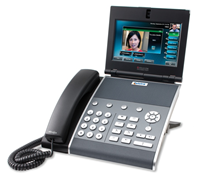
The new device, called the Telstra VVX 1500 Business Media Phone, is HD voice ready and features a seven-inch touch screen display, six lines, a Gigabit Ethernet switch and an integrated camera. Telstra is one of the first carriers in the world to offer the phone which provides a high-quality video and voice experience thanks to quality of service (QoS) data traffic prioritisation on Telstra’s Next IP network.

“Video telephony represents a new opportunity for businesses looking to increase their face-to-face contact with customers, staff and suppliers. It can facilitate faster decision-making, improve productivity and can also provide genuine alternatives to some business trips – helping to reduce a business’ carbon footprint and travel expenses. Industries as diverse as mining, manufacturing, banking, retail and education can benefit from this solution which is delivered over Telstra’s Next IP network,” Ms White said.

In addition to video calling Telstra is also launching high-definition voice calling between businesses using Telstra IP Telephony. The new business-to-business capability comes after Telstra launched internal HD voice calling for businesses in April 2009.


“HD voice calling delivers twice the clarity of ordinary phone calls and is like switching from AM to FM radio. Increasing voice clarity can improve understanding and can help businesses communicate and collaborate more effectively with customers and suppliers.

“Organisations currently using HD-capable TIPT handsets will automatically access HD voice calling when connecting with other TIPT customers with compatible handsets. We expect new customers will move quickly to equip their meeting rooms with this technology, while others will upgrade their entire fleet of desktop phones to allow all staff to realise the benefits,” Ms White said.

Both HD voice calling and video telephony via the Telstra VVX 1500 Business Media Phone are available to Telstra Business and Telstra Enterprise & Government customers from this week. The Telstra VVX 1500 is available to TIPT customers on a rental arrangement with Telstra for $45 (GST exclusive) per month over 3 years.

Samsung On Fire In IT Market After Dud Start

After struggling for years in the IT market, Samsung Australia is now reaping the benefits of a major restructure, with the company now reaching revenues of $18.5 million dollars a month compared to $6 million a year ago.

Under the leadership of former BenQ Australia Vice President Phil Newton, Samsung Australia has become #1 in the monitor display market. It has also lifted sales of its commercial display screens by 40 per cent to snare the #1 slot ahead of Panasonic, Sony and LG. Samsung is also the #1 vendor in the multi-function laser printer market.

After getting out of the notebook market two years ago, Samsung is now struggling to keep up with demand, with the company earlier today launching a new range of notebooks, including several models with 12-hour battery life and built-in Quad Band 3G Wi Fi capabilities.

According to Newton, both Telstra and Vodafone are now ranging their notebooks, with Optus tipped to offer a Samsung bundle next month.

Also selling their notebooks are retailers JB Hi-Fi, The Good Guys and Bing Lee.

According to Newton, 35 per cent of Samsung notebook sales are coming from telecommunication carriers, 45 per cent via retailers and 20 per cent via the channel serviced by Synnex and Ingram Micro.

“Next month we will have our first $20 million month, and I am confident that with the introduction of new Samsung IT products and the expansion of our partners, we can grow our monthly sales significantly,” said Newton.

Late yesterday, Samsung was hosting several major resellers, including senior executives from Harvey Norman, which currently doesn’t sell Samsung notebooks. Samsung has also launched a new range of notebooks, which Newton is confident will help Samsung grow revenues from this category.

“Today we have an excellent team in place at Samsung, as well as a strong range of products that keep just getting better and better. We have big advantages in that we manufacturer a lot of our components like storage, and we have excellent related product categories like TV’s and mobile phones. For example, with the carriers, we are now selling both mobile phones and notebooks and this helps. With the retailers, we are selling Samsung TVs, and IT products including notebooks, printers and display screens.

“When I came on board we had 1 per cent of the commercial display market, today we have over 40 per cent,” Newton said.

According to Mark Deere Jones, General Manager of Commercial Display at Panasonic, “Samsung has definitely become a threat.”

“They have not only benefited from a restructure, but the exit of TV brands like NEC, Pioneer, Hitachi and Philips from the commercial display market. Both Samsung and Panasonic have also taken market share away from both Sony and LG in this market,” he said.

In the monitor display market, Samsung is #1 in the consumer market, with Newton claiming that he is now shifting 40,000 units a month.

UPDATE: Westpac Online Closed Down After Attack

Westpac appear to have closed down their online banking operations after customers started receiving scam emails asking them to authenticate their log in details. Hundreds of thousands of customers who traditionally pay staff on a Thursday are set to be affected.

 
In a space of an hour, I personally got three emails headed “Westpac” that went on to say “I want to assure you that your accounts and your assets are safe with us, and that we put the utmost value on our relationship with you.

“As part of our efforts to meet the requirements of the Australian Financial Services Authority (FSA), we now ask all Westpac users to verify their account information. It’s a smart and simple way to add an additional level of protection to your account. 

Click to enlarge
Samples of three scam emails currently being syndicated

Here’s how it works : 
  • Click here to securely log on.
  • Complete our quick and simple form. 
  • Continue with your account session.”
Westpac at this stage are refusing to comment, however, their web site has been closed down, with all sections running a message that says “Online Banking not available, please try later.”
 
At this stage it is not known whether EFTPOS gateways in retail stores are still operating.

Since writing this story, a Westpac executive has contacted to say that the bank is not responsible for sending the emails and that “Yes” the website has been difficult to access for some customers due to problems with “mainframe access”.

“The site is available to 75% of customers, however, some customers will experience problems while this problem is being fixed”.

Judge Finds That Stores Online Deceived Customers

The Federal Court has found that an e-commerce marketing company that advertised products as being discounted when they had never been offered at the full price operated in a misleading and deceptive manner.

The action bought by the Australian Competition and Consumer Commission against StoresOnline is the same complaint that the ACCC laid against online web site Kogan who were selling flat panel TV’s at a discounted price without first offering them at the full price.

The judgment represents a successful conclusion to the second lengthy proceeding taken by the Australian Competition and Consumer Commission against StoresOnline.  In each case it was claimed that there was misleading and deceptive conduct in the promotion and sale of StoresOnline home business e-commerce software packages.  The packages were promoted through a series of seminars, primarily to those wishing to set up small businesses online.

Justice Edmonds made orders by way of declarations that StoresOnline, since October 2006, had engaged in false and misleading conduct in breach of the Trade Practices Act 1974 in relation to the promotion and sale of its software packages.

StoresOnline was found to have breached theTrade Practices Act 1974 at workshops and seminars when they their software for sale at a discount.

The Cout heard that StoresOnline offered packages for sale to workshop attendees at a particular offer price for 90-days from the date of the workshop when in reality they  had no such intention to offer a discount.

The ACCC claimed that at workshops and seminars StoresOnline represented that the difference between the full price and the 90-day offer price for StoresOnline packages was the amount a consumer could save by attending a Stores Online workshop and purchasing the packages when that level of saving did not exist.

The court ordered that StoresOnline pay the ACCC’s costs.

See store at: http://www.storesonline.com/

Big New 3TB Drive Coming From Seagate

24 hours after we exclusively revealed in Australia, the launch of a complete new portable storage system from Seagate comes news that Seagate is set to launch a 3TB Constellation ES disk drive.

Ideal for organisations serving video content the drives are primarily designed for heavy duty use.

Originally revealed on the Register the enterprise-class drive would have a 6GBps SAS interface and have the largest capacity from any of its kind in the Seagate’s range. The largest current Constellation ES is a 2TB, 7,200RPM unit.

A 1TB version of a 2.5-inch Constellation ES drive is also expected mid-year, and become the highest-capacity 2.5-inch drive. Also rumoured is a new Savvio 2.5-inch drive that would eclipse the current 600GB, 10,000RPM unit, likely upping capacity to 750GB.

SAS, or Serial Attached SCSI drives, are used heavily in servers.


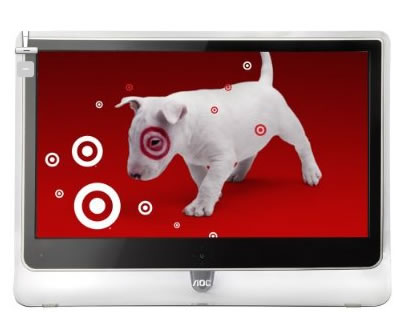
Target Sells 22 Inch OLED Monitor For $248

Discount store, Target, has started selling a 22″ OLED PC monitor online for just A$248.

The product which comes in a sleek light grey casing has a maximum resolution of 1920 x 1080. Target USA say that they will ship to Australia if the buyer has a US credit card or can pay via a US bank.

The screen is made by AOC.

Earlier this year Sony was trying to sell an 11″ OLED monitor for $6,999 via their Sony Central stores.

The full details are as follows.

 ·Monitor Features: Adjustable Tilt, Touch Sensitive Controls
·Maximum Resolution: 1920 x 1080
·Contrast Ratio: 2000000:1
·Aspect Ratio: 16:9
·Dot Pitch: 0.24 mm.
·Brightness(cd/m2): 250
·Viewing Angles: 160 Degrees
·Response Time: 5ms Response Time
·Audio Features: Built-In Speakers
·Input Type: Analog RGB, VGA, DVI-D, HDMI Port
·DVI-D Ports: 1
·DVI-D with HDCP Ports: 1

More Details Over page


·HDMI Ports: 1
·IEEE 1394 (Firewire) Ports: 0
·VGA Ports: 1
·Dimensions: Length: 15.5 “; Width: 21.3 “; Depth: 5.2 “
·Product Weight: 7.1 Lb.
·Warranty Description: 1 Year Limited Manufacturer Warranty

To make a purchase follow this link.


Click to enlarge

NBN Problems If Gear Located in Telstra Exchanges, Says Report

NBN REPORT: A new report prepared by KPMG and McKinsey for the federal government claims that the National Broadband Network will have problems if there is not a level playing field for retailers.

They say that if gear is located in Telstra exchanges there could be problems.

The report says that practical access to a point where the Internet connects requires the co-location of customer equipment at the POI.

This will create another potential bottleneck in the form of limited physical space at the POI. If NBN Co secures space for its POIs that is merely sufficient for its own equipment, the difficulty in obtaining space for retail service providers to locate equipment could impede competition, particularly at such point as physical unbundling is permitted.

This problem will be exacerbated if many NBN Co POIs are located in current Telstra exchanges. In this scenario, Telstra would enjoy a unique advantage over its competitors in gaining access to the NBN.

The report writers say that the government’s objective of a level playing field for retailers will not be achieved. To resolve this problem, it is important that retailers only be allowed to connect to the NBN at points where they and their competitors will face similar backhaul costs. In practice, this means that NBN Co should not allow access to its network except at points reached by competitive backhaul.

They claim that is not a trivial matter to determine whether a particular backhaul link is genuinely competitive. We propose that NBN Co should build backhaul on links that are clearly not competitive.

Samsung OZ Rips Up The AV Market With 27% Growth

After spending millions of dollars building their brand in Australia Samsung is starting to reap the benefits with the Company outperforming the market in several categories including audio visual, telecommunications and appliances.

Overall sales from these categories are close to $1 Billion with the Company tipping that they will exceed this during the next 12 months.

In the AV market Samsung has grown 27% since May 2009, when the overall market has only grown 3% the Korean Company claims. Overall Samsung now has 20% of the total AV market.

 According to GfK data, Samsung has achieved the highest level of combined value sales across its four biggest AV categories – flat panel TV, digital camera, portable media player and DVD/Blu-ray Player market – from May 2009 through April 2010.

Launched in November 1987 Samsung Australia struggled for several years because of poor management, and a lack of marketing investment.

Head of Corporate Marketing for Samsung, Lambro Skropidis, said “It’s exciting to see the Samsung brand enjoying so much consumer support. Our tracking data shows that consumer awareness and preference for our brand has been continuing to build from year to year. The ultimate expression of consumer support is seeing preference translate into higher levels of sales at the store level.”

Skropidis said that he is hoping to maintain this momentum in 2010 with the launch of its Full HD 3D TV sets.

Last month Samsung was the first to launch 3D TV’s in Australia as a result they have reaped the benefit of being first to market say retailers who also predict that they will be challenged hard in the second half of 32010 as brands like Sony, Panasonic, and LG launch their 3D TV’s.


This will be followed by low cost models from several Chinese brands. In the phone market Samsung is attempting to launch their own Bada OS up against Apple, Microsoft’s Windows and the surging Google Android which is set to gather momentum as several vendors roll out new Android based phones as well as Android based tablets.

Shortly Samsung Australia will launch a brand new Smartphone called the Galaxy S, based on the Android 2.2 operating system. The Company is hoping that it will challenge the Android market share held by HTC; Telstra is expected to range the phone.

The Galaxy S Android phone will incorporate the same processor as the iPhone 4/HD and iPad. The ARM Cortex A8 processor is currently built into the new AppleA4 which is delivering blistering speed for iPad users.

Globally, Samsung Electronics net profit has surged more than six-fold in the first quarter to a record high on strong demand and higher prices for memory chips as well as increased sales of mobile phones and flat screen televisions.

Samsung earned $3.59 billion in the three months ended March 31, the company said recently. The latest figure was an all-time high for the company.