Smart Office

JB Hi Fi To Take On Officeworks & Staples In B2B Market

EXCLUSIVE: JB Hi Fi is moving into the SMB and telecommunications market in an effort to capture a larger share of the Australian business market.

According to JB HI Fi CFO Richard Murray the mass retailer is in an excellent position to offer small medium business customers who have up to 50 employees a range of services including access to Telstra telecommunication products.

Earlier this week the Company appointed Tony Nikolovski as B2B Telecommunications Manager, his job according to Murray is to work with store managers across Australia in developing a business engagement program with business customers who are looking for a combination of software, hardware and telecommunication services.

“There is a big of opportunity for us to grow the office side of JB HI Fi from providing gift cards for business to delivering their telecommunication and hardware needs. As one of Telstra leading retail partners, this is a natural extension of our successful Consumer telecommunications business”.

“We have the buying power with partners to deliver value for money and in the same way that we deliver for our consumer customers we can deliver for small medium businesses in Australia”.

Murray said that in 2013 the Company will look at delivering a separate business web site that allows small medium business to engage with the mass retailers. Services such as cloud based software to IT and display hardware along with communication services and devices will be offered”.
 
Tony will work within our Commercial Division to development and implement JB’s National BSB Communications Strategy, focusing on mobility, fixed and data.

 “The appointment of Tony Nikolovski who was most recently a National Account Manager with Telstra Retail delivers for JB Hi Fi a person who is experienced in the needs of small medium business. He will be responsible for utilising JB Hi Fi resources and engaging with our partners to deliver a new service for business in Australia”.

A New Smartphone Or Better Upgrades, What Would You Like?

The smartphone market is booming but the big question now is whether manufacturers are unnecessarily churning out new phones in an effort to drive sales.

Did we really need a new Galaxy S4? Or would an upgrade of the OS, along with all the new bells and whistles found in the new S4 sufficed most owners?

The S3 was launched in August, now some nine months ago, and users are being told that their S3 is an “old model”.

As manufacturers battle for supremacy, the once mighty benchmark for the smartphone industry, the Apple iPhone, is looking a tad “old hat”.

At the same time Microsoft is struggling to get traction with their Windows 8 OS, as HTC, Samsung and Nokia report poor sales when compared to the demand for Android smartphones.

Telstra, the big carrier who is reporting record sales of 4G phones, has told SmartHouse consumers are “confused” about all the features found in new models. In response the company is limiting the range of models they sell to key smartphones that they believe deliver speed and a rich range of capabilities.

LG is one company who recently stepped up to the top smartphone table with their all new Optimus G smartphone. This is a cutting edge smartphone that the Korean Company badly needed in Australia to put them in the race alongside Apple, Sony, HTC and Samsung.

Despite being late into the Australian market, the Optimus G is packed with power and features and can be easily updated with new software. While a lot of journalists got their knickers in a twist over the fact it had already been launched in the US, the fact remains it is a state of the art smartphone that has the capacity to handle any new upgrades thrown at it.

Recent data from Counterpoint Research shows that LG is now a serious player in the smartphone market. In the US recently LG overtook Apple to claim the second-largest stake of the U.S. phone market. Samsung is still way ahead in first spot.

The LG flagship Optimus G had recently surpassed the one million sales mark, and the Korean company is enjoying plenty of success with its Nexus 4.

One of the standout new smartphones is the HTC One, due to be launched this month. This new Android OS offering is beautifully designed and is already being labelled “the best phone” in the world by reviewers.

I have been using the device for the past two weeks and I am not only impressed by the design and the features, but the way in which HTC-who were desperate for a leg up in the market-has gone about delivering new capabilities via their Ultrapixel camera or their scrolling new information system that easily delivers news and information to a screen.

The Optimus G and the HTC One usher in enough innovation to warrant a phone upgrade. But the verdict is still out on the Galaxy S4, with its subtle redesign and its software overhaul.

What I would rather see is less models and more software upgrades that improve the functionality of a device.

In Store Retail Displays Stir Up CE Channel

Mass retailers are moving to change their consumer engagement processes with the introduction of new in-store displays which are paid for by suppliers a move that has upset some distributors.

While big brand suppliers like Samsung, LG, Toshiba and Telstra have welcomed the move some suppliers are not happy telling ChannelNews that they don’t have the margins to pay for” in store displays, catalogue advertising and in some cases floor space”.

Scott Browning the Marketing Director at JB Hi Fi claims that consumer electronics marketing today is all about “consumer engagement” and that to be successful retailers have to change their engagement model.

“Our in store staff have to be able to demonstrate a product as well as have knowledge about a product and an in store displays allows us to range products in a way that we can not only show the product but in many cases show how a product works”. 

He cites headphones as a category where the introduction of new in store displays for brands like Beats, Skull Candy, Sennheiser and Bowers & Wilkins have led to “significant” sales increases. 

The introduction of working headphones connected to music along with the positioning of a mirror right next to a headphone is now standard in most JB Hi Fi stores. 

Samsung Australia claims that their in store displays which they refer to as “Paragons” have delivered significant increases in sales because products are linked with products that consumers trust.

Philip Newton, the vice president of consumer electronics at Samsung Electronics Australia said “When we range a camera or a PC or an audio product on one of our displays that is next to a Samsung TV the consumer is more likely to trust the brand. Many Australians watch a Samsung TV of an evening and they trust the product and the brand so when they go into a store and see another Samsung product they are likely to buy it because it is associated with a brand that is trusted”. 

Currently Samsung is planning a major new retail drive with new point-of-sale “Paragons” to be placed in leading retail chains complete with a “Samsung ambassador” on hand to answer customer questions, explain products and train in-store staff.
The stands will be stocked with tablets, smartphones and computers, large-screen TVs and Samsung’s new home theatre range.

The concept was first trialled in Harvey Norman Auburn before being rolled out into 70 stores across Australia in 2012. Now the original 70 stands will be retrofitted and Samsung has plans to have the new Paragons in 200 stores by the end of the year.

It will start next week, with stands in some JB Hi-Fi, Harvey Norman, Bing Lee and Good Guys stores.

The concept has some parallels with Apple’s in-store installations in retailers including Harvey Norman, Myer and David Jones, in some cases staffed by Apple employees. Toshiba at its recent new product launch also revealed plans for in-store consoles.


The move which is costly has led to increased sales for both distributors and manufacturers. Geoff Mathews the CEO of Convoy the distributor of JBL, Monster, Bowers & Wilkins and Harman Kardon products said “We have invested significantly in working with retailers to deliver in store displays and we are reaping the benefits. Originally the displays were costly but we have worked on our displays and we have been able to lower the cost while improving the display to include interactive capabilities by working with Chinese manufacturers who are able to deliver a cost effective solution”. 

Three distributors who are currently range products at Harvey Norman and JB Hi Fi told ChannelNews that the move by retailers to “demand” in store displays was “costly” and that the margins were not there to support “this type of marketing”.

One audio distributor said “mass retailers want suppliers to pay for everything from the marketing of a product to now having in store displays, some are even asking us to pay for floor space. This is not sustainable for smaller distributors and it will lead to several products disappearing from the Australian market. It will also drive consumers to overseas web sites”.

“Australian retailers don’t want to take any risks, stock is supplied as sale and return and they want us to now invest in displays which have to be changed on a regular basis.”

Another distributor said “Some retailers are pushing all the risk and the marketing onto distributors who don’t have the marketing resources or marketing knowledge to compete. We are distributors who take the risk on a product selling after we have taken the risk of importing the product. Retailers need to invest more of their money in the marketing of a product; they are demanding bigger margins while asking us to take all the risk”.

Scott Browning said “In store displays suite certain brands, we recognise that some distributors have to go back to their manufacturer to try and get marketing dollars to support an in store display. The big manufacturers are not treating their displays as a co-op funding cost, it is coming out of their above the line marketing budgets because they recognise the value of engaging with a consumer in store”.

He added “Apple raised the bar both in their own stores and with their retail partners like JB Hi Fi, their products are engineered as part of the design process so that they can be left on for in store display purposes. Today people have an expectation when they go into a store and what we have to do is merchandise a product in a way that we get a per square metre return. Our rents are not coming down so it is important that we work to maximise a return for both JB Hi Fi and our partners, we are working to get a balance that is right for both parties”.

Humpty Dumpty Destroys Mosman Park

The Humpty Dumpty Foundation who often work with leading technology Companies to raise money for Children’s hospitals and are the organisers of the now famous Balmoral Burn, have been accused of destroying a park at Balmoral Beach after the running of this year’s event which raised over $1.7 Million dollars for children’s hospitals.

Visitors to Balmoral beach have been left with a “mud quagmire” that could costs thousands of dollars to repair after a tent city was erected in parkland below Awaba Street in Mosman for the event and a fund raising dinner attend by some of Sydney’s leading business, sporting and entertainment industry executives.


Click to enlarge

Also damaged by Mosman Council trucks involved in the event was parkland surrounding the Bathers Pavilion Cafe and restaurant as well as opposite the landmark Balmoral Rotunda where weddings and events often take place. 

The damage was caused according to local residents after a tent structure was built on Balmoral Beach which resulted in parkland being chewed up by vehicles used by contractors supplying the staging equipment.

Now residents are demanding that the problem is fixed at the expense of the organisers and not Mosman Council or the residents of Mosman.


Click to enlarge


A local resident said “This is an extremely popular park that is everyday used by residents and visitors to Balmoral. Every morning at least 20-30 people enjoy exercise classes in this park, visitors also hold picnics in the park that has been totally chewed up and destroyed by contractors who were not properly supervised by organisers of the event”. 

He added “There is nothing wrong in the running of the event and local residents are very tolerant of the inconvenience and the noise that the event causes, but to leave a beautiful park in the state that it has been left is appalling and reflects poorly on the event organisers. I only hope that the Council has taken a big deposit because the repair is going to cost thousands and leave residents and visitors without a park for several weeks”.

A spokesperson for the Humpty Foundation said “We are well aware of the problem. We did raise $1.7 Million dollars and it will reflect poorly on you if you write a story highlighting this problem. It was all done as part of a good cause”.


Click to enlarge


They added “We are talking to Council about this issue. Last year we gave the Council $5,000 to repair the damage we caused”.


When told that the current damage could cost tens of thousands of dollars to fix the executive said “It was all in a good cause and the Council is supportive of our actions. The Mayor Dom Lopez attended the event and is aware of the damage”.
A spokesperson for Mosman Council was not available.

David Richards is a resident of Mosman.

PR Spin Can Sometimes Do A Lot Of Damage

PR manipulations seems to be flavour of the day among technology vendors, who on one hand want to milk PR exposure from technology publications by offering up reviews and new product launch stories, but when there’s a sniff of a problem they all of a sudden, become PR shy.

This week Hewlett Packard tried to spin the local tech media by not issuing a local press release for the recall of over 20 notebook batteries that could burst into flames.

Announced to the US media on May 14th, some five days ago, HP chose not to make the PR announcement in Australia despite several of the notebooks being on sale in Australia.

Their argument “We thought you would pick it up from the US press release”.

Really, It was only 18 months ago that Guyon Collins a senior marketing manager at HP was complaining to SmartHouse because we dared to feature a product that had been exposed in a US press release before it was launched in Australia.

He also complained that we had featured a product that “may or may not be launched in Australia”.

PR is a wonderful marketing tool, but a right bastard when it goes horribly wrong as Jenny Geddes, the Communication Manager at Sony is now realising.

Geddes, who use to work for Burson  Marsteller, who are also HP’s PR advisors,  got her knickers in a twist over a story about the kidnapping of the CEO of France by Sony staff and the implementation of Sony security in Australia.

 Screaming down the phone she demanded that we remove the story because in her words “It’s not relevant to Australia”.  We chose not to. The screaming fit came only 4 weeks after the CEO of Sony Entertainment threatened us with legal action for daring to accuse SCE of price gouging with their overpriced Playstation’s.

Several days later Sony decided to ban 4square from press events and PR information.


Geddes hissy spat, came only days after Sony Australia had sacked 32 people in Australia with a 98 word email to journalists, ironically the sacking press release was was only issued to selective journalists and only because ChannelNews and the Australian newspaper leaked the fact that layoffs were about to be made at Sony Australia.

I, for one, wanted answer’s from Sony and I did not want a PR flack like Geddes, spinning me a positive yarn. I wanted to hear from the same senior Sony management who are always available for a new product launch, the role out of a soccer sponsorship deal or the pumping of numbers when Sony was doing well.

 I wanted to know why Sony was sacking 32 people when competitors like Samsung and Panasonic were hiring people to handle growth. I also wanted to know about the performance of the company locally and whether return to Australia of CEO Carl Rose was now having an impact on the business with the introduction of savage cost cutting.

Last week, Sony announced losses of over $2.8 billion dollars and Panasonic losses of $5 billion, the big difference was the availability of Steve Rust the CEO of Panasonic Australia, who not only got his PR advisors to contact me but talked openly about the losses that Panasonic globally were experiencing as well as the performance of the local subsidiary.

Maybe Sony don’t want to talk about their local performance because they are doing poorly. I don’t know. But what I do know is the PR is a two way relationship and that media organisations like SmartHouse or ChannelNews are not here to be manipulated by a PR puppet like Geddes and the other PR hacks at Sony. We are here to work with vendors to impart information to both sellers of technology and the buyers which, in the case of the SmartHouse web site, will be in excess of 3.5 Million unique visitors this year.

Ironically, Sony has four in-house PR staff and several external PR advisors Vs one each for Samsung, LG, and Panasonic.  


For the last four years, Sony has spun yarn after yarn, about the so called success, of their Bravia LCD TV’s, Playstation consoles, digital cameras and camcorders  but when it was revealed recently that not one of these product categories was making money and had not done so, for many years we started to ask why?

Call after call and email after email, was ignored by Sony in an attempt to shut us up and internally hope that we would go away, or even forget the story.

What most PR practitioners in Australia have not realised is that the Internet has changed game plans. Media outlets want news today not tomorrow. It’s not a case anymore of sacking 32 people today and then maybe if they feel like or after gauging the media response make an executive available for comment days later, which is what I suspect Sony were trying to do with 4Square Media.

Web sites like ChannelNews and SmartHouse are a cross between tabloid journalism and a gladiator competition. Every day we go fishing for eyeballs and a key ingredient is fast breaking stories, which in the case of SmartHouse, attract the attention of the Google search engines.


For example, one Sony story last week got over 100,000 unique visitors 89% came from a search of Google and the insertion of the word Sony into the Google search engine.

The Internet has become the largest media outlet in the world, yet PR Company after PR Company don’t grasp the speed with which a story can break, grab eyeballs on Google and the die because a better, newer story has come along.

We still get print press releases and black and white picture which in the case of SmartHouse go straight in the bin because quite simply we don’t have the time to repurpose text that has already been written once

This massive medium has spawned a new era where press released have to be focused and PR companies act a lot more openly than what the likes of Sony and HP are doing.

Because if they don’t, the blog, the internet and the really pissed off consumer will get them for the whole world to see. And that includes ChannelNews and SmartHouse.



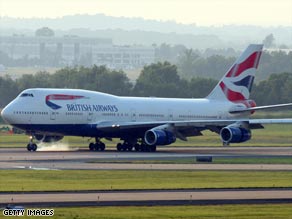
Qantas To Merge With British Airways

Only days after Geoff Dixon retired as CEO of Qantas CNN has reported that Qantas is set to merge with British Airways a former major shareholder in the Australian airline.

CNN is reporting that British Airways has said  it was in talks with Australian rival Qantas that could see a merger of two of the world’s most prestigious airlines.

BA says it is in talks with Australian rival Qantas.

BA says it is in talks with Australian rival Qantas.

London-based BA said the exploratory talks would look at creating a dual-listed company but offered no other details.

“There is no guarantee that any transaction will be forthcoming and a further announcement will be made in due course if appropriate,” BA said in a statement.

BA said the talks would not affect its negotiations in Spanish airline Iberia, with which it opened merger talks earlier this year. 

The tech savvy airline British Airways has a lot to gain from a merger with British Airways analysts are reporting as both airlines have significant investments in providing services between Europe and Australia.

Now under the leadership of Irishman Alan Joyce the former CEO of budget airline Jetstar the merger comes at a time when the Australian dollar is $0.63 to the US dollar.

Earlier today Reuters reported that Qantas will remain majority Australian-owned and Singapore Airlines  will stay shut out of lucrative Australia-U.S. routes under a new government aviation blueprint.

A discussion paper for the industry, to be released on Tuesday by the government, would keep the existing cap on foreign ownership of Qantas at 49 percent, Transport Minister Anthony Albanese told state radio.

“The 51 percent Australian ownership is maintained under the Qantas act. We think there should be a level playing field apart from that,” Albanese said.

The Australian newspaper said the proposals also include removing a 25 percent limit on individual foreign shareholdings in Qantas and a 35 percent total limit on foreign airlines’ holdings in the carrier,

More to follow.

Dick Smith Shares Smashed After Profit Downgrade, Concerns Over Stock Levels + Margins

Shares in Dick Smith have plunged 30% after the Company cut its full-year profit guidance by around 15%.

CEO Nick Aboud has said that gross margins have been squeezed, ChannelNews understands that the mass retailer has told several vendors who were expecting Xmas orders from Dick Smith buyers that no new orders will be forthcoming due to the Company failing to shift stock in stores and their warehouses. 

Dick Smith now expects 2016 net profit to be $5 million to $8 million below its previous guidance of $45 million to $48 million and consensus forecasts around $45.3 million.

Recently the Company had two senior merchandising managers quit, 3 buyers along with Rod Orrick the General Manager of buying. Orrick left for health reasons. 

Shortly after the results were announced investor took an axe to their stock forcing their share value down to 89 cents. 

In comparison Harvey Norman announced that they are heading for a second year of double-digit profit growth after announcing a 27.4 per cent rise in net profit to $141.9 million in the December half, executive chairman Gerry Harvey has flagged a strong second half after same-store store sales jumped 8.8 per cent in January.

Franchisee sales in Australia rose 1.9 per cent to $2.53 billion, with like-for-like sales rising 2.8 per cent in the December and September quarters, while sales from company-owned stores, most of which are overseas, rose 8 per cent to $839.3 million.

Franchisee sales revenues have now risen for eight consecutive quarters, prompting Mr Harvey to declare that the worst is over for Harvey Norman after several years in the rough.

In a statement issued to the stock exchange today Dick Smith CEO Nick Abboud said strong sales growth in unlocked phones and fitness products was offset by disappointing sales in tablets, gaming and accessories.

Channel mix was also negative, with strong online sales growth offsetting softer retail store sales, impacting gross margins.

“Heightened promotional activity and unfavourable product and channel mix intensified to adversely impact gross margin in October, as we undertook promotional activity to stimulate sales and protect market share,” he said.

“Even with this promotional activity, October sales were disappointing with growth well below the level achieved in the first quarter,” he said.

“Given the October performance and expectations of challenging and variable market conditions, we are cautious about the outlook for the all-important Christmas trading period,” he said.

Dick Smith has revived its “daily deals” campaign on television and radio this week 

Currently Harvey Norman is now rolling out a company and franchisee-wide merchandise, inventory and supplier SAP management system after testing the system in New Zealand stores late last year.

JB Hi Fi On A Roll CEO Speaks Out On The Economy

The CEO of leading CE retailer JB Hi-Fi Richard Uechtritz ,has said that rising oil prices is the biggest danger to the Australian economy not interest rates. He claimed this after announcing that his profit for the year ending 30 June 2008 will be around $64 million, a 58% increase on the prior years NPAT of $40.4 million (previous guidance was $57 to $60 million).

Sales expectations continue to be in line with previous guidance of $1.8 billion, a 40% increase on the prior year. Comparable store sales growth for the 11 months ended 31 May 2008 was 15.8%.

“While we have had mortgage rate increases the market has absorbed this and I am bullish as to future growth. Employment is not rising and the mining boom is going to be followed by an increase in agriculture sales due to good rains in the bush. This will further strengthen the economy.” He said.

He added “The one issue that could become a problem is oil and if this keeps rising it could have a knock on effect with other services such as transport food costs etc”.

 Uechtritz said that the strong forecast for JB Hi Fi result will be achieved after absorbing the cost of a substantial first year investment in new stores in New Zealand and the rollout of telecommunications in Australia, both of which should be positive contributors in FY09

Gross margin in Australia will be similar to last year (FY07), despite the rapid growth of new lower margin categories such as games and computers. Our cost of doing business continues to reduce,which will give us an EBIT margin increase over the previous financial year.

“While the current retail climate has provided some variability, this outstanding result shows that we have many positives working in our favour at JB and these should continue to more than offset any tempering of consumer sentiment” said CEO Richard Uechtritz. “We continue to grow our market share as recently opened stores mature, we open new stores, expand our offering and reduce our prices on the back of increased economies of scale and a continued focus on costs” he said.

“We have a very strong and resilient retail model in the right space. Australians’ love affair with technology is alive and well. Whilst consumers may be cutting back on furniture, fashion, eating out, that new renovation and holidays, interest in home entertainment remains strong and we are the undoubted leaders in that space” he said.

The company will open 24 new stores in FY09, which will be the largest number it has opened in any year since formation. The maturing of the 33 stores opened in the last two years and the 24 new stores will continue to drive solid top and bottom line growth going forward. The company expects to have sales of circa $2.35 billion for FY09, a 30% increase on the prior year.

The company currently operates 88 JB Hi-Fi branded stores in Australia and NZ. The circa $2.35 billion in sales expected in FY09 will make JB Hi-Fi Australia’s 6th1 largest retailer ahead of David Jones.”The underlying business remains strong,” Julian Mulcahy, an analyst at Citigroup Inc. in Melbourne, said in a report to clients. “The upgrade has been driven by improved gross margins.” He told Bloomburg.

JB Hi Fi Up 9.2% As New Store Program Revealed

CE retailer JB Hi Fi who recently re branded their Digital Home online aquisition as JB Hi Fi Digital Home has seen their shares jump as much as 9.2 percent after it said that trading in February, March and April had been solid, and that it anticipated earnings being towards the top end of its guidance.

CE retailer JB Hi Fi who recently re branded their Digital Home online aquisition as JB Hi Fi Digital Home has seen their shares jump as much as 9.2 percent after it said that trading in February, March and April had been solid, and that it anticipated earnings being towards the top end of its guidance.

The company said in February that full-year net profit after tax would be between A$57-60 million, an increase of 41-49 percent on the previous year. JB Hi-Fi last traded up 8.7 percent at A$10.60. Earlier this year JB Hi-Fi told ChannelNews that they would  open between 13-15 new stores each year for the next four to five years.

JB Hi-Fi chief financial officer, Richard Murray,  said in Sydney today that the Company is on track to open several new stores as well as refurbish several older stores. He said that the company plans five new stores in New South Wales, 4 in Queensland, one in Victoria, 8 WA  stores, one in the ACT and 2 in New Zealand.

The New South Wales stores will be located in Tweed Heads, Pagewood, Albury,  Penrith and one undisclosed Sydney location. Queensland will see stores in North Lakes in Brisbane Morayfield, Cairns and Rockhampton. WA  will see stores opened in  Malaga, Cockburn, Cannington, Joondalup, Claremont, Rockingham, Mandurah, and in the Perth CBD.  Victoria will have a new Bendigo store, while the ACT will also gain one store, in an undisclosed location.

New stores are also planned for New Zealand. Richard Uechtritz JB Hi Fi CEO said that their Clive Anthonys chain will build three new stores in Frankston, Victoria, Helensvale, Queensland and another undisclosed location in the ACT.

iTunes Phone A Flop. Big Returns

As many as six times more customers are returning the Rokr phones than is normal for new handsets, according to American Technology Research analyst Albert Lin,

As many as six times more customers are returning the Rokr phones than is normal for new handsets, according to American Technology Research analyst Albert Lin, who said he talked to distributors, retailers and call center workers at retailers and phone companies which sells the phone. Motorola Chief Executive Officer Ed Zander said he is disappointed with the phone’s marketing and plans to fix it.

Talking to Bloomberg“We got off to a little bit of a rough start,” Zander said in an interview after Motorola reported on Oct. 18 that third- quarter profit tripled, driven by more-popular phones such as the Razr. “People were looking for an iPod and that’s not what it is. We may have missed the marketing message there.” Zander said that Motorola didn’t make it clear enough that the Rokr stores fewer songs than an iPod. The phone holds 100 songs the iPod Nano, introduced on the same day, holds 1,000 songs and costs about the same as the Motorola phone.


Click to enlarge
The Motorola iTunes Phone

The response to the phone blemished an otherwise better- than-expected earnings report from Motorola, the world’s No. 2 mobile-phone maker. “There’s an overall disappointment with the product,” said Lin.

Apple CEO Steve Jobs unveiled the phone early in September 2005 after 15 months in development. Pop singer Madonna joined in the introduction via telecast from London. Madonna is also featured in a television ad for the Rokr. She’s crammed into a phone booth with musicians such as Little Richard and an actor portraying Beethoven. She shouts “Biggie! No!” when the late rapper Notorious B.I.G. approaches the booth. As the commercial ends, a voice-over intones, “A hundred tunes in your phone, baby.” Apple, on its Web site, advertises that the firm’s iTunes software can link to the phone. The program has “compatibility bugs,” Lin said.

On Apple’s online discussion boards about the Rokr, the longest discussion among more than 70 topics concerned how to synchronize the Rokr with an existing iTunes account on a personal computer. Motorola sold 250,000 iTunes phones in the weeks it was on sale last quarter, or about 83,000 a week. About 6.5 million Razr phones were sold during the entire quarter, or about 500,000 a week. Lin said Rokr’s sales matched estimates, though the high rate of customers returning the phone means it won’t be a “superstar product.” “The Rokr is performing equal or better to any product launch and I don’t have anything that would corroborate” higher returns, said Alan Buddendeck, a Motorola spokesman.

Mark Siegel, a spokesman for Cingular, the biggest U.S. mobile-phone service provider and the only U.S. carrier sells the iTunes model, said the company is “satisfied with the results of the sales.” Apple spokesman Steve Dowling declined to comment. “There’s a difference in the marketplace around the world,” Buddendeck said. “The U.S. is very familiar with the iPod and the reviewing audience was unfairly comparing it to the iPod.” Zander said the Rokr phones are selling better in Europe and Asia.  The iTunes phone failed to inspire buyers in the same way as the Razr, Motorola’s previous new product, analysts said. The company has sold 12 million Razrs since the introduction last year. The phone accounted for 17 percent of its 38.7 million handsets sold last quarter, Ron Garriques, president of Motorola’s mobile-devices unit, said in an interview. Demand for Razr helped Motorola’s net income jump to $1.75 billion, or 69 cents a share. Revenue rose 26 percent to $9.42 billion, beating analysts’ estimates.

Zander this year added an all-black Razr. Former Wimbledon champion Maria Sharapova, who endorses Motorola, requested an all-pink version for herself. Zander, 58, plans to sell a similar version to consumers by the end of the year. Motorola shares fell 19 cents to $20.70 at 4 p.m. in New York Stock Exchange composite trading. Apple dropped 48 cents to $55.66 on the Nasdaq Stock Market. The iTunes phone is only one of Motorola’s music-focused phones, Zander said. The company next year will roll out a new service dubbed iRadio that will allow subscribers to wirelessly transfer music from a home entertainment system to a cell phone or a car stereo.

“ITunes is a small subset of Motorola’s music strategy,” Lin said. “As far as their financial focus, they’re much more interested in other devices, and by the end of the year, it’s iRadio that’s going to be front and center.”  Apple has sold more than 600 million songs through its iTunes store and more than 10 million users have iTunes accounts. That’s still a big target market, Zander said. Some analysts are skeptical about the company’s ability to reach those users.

“Beyond the flash of the iPod name and the newly proud Motorola marketing machine, you’d be hard-pressed to say the Rokr is a good product,” said Paul Sagawa, an analyst with Sanford C. Bernstein & Co. in New York. He rates Motorola shares “market perform” and said he doesn’t own them.