Smart Office

Senior Telstra Executive Quits

The controversial head of Telstra’s communication division Dr Phil Burgess has quit and is returning to the USA.

The controversial head of Telstra’s communication division Dr Phil Burgess has quit and is returning to the USA.

A US national Burgess got right up the noses of the Howard government in particular former Communications Minister Helen Coonan.

The former Telstra public policy chief transformed Telstra from being a “toe the government line” organisation to one that had a voice and was not afraid of disagreeing with government policy decisions.

Telstra’s Chief Executive Officer, Sol Trujillo said “I have always valued Phil’s advice and his principled approach to public policy and communications. Phil has great integrity and has not been afraid to show leadership, often speaking the truth even when it was inconvenient for established interests to hear it,” Mr Trujillo said.

“Phil has consistently spoken out with great passion and courage, articulating how a national high-speed broadband network would produce enormous benefits for communities and the national economy.

“Phil has made a very large positive impact on the culture and success of Telstra, and like all employees I am grateful to him for the leadership he showed.” Mr Trujillo announced that the new Group Managing Director, Public Policy & Communications, would be David Quilty, who has been Telstra’s Director of Government Relations since January 2006.


Telstra say that Dr Burgess will return to his home in Annapolis, Maryland, in early September to support his wife, Mary Sue, whose mother is seriously ill, and to resume his life as an advisor to business and government on matters related to technology and society, a life he put on hold to join Sol Trujillo and Telstra three years ago. Dr Burgess has been Group Managing Director, Public Policy & Communications, since July

2005. He has been responsible for regulatory affairs, government relations, media relations, corporate affairs and the $5.5 million Telstra Foundation.

“The last three years have been enormously consequential for Telstra and Australia – with the full privatisation of Telstra, construction of the world’s largest, fastest, and most advanced wireless broadband network and the transformation of Telstra into the world’s first next generation, fully-integrated telco,” Dr Burgess said.

“Working in a country and culture not your own is an enormous privilege – and working for one of its iconic companies is a privilege amplified. My time in Australia and with Telstra has been

one of the most memorable experiences of my life, both personally and professionally. I came here expecting to stay for 1-2 months. Three years later, Mary Sue and I leave having been

welcomed guests in this wonderful country.”

Dr Burgess said he was proud to have increased the capacity of Telstra to communicate with consumers and the public, represent shareholder interests, put high-speed broadband on the

agenda three years ago, and transform the way the company communicated both internally and externally. “It was hard for some to give up the idea that Telstra is community property. The cultural

change required by privatisation was difficult – both for Telstra and for the government,” Dr Burgess said.


“Though we were criticised by some, our new approach achieved important results, including safeguarding new investments like Next GTM and ADSL2+ from value-destroying regulation, winding back regulation on more than four million copper telephone lines, and the reversal of a $1 billion taxpayer gift to SingTel-Optus,” he said. Telstra’s Chief Executive Officer, Sol Trujillo, thanked Dr Burgess for his enormous contribution to Telstra over the past three years.

“Phil Burgess has prosecuted Telstra’s interests passionately and with great effectiveness since his arrival three years ago, and I pay tribute to his extraordinary leadership and commitment,”

Mr Quilty said. “Telstra will continue to put the interests of its shareholders, customers and employees first and foremost both publicly and in our dealings with all stakeholders.”

Dr. Burgess, who will serve as a consultant to Telstra and advisor to the CEO, will return to The Annapolis Institute in September where he will resume research, writing and speaking on issues

related to technology and society. He has also been appointed as a Senior Fellow at the Center for the Digital Future at the Annenberg School for Communications at the University of Southern California in Los Angeles, where he will address the impact of the Internet and advanced communications technologies on consumer behaviour, business practices and community development in the US and around the globe.

Brit Software Company Sage, Resorts To Visual Pollution On OZ Pavements To Get Message Across

Software accounting Company Sage Business Solutions appear to have become environmental vandals with the British Companies marketing messages now being daubed on pavements in North Sydney without the permission of the local Council.

During the weekend a large plastic poster along with a printed footstep have appeared on pavements in North Sydney.

In Alfred Street the company has turned to visual pollution with signs stuck to the pavement right outside the Bayer Building with what appears to be a Super Glue. 

Several staff at the building said they were shocked by the signage.


Click to enlarge


Sue Wright who works in the building said “This is out and out visual pollution that should not be allowed. If every Company was allowed to daub posters onto the pavement could you image what our streets would look like”. 

North Sydney Council claim that they have not given permission for the pavement signage which promotes the Companies Cloud based offering. They said that they will “investigate the matter”.

Executives from Sage Business Solutions, or their PR Company Edelman have not responded offically to this story however an Edelman executive did admit that the illegal posting of advertising material was “part of a Sage marketing campaign”.


One executive who saw the poster which was daubed over the weekend said “shit software anyway”. 


Click to enlarge

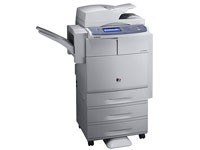
Samsung Take Another Stab At The Printer Market

Samsung who are languishing in the printer marker claim that they will be #1 by 2010. There competitors say “good luck they will need it”.

Samsung who are better known for “copying” than printers has rolled out 26 new printers in an effort to get to #1 in the printer market by 2010. Their competitors some who have over 43% market share say it will be impossible.

Better known for their TV’s fridges and MP3 players Samsung is now attempting to be a jack of all trades by trying to take a stab at the business printer market by releasing 26 new printers a move that they brag will snare them the #1 printer position in the world by 2010.

In Australia the Company has limited distribution and is struggling to sign up solution providers in the SMB and “Enterprise” market where Company PR manager Jesse James said the printers will be sold.


When asked which market the Company aims to compete in she said “The enterprise market”.  When asked whether she meant the large enterprise market of over 1000 employers or the medium enterprise market of over 150 employees  she said “The enterprise market, I don’t need a lecture of where our market is we are simply after the enterprise market”.


However the new Samsung model range is more Soho and SMB market where competition is brutal and margins wafer thin except for consumables.


Currently the single printer and multi function printer market excluding A3 printers is worth about $300 million according to IDC. 26% of the total market is multi function printers with several vendors telling ChannelNews that the market for single printers is “dead”.


Epson Australia’s director of e-commerce and marketing, Michael Pleasants, said the decline of sales of single function printers had been steep, in the range of 35 to 40 per cent per year: “Indeed, when it comes to the office, single function is virtually dead.”

 
Hewlett Packard (HP) has retained its position as the market leader for printer, copier and multifunctional (MFP) product shipments to Australia. According to Gartner, the combined printer, copier and multifunctional product (MFP) shipments in Australia totalled 1.17 million units in the first half of 2007, an increase of 7.3 percent compared with the same period in 2006.


Globally Samsung’s printer business has been growing 20 percent in the mono-printer sector and 47 percent in that of colour-printer annually over the past few years. But the business still accounts for less than 5 percent of the company’s total sales. In Australia according to Gartner the Company has less than 5% of the market.


But the big mover and shaker was Hewlett-Packard which accounted for almost half of the total market share. HP shipped over a million units in 2007 an increase of 43.3.


In a direct stab at Hewlett Packard the market leader in printers both globally and in Australia Kwon Song, chief of Samsung Electronics’ Digital Printing Division B2B Marketing Group, said “We don’t think the industry leader Hewlett-Packard is ideally positioned with rich printer portfolios. We believe that by 2010 we will be #1 in the printer market”.


The senior vice-president of digital media for Samsung, Jang Jae Lee, said that the inkjet market was of no interest because it represents “less than 30 percent of the market”.I

n response to Samsungs claims a senior HP offical said ” We welcome the challenge Samsung have tried before with printers and failed and the models they are offering while fast do chew up consumables which is good for Samsung but not necesarily good for the user. What they tend to do is deliver lower priced printers but high priced consumables. They have limited distribution and the only way that Samsung know how to grow market share in the IT space is to buy it. They failed in the notebook market and they will fail in the printer market as brands like ours, Canon, Lexmark or Xerox  have excellent distribution as well as a good range of products.”

 
Vendors also claim that a big problem for Samsung is that they have a limited dealer network with many printer solution providers refusing to take on the brand. “There big oppertunity is with mass market resellers like OfficeWorks, Harvey Norman or JB HiFi where the brand is known” said one competitor.


Among the new range is the MultiXpress 6555N a digital mono laser MFP capable of churning out 53 pages per minute (ppm). It comes with an 80GB built-in harddisk for network printing. The A4-MFP also has  a 7-inch color touchscreen for menu access.

Samsung has also introduced the MultiXpress C8380ND, a A4 digital MFP. Capable of printing both color and mono prints at 38ppm,  it is also network-ready and comes with an 80GB disk and a 7-inch color touchscreen.

The printers come with JScribe a technology that was  was co-developed with IBM and CCP, and is embedded within the printer. The software allows businesses to program Java applications.


They have also introduced the  CLP-310 series which Samsung claim is the world’s smallest and quietest color laser printer. This series of color laser printers take up a small footprint, measuring just 38.4cm along its width.

Samsung are also offering built-in duplex printing and “Tone Save” in some of its devices such as the ML-2850.

Also announced is SmarThru Office, a document management application that deciphers scanned text and sends it straight to a designated folder on the computer for easy retrieval or sharing on a network.

In an effort to entice journalists to write about the printers Samsung flew journalists to Bali.

Castel Could Lose SED TV From Toshiba

Castel the Australian distributor of Toshiba CE products could lose Toshiba’s SED TV range.

A senior Japanese Toshiba executive has told SHN  that the new SED TV’s that are due in Australia mid 2007 may not be sold via Castel but via Toshiba Australia. the executive who did not want to go on record also said that Castel would need to invest a lot of marketing dollars to compete in the SED market and that this may be a problem for them.

Also talking in Japan  Yoshihide Fujii, Senior Vice President of the Toshiba Corporation. and President of the Digital Media Network Company claims that there is no hurry to launch the SED TV onto the Australian market. Speaking at a conference in Japan he said “There will be no other TV device than the PDP, LCD, organic EL and SED panels in the market over the next ten years so we don’t have to rush”. He insisted that Toshiba can fully impact the SED TV by launching it after establishing a volume production line at its Himeji Operations, instead of prompting the market release using the minimal amount of panels currently manufactured in a pilot line at a Canon plant.

Commenting on the delayed marketing schedule of the SED TV, which was initially slated to make a debut in late 2006, Fujii said, “We have not fixed the launch schedule yet. We are against a 2006 launch because the LCD and PDP TVs’ pricing is lowering and performance is improving faster than initially forecasted.

Fujii describes the SED TV’s picture quality as “significantly better than any other TV panel technologies,” and expects the pricing to have “a 10-20% premium on the price of PDP and LCD TVs.” On the other hand, to realise a panel with the SED’s genuine picture quality and a low cost that allows no more than a 10-20% premium on PDP and LCD TV prices” he said.

In a bid to cope with the faster-than-expected lowering of prices and advanced performance of the PDP and LCD Toshiba is revising its manufactured volumes., “We are currently revising the manufacturing process, panel structure and other factors,” said Fujii. He believes that it will not be too late to enter the SED market in or after 2007, in which Himaji Operations is slated to start operation, considering “Even as of 2010, prevailing screen sizes in the market will be those covered by the current LCD TV.” He seems to bet demand for the SED TV will grow greatly in and after 2010, in which demand for large screen TVs is predicted to rise further.

Microsoft Office 12 Beta Released

Microsoft has released a first beta version of the Office 12 productivity suite.

The test version of the software has been made available to a selected group of 10,000 customers and partners. The final version of the application is expected to be made available in the second half of 2006. The new suite’s main new feature is a user interface that Microsoft chairman and chief software architect Bill Gates unveiled last September at the Professional Developer Conference in Los Angeles. The user interface will change with that task that a user is performing, which Microsoft expects will better inform users of the features that are available. Internal Microsoft research had shown that most features that users requested were already available, but that users had trouble finding them.

The new office version will also offer new tools for business intelligence (BI), offering features that will help employees find and analyse information. A second beta of the application will be made available spring 2006 to a wider group of testers. The software vendor is inviting interested tested to sign up online.

HP A “Basket Case” 30,000 Jobs Slashed As PC Sales Slump

Hewlett-Packard who has been described as a” technology basket case” that has lost direction, is set to slash another 25,000 to 30,000 jobs in an effort to cut costs.


In Australia HP has been bleeding losses, as they struggle

to hold onto contracts, globally their PC division is also suffering, when

Lenovo launched back in November the Company reacted to the the new consumer

market entrant by slashing the price of their PC’s.


A major supplier to the Commonwealth Bank whose systems

crashed last week leaving millions without access to credit cards or able to

access their accounts the Company will shortly spit into two divisions.


About 10 percent of the jobs at the current HP, will be

eliminated, company officials said early this morning.


A year ago, Meg Whitman the CEO of HP who was in Australia

recently to meet with Commonwealth Bank executives announced she was cutting

Hewlett-Packard in two. This morning, she detailed job cuts expected at the

company.


“We’re looking forward to operating as two industry-leading

companies,” said Ms. Whitman, HP’s chief executive, speaking at a meeting of

financial analysts. “You’ll see us doing more pruning of businesses that don’t

fit.”


Ms. Whitman became the head of HP in 2011. As part of a

restructuring announced in 2012, 54,000 jobs have been cut at the company. The

new cuts are on top of that.


In November, Ms. Whitman will become the chief executive of

HP Enterprise, or HPE, which will sell things like computer servers, data

storage, software and services to business.


The other company, called HP Inc., will focus on printers

and personal computers. Ms. Whitman has said the division will enable both

businesses to react faster to changing markets.


The expected job cuts will result in a charge of about

$US2.7 billion, beginning in the fourth quarter.


“We’ve done a significant amount of work over the past

few years to take costs out and simplify processes and these final actions will

eliminate the need for any future corporate restructuring,” Chief

Executive Meg Whitman said.


The total job cuts planned by the company as part of

Whitman’s multi-year restructuring plan was 55,000 as of October last year. HP

had more than 300,000 employees as of Oct. 31, 2014.


In the latest third quarter HP’s revenue from personal

computer and printer businesses, its largest, fell 11.5 percent. Enterprise services

division sales dropped 11 percent, while revenue at the enterprise group rose 2

percent.


Hewlett Packard Enterprise is expected to have more than

$US50 billion in annual revenue and report adjusted profit of $US1.85 to

$US1.95 per share in 2016, HP said on Tuesday.


The business is expected to report free cash flow of $US2.0

billion to $US2.2 billion in 2016, at least half of which is expected to be

returned through dividends and share buybacks.

Optus Set To Be Pushed To #3 Slot After TPG Gets Voters Nod To Takeover iiNet

TPG is set to become Australia’s second largest ISP after Telstra after iiNet shareholders have approved a $1.56 billion takeover by the Sydney based Company.

At a shareholder meeting in Perth this morning the TPG

takeover offer won the votes, with 100.6 million in favour and 5.2 million

against, 93% per cent of proxies were in favour of the deal.

The deal went ahead despite several people voicing their

objection to the proposed takeover which will see Optus relegated into the #3

slot in Australia.

TPG will now become a telecommunications powerhouse with 1.7

million broadband subscribers and the power to reshape the Australian internet

market.

This places it behind Telstra’s 3 million accounts and ahead

of Singtel-Optus’ 1.03 million users with M2 Group a distant fourth.

Objections to the takeover came from Merlon Capital’s Hamish

Carlisle and iiNet’s founder Michael Malone along with several major

institutional shareholders including BT Investment Management, the3 original

offer was based on $1.4 billion all-cash bid that was revealed back in March.

The Australian Competition and Consumer Commission who is

still investigating the deal is set to deliver their verdict on August 20th

with insiders tipping a green light for the deal

Fairfax Media said that once approval is given both parties

will then immediately call for a court hearing to ratify the merger and

finalise the deal.

 IiNet chair Michael

Smith had warned that any move to reject the deal would most likely result in

the company’s share price collapsing.

The Australian newspaper said that the Australian

Competition & Consumer Commission has been studying the impact the deal

could have on the competitive landscape of the $40 billion a year telecoms

sector.

ACCC chairman Rod Sims said he was aware of the criticisms

about the proposed deal from some segments of the telco market, but he said the

ACCC would not rush into handing down its decision before its scheduled release

date.

“We are cognisant of commercial pressures out there, but

this is a big deal and it will permanently change the landscape so we have to

fulfil our duties and assess it probably,” Mr Sims said.

Big New 3TB Drive Coming From Seagate

24 hours after we exclusively revealed in Australia, the launch of a complete new portable storage system from Seagate comes news that Seagate is set to launch a 3TB Constellation ES disk drive.

Ideal for organisations serving video content the drives are primarily designed for heavy duty use.

Originally revealed on the Register the enterprise-class drive would have a 6GBps SAS interface and have the largest capacity from any of its kind in the Seagate’s range. The largest current Constellation ES is a 2TB, 7,200RPM unit.

A 1TB version of a 2.5-inch Constellation ES drive is also expected mid-year, and become the highest-capacity 2.5-inch drive. Also rumoured is a new Savvio 2.5-inch drive that would eclipse the current 600GB, 10,000RPM unit, likely upping capacity to 750GB.

SAS, or Serial Attached SCSI drives, are used heavily in servers.


EXCLUSIVE: Senior Execs Quit Dick Smith, JB Hi Fi Dismiss Takeover Rumour

The head of merchandising along with three senior buyers have quit Dick Smith, the move comes as speculation mounts that Dick Smith could be a takeover target.

Carl Bonham the former merchandising director quit last week, now three senior buyers have left the Company with one former executive telling ChannelNews that “serious” questions have been raised about stock levels and the failure of certain product categories. 


Bonham joined Dick Smith in 2013, prior to joing the mass retailer he was Managing Director, Global Sports Depot and prior to that COO of Rebel Group.

One area of concern has been the high level of house brand products which Dick Smith source via their own supply office in Hong Kong. 

It’s believed that decisions have been made in Hong Kong “without” consultation with senior category buyers in Australia. 

Earlier this week it emerged that Dick Smith has called in Luminis Partners for an advisory role in what is viewed as a pre-emptive move to fend off any prospective suitors.

The boutique firm, founded earlier this year by veteran bankers Simon Mordant and Ron Malek, is also working with struggling grocer Metcash and Southern Cross Media Group, roles that it won largely thanks to the founding partners’ prolonged relationship with Rob Murray.

Mr Murray is chairman at Dick Smith and Metcash and also sits on the Southern Cross Media Group board.

One Company tipped to be considering an acquisition of Dick Smith is JB Hi Fi.

JB Hi-Fi trades at about 13 times its earnings before interest, tax, depreciation and amortisation and has a $1.79 billion market value.

Dick Smith trades at between six and seven times its EBITDA and its market value has sunk since its initial public offering to about $331m. There are said to be strong synergies between JB Hi-Fi and Dick Smith, which has about 400 stores across Australasia.

Senior management at JB Hi Fi have dismissed the claim that they are looking to acquire Dick Smith.

LG Philips set to sell shares

Philips & LG are set to sell as much as US$3 billion dollars worth of share in the worlds largest LCD manufacturing operation. The move comes as Philips struggles in the Lifestyle Technology market.

Struggling electronics group Philips and Korean powerhouse LG Electronics are close to selling as much as $3 billion of their stock in the LG Philips LCD Company which is the world’s largest maker of liquid-crystal display. Shares in the company surged after the news was leaked. In Australia Philips is struggling to gain market share in the lifestyle technology market and during the past 12 months the company has slashed advertising and marketing activities while trying to hang on to retail distribution relationships.

Analysts are tipping that LG Electronics may sell a stake of about 10 percent when a restriction on sales ends in July, Park Hyeong an investor relations manager said today. The Seoul-based Company and Amsterdam-based Philips scrapped plans to sell shares in a $1 billion LG.Philips initial public offering last July. They each hold a 44.5 percent stake and agreed to keep equal ownership. “It’s become easier for them to sell their stakes in the joint venture as the prospects for the LCD market are improving,” said Chung Jae Yeol, an analyst at Good Morning Shinhan Securities Co. in Seoul. “Each company wants to sell the 10 percent stake they couldn’t sell at last year’s IPO.”

LG.Philips shares surged 39 percent in the past year as market researcher DisplaySearch said shipments of LCDs used in flat-panel computer monitors and televisions rose at a faster- than-expected pace to a record in the first quarter. LG Electronics plans to increase spending by 40 percent to $3.5 billion this year, while Philips is selling stakes in companies including Vivendi Universal SA to fund acquisitions.

Philips Chief Executive Gerard Kleisterlee, 58, sold stakes in Vivendi and ASML Holding recently NV as it prepares for acquisitions in medical systems and health-care appliances, industries typically less sensitive to economic swings than the semiconductor and electronics businesses.

Shares of Philips, Europe’s biggest maker of televisions and coffee machines, had their biggest decline in two years on June 15 after it said demand in Europe for its consumer electronics is slowing this quarter. In the US market the company has failed to make a profit in the consumer technology market for more than 15 years.

LG.Philips shares today fell as much as 3.4 percent. Lee Bang Su, LG Philips spokesman, declined to comment on the plans of shareholders. He said each of the two firms will hold at least a 30 percent stake for at least three years.

LG Electronics, South Korea’s second-largest electronics maker after Samsung, said in January it plans to spend 1.7 trillion won (1.7 billion) this year expanding plants and other facilities and 1.8 trillion won on research and development.

Chief executive Kim Ssang Su, 60, is building plants from Poland to India as the company seeks to increase handset sales by as much as 50 percent in 2005. The Seoul-based company had an 86 percent decline in first- quarter net income after the LCD venture posted a loss and a stronger won eroded the value of its exports. In Australia LG is slashing the cost of its products

LG.Philips said in April an oversupply of LCDs that caused the company’s first loss in two years will ease this quarter and demand will meet supply in the next three months.

Expansion by Chief Executive Koo Bon Joon, 53, and his rivals in the $35 billion LCD industry had led to an oversupply which drove first-quarter prices down 41 percent from a year earlier. The company had a first-quarter loss of 79 billion won, compared with profit of 628 billion won a year earlier.

Hewlett-Packard Co., the world’s second-largest maker of personal computers, in June agreed to purchase $5 billion of flat- panel screens for notebook and desktop computers, becoming LG.Philips LCD’s biggest customer.

The U.S. Company’s commitment is the latest sign that demand for personal computers may be recovering. LG.Philips, which overtook Samsung Electronics in the latest quarter as the world’s top maker of LCDs, is spending $4.6 billion on its factories this year.

First-quarter shipments of LCDs measuring at least 10 inches diagonally at LG.Philips rose 13 percent from the fourth quarter to 9.5 million units, DisplaySearch said May 27.

Industry shipments rose 34 percent from a year earlier to 42.9 million units after a 34 percent decline in prices spurred demand, DisplaySearch said. Industry sales fell 12 percent from a year ago to $8.1 billion, it said.